


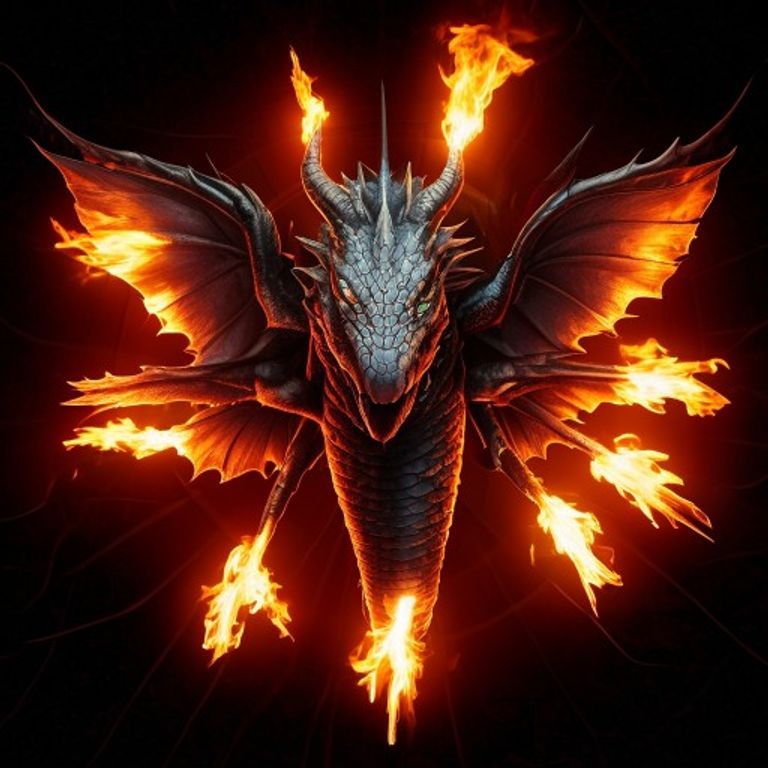
Luminous phenomena that emerge from the Mekong River in Thailand annually, with explanations ranging from flammable natural gases to myths about sacred serpents.
⚠️ Research conducted with the aid of Deep Research is subject to referential ambiguity.
🖥️ Clean HTML code using a proprietary tool.
👥 Research by Guilherme Felipe, Curation by Sílvio Lôbo
The Mystery of the Naga Fireballs: A Floating Enigma on the Mekong River
On the serene banks of the Mekong River, in a region spanning Laos, Thailand, and Cambodia, an annual and enigmatic spectacle captures the imagination and defies explanation: the appearance of mysterious fireballs that emerge from the aquatic depths and ascend into the night sky. Known as the "Naga Fireball Mystery" or "Luci da Fogo" in Thai, this phenomenon, while shrouded in folklore and mysticism, has been the subject of observation and debate for centuries, persisting as one of the most intriguing unsolved cases in the natural and cultural history of Southeast Asia.
The Context and the Incident: Where, When, and How the Mystery Began
Naga fireballs are described as luminous spheres ranging in color from reddish to pink, varying in size from a tennis ball to a basketball, rising to considerable altitudes before disappearing. The phenomenon is most prominent during the Ubon Asalha Puja celebrations (or Asalha Full Moon Day), which occur in July or August, marking the end of the rainy season and the beginning of the dry season. Although observation is most intense during this period, reports of sporadic appearances throughout the year are not uncommon. The primary geographical origin is concentrated in specific areas along the Mekong, such as Vientiane (Laos) and Nong Khai (Thailand), where the riverbanks are wider and more conducive to visibility.
The mystery, intrinsically linked to local legends, attributes the phenomenon to Nagas, mythological reptilian beings said to inhabit the deep waters of the Mekong. According to folklore, the fireballs are the breath of these creatures, a demonstration of their existence and power, often interpreted as a form of veneration or as a harbinger of future events.
Timeline of Events: A Chronological Reconstruction
The chronology of the "Naga Fireball Mystery" is marked more by recurring observations and the perpetuation of the phenomenon than by a single initial incident. However, we can outline a timeline focused on milestones of interest:
- 18th - 19th Centuries: First documented records and oral accounts associating the phenomenon with the Nagas, solidifying the folkloric belief.
- Early 20th Century: Increased popularity of the phenomenon as a cultural event, with growing local pilgrimages to observe the "fireballs."
- 1960s - 1970s: The phenomenon gains international notoriety, attracting the interest of scientists and investigators from outside the region.
- 1980s: Thailand and Laos begin to capitalize on the mystery, promoting festivals and attracting tourists. The city of Nong Khai, Thailand, becomes a hub for observation.
- 1989: Thai physicist Dr. Samian Kraiwichien publishes a study suggesting a scientific explanation for the fireballs: the methane theory.
- 2000s - Present: The scientific debate continues, with new hypotheses being proposed and the phenomenon consolidating itself as an important tourist and cultural attraction, despite the lack of a definitive and universally accepted explanation.
The Main Theories: Unraveling the Enigma
Over the decades, various theories have attempted to rationalize the emergence of the Naga fireballs, ranging from rigorous scientific explanations to mystical interpretations.
Scientific and Police Theories
- Methane Theory (Dr. Samian Kraiwichien): The most prominent hypothesis suggests that the fireballs are formed by the spontaneous ignition of methane gas. This gas is released by the decomposition of organic matter on the riverbed, accumulating in underwater pockets. When the gas pressure becomes sufficient, it rises to the surface and, upon contact with oxygen and an ignition source (possibly ambient heat or friction), combusts, creating the luminous spheres. This theory gains strength from the presence of large amounts of organic matter in rivers like the Mekong and the observation of similar phenomena in swamps with high decomposition. Official Thai reports and subsequent scientific studies have tended to favor this explanation.
- Atmospheric Phenomenon (Ball Lightning): Some scientists suggest that the fireballs could be a variation of ball lightning, a rare and poorly understood atmospheric phenomenon characterized by luminous spheres that can hover in the air for a few seconds. However, the reported underwater origin of the Naga fireballs directly challenges this explanation.
- Optical Illusion/Reflection: Under certain lighting and atmospheric conditions, the reflection of distant lights (boats, villages) on the water's surface could create the illusion of luminous objects emerging from the river. However, the consistent description of the spheres rising vertically makes this explanation less plausible for all reports.
Alternative, Conspiracy, or Paranormal Theories
- Breath of the Nagas (Local Folklore): Popular and religious belief attributes the phenomenon directly to the Nagas, mythological aquatic creatures. This is the most widespread explanation in local culture and is celebrated during festivals.
- Underwater Geothermal/Volcanic Activity: A less common hypothesis suggests the possibility of unusual geothermal or volcanic activity on the riverbed, releasing gases that could ignite. However, there is no geological evidence to support such active and recurring activity in the Mekong.
- Secret Military Experiments: In conspiracy theories, it is speculated that the fireballs could be the result of secret weapons tests or technologies unknown to military powers in the region. However, there is a lack of any concrete evidence to support such claims.
- Ufology and Extraterrestrials: Some paranormal theories associate the phenomenon with UFOs (Unidentified Flying Objects) or extraterrestrial activities, with the fireballs being ships or energetic phenomena of alien origin. This line of thought is highly speculative and lacks any empirical basis.
Controversies and Blind Spots
Despite the longevity of the mystery, several controversies and blind spots have haunted investigations and observations:
- Lack of Tangible Evidence for Scientific Analysis: One of the greatest challenges is the difficulty in collecting samples of the fireballs in action for laboratory analysis. The ephemeral nature of the phenomenon and the impossibility of accurately predicting its appearances make the collection of direct scientific data extremely challenging.
- Conflicting Testimonies and Cultural Influence: The strong influence of Naga folklore can lead to subjective interpretations and confirmation bias. Local testimonies, while valuable, can be shaped by pre-existing beliefs, making it difficult to distinguish between objective observation and mystical interpretation.
- Ignoring Potential Clues: Critics point out that, in some investigations, the strong adherence to the methane theory may have led to the neglect of other explanations that might deserve more attention. The pressure to provide a "scientific" answer may have overshadowed the search for more holistic approaches.
- Disappearance of Records or Data: As with many historical mysteries, the possibility that some initial reports, photos, or footage (rudimentary at the time) may have been lost or poorly archived contributes to the lack of a complete collection of evidence.
- Tourist "Manipulation": In some cases, concern about the economic impact of the phenomenon has led to accusations that observation events may be artificially "enhanced" to attract tourists, raising doubts about the purity of the most recent and spectacular observations.
Curiosities and Legacy
The "Naga Fireball Mystery" has transcended the banks of the Mekong to become a cultural icon and a persistent enigma in the popular imagination.
- Cultural and Tourist Impact: The phenomenon is a driving force for tourism in regions like Nong Khai, Thailand, where festivals dedicated to the fireballs attract thousands of visitors annually. The narrative of the Nagas is intrinsically woven into the local cultural identity.
- Symbol of Regional Unity: Despite political borders, the mystery is a point of cultural convergence between Laos, Thailand, and Cambodia, uniting populations through a shared belief and spectacle.
- Current Status: The case of the Naga fireballs has not been formally "reopened" or "closed" in the sense of a criminal investigation. It remains a topic of scientific debate and cultural fascination. The methane explanation is the most accepted by the scientific community, but the intrinsic mystery and the absence of irrefutable proof keep the aura of enigma alive.
- Inspiration for Media: The phenomenon has inspired documentaries, articles, and reports around the world, fueling curiosity about the inexplicable and the enigmatic beauty of nature.
Until definitive and unquestionable evidence emerges, the Naga fireballs will continue to rise from the deep mysteries of the Mekong River, fueling both science and fantasy, a vivid reminder that, even in our increasingly explained world, there are still spectacles that challenge our understanding and touch the core of our sense of wonder.



