


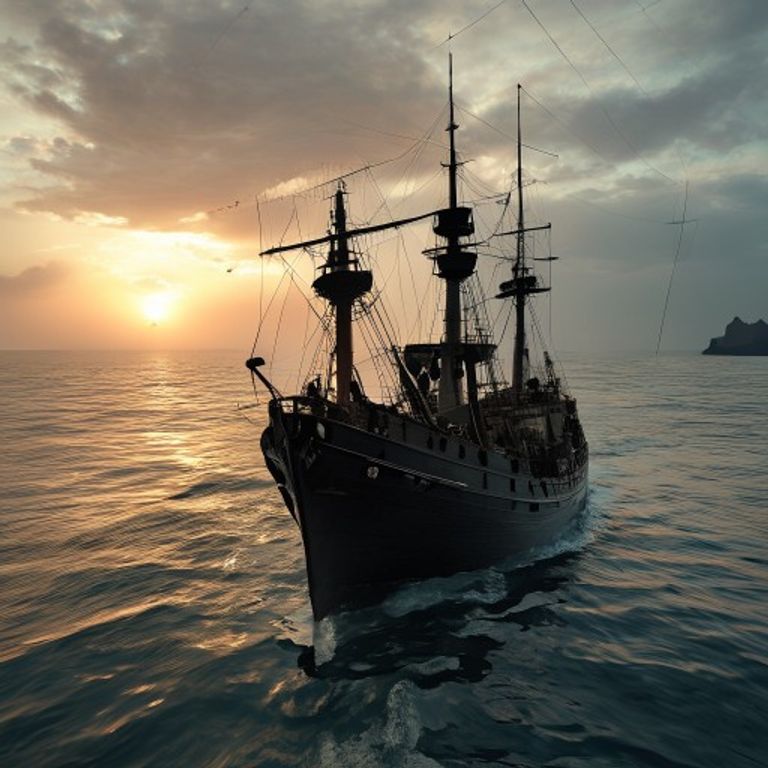
The 1906 shipwreck off the coast of Canada where survivors reported, years later, sightings of the ghost ship and empty lifeboats sailing against the current in the disaster region.
⚠️ Research prepared with the aid of Deep Research is subject to referential ambiguity.
🖥️ Clean HTML code using a proprietary tool.
👥 Research by Guilherme Felipe, Curation by Sílvio Lôbo
The Mystery of the SS Valencia: A Ghost at Sea Breaks the Calm of the British Columbia Coast
In the icy and unforgiving mists of the Pacific Northwest coast, the SS Valencia, a steamship that once represented progress and connection, became a specter—a cautionary tale whispered in harbor taverns and the subject of countless speculations. The inexplicable disappearance of its final captain and crew in 1906 cast a lasting shadow over the region's maritime history, an enigma that defies simple explanations and invites exploration of the boundaries between the factual and the fantastic.
1. The Context and the Incident: Where, When, and How the Mystery Began
The SS Valencia was a cargo and passenger ship belonging to the Pacific Coast Steamship Company. Built in 1882, it was a sturdy and reliable vessel, accustomed to the winding and often dangerous routes between the coastal cities of British Columbia, Canada, and the ports of Washington state, in the United States. The tragic journey that would culminate in its disappearance began on January 20, 1906, when the ship departed from San Francisco bound for Seward, Alaska, carrying cargo and an unspecified number of passengers and crew.
The weather during that period was notoriously severe. Violent storms were common in the region, and visibility was often reduced to near zero by dense fog and incessant rain. It was during one of these adverse conditions, somewhere off the coast of British Columbia, that the SS Valencia vanished from radar, without sending any distress signal, leaving no clear traces of a shipwreck or any indication that something catastrophic had occurred. Only silence echoed, swallowing the ship and everyone on board.
2. Timeline of Events
The exact reconstruction of events is hindered by the abrupt nature and lack of communication regarding the disappearance. However, the proven facts can be traced:
- January 1906: The SS Valencia begins its voyage from San Francisco to Seward, Alaska.
- January 20, 1906: The ship departs from San Francisco.
- Date unspecified between January 20 and 25, 1906: The SS Valencia is last sighted somewhere off the coast of British Columbia. Reports from witnesses on land suggest hearing sounds of vessels in nearby areas, but no specific confirmation.
- January 25, 1906: The ship is officially declared missing.
- Following weeks and months: Extensive searches are conducted by Canadian and American authorities, covering a vast area of the coast and open sea. No significant wreckage of the SS Valencia is found.
- March 1906: A piece of wood, presumably from a ship, is found on a beach near Cape Beale, British Columbia. The identity of the fragment as being from the SS Valencia was never conclusively proven, but it fueled speculation.
- Subsequent years: The story of the SS Valencia solidifies as one of the great maritime mysteries of the region, with intermittent reports of sightings and fragments.
3. The Main Theories
The absence of concrete evidence opened a wide range of theories, from rational explanations to the most fantastic ones:
3.1. Probable Scientific and Official Hypotheses
- Shipwreck Due to Severe Weather Conditions: This is the most plausible and widely accepted explanation. The coast of British Columbia is known for its sudden and violent storms, strong winds, and towering waves. It is possible that the SS Valencia was caught in a particularly brutal storm, resulting in catastrophic damage and rapid sinking in deep waters, where the wreckage would be difficult to locate. The lack of a distress signal may indicate a sudden event that prevented the crew from reacting in time.
- Collision with Another Vessel or Submerged Object: Although less likely due to the absence of collision reports and the lack of wreckage from other vessels in the area, it cannot be entirely ruled out. Reduced visibility in conditions of intense fog and rain could have led to a fatal impact.
- Internal Explosion (Boiler/Cargo): Steamships of the era relied on boilers to generate power. A catastrophic failure in a boiler, or an explosion of dangerous cargo (although there is no official record of explosive cargo on board), could have destroyed the ship instantly.
3.2. Alternative, Conspiracy, or Paranormal Theories
- Piracy or Sabotage: Although the period was relatively peaceful in terms of organized piracy on established trade routes, the idea of an attack by modern pirates or intentional sabotage for unknown reasons has never been entirely dismissed by some theorists. However, the lack of any communication or claim makes this theory unlikely.
- The North Bermuda Triangle / Paranormal Energy Zone: Some paranormal enthusiasts suggest that the region in question may be a lesser-known "Bermuda Triangle," an area prone to temporal distortions, gravitational anomalies, or interdimensional portals that could have swallowed the ship. This theory lacks any scientific basis or empirical evidence.
- The Ghost of the SS Valencia: Reports of sightings of a ghost ship identical to the SS Valencia, especially on foggy nights and around the area where the ship disappeared, have persisted for decades. Some believe that the crew, or the ship itself, still wanders the waters, trapped in an eternal cycle.
- Alien Intervention: A more fanciful theory, but one that arises in discussions about unexplained mysteries, suggests that the ship and its crew could have been abducted by extraterrestrial technology.
4. Controversies and Blind Spots
The official investigation into the disappearance of the SS Valencia was marked by difficulties inherent to the era and the remote nature of the search area. However, some questions remain:
- Insufficient Searches?: Critics of the time suggested that the searches, although extensive, could have been insufficient or poorly directed, especially considering the vast expanses of deep water and the complex underwater topography of the region.
- Ambiguous Fragments: The piece of wood found, although considered a possible clue, was never conclusively identified as belonging to the SS Valencia. The lack of other significant wreckage – such as lifeboats, crew belongings, or pieces of the hull – is a crucial blind spot.
- Incomplete Cargo and Passenger Records: The lack of detailed and definitive records regarding the exact number of passengers and the nature of all cargo on board hinders the analysis of possible contributing factors to the disaster.
- Conflicting Testimonies (or Absence of Testimonies): If there were witnesses on land who spotted the ship in its final moments, their testimonies were either not collected properly or were inconsistent, adding more noise to the puzzle.
5. Curiosities and Legacy
The case of the SS Valencia transcended the record of a mere maritime accident. It became part of local folklore and one of the great unsolved enigmas of the British Columbia coast.
- The Ghost Ship Persists: Reports of sightings of the ghost ship continue to be heard, fueling the legend and attracting the attention of curious individuals and paranormal enthusiasts.
- Impact on the Maritime Community: The disappearance served as a grim reminder of the unpredictability and destructive power of the ocean, reinforcing the need for caution and respect for maritime conditions.
- Current Status: The case of the SS Valencia remains officially "unsolved." Although the theory of a shipwreck due to a storm is the most accepted by authorities, the absence of definitive discoveries allows speculation and mystery to endure. New sonar and underwater research technologies could, theoretically, one day uncover the ship's final destination, but until then, the SS Valencia will continue to sail through the waters of the imagination, an eternal ghost at sea.



