


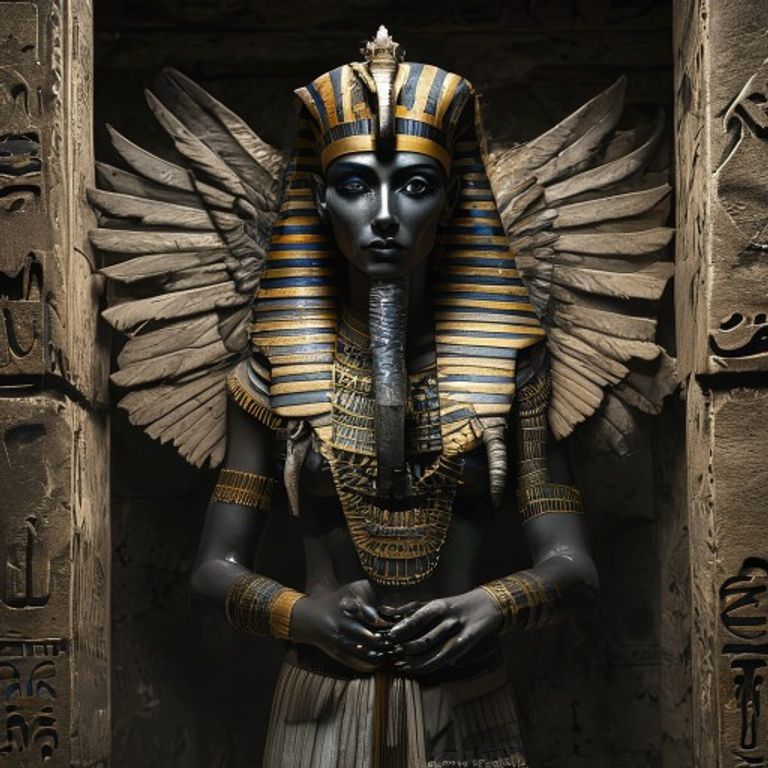
The succession of deaths of members of the archaeological expedition after the opening of the pharaoh's tomb in 1922, generating the popular belief that a magical protection had been violated.
⚠️ Research conducted with the aid of Deep Research is subject to referential ambiguity.
🖥️ Clean HTML code using a proprietary tool.
👥 Research by Guilherme Felipe, Curation by Sílvio Lôbo
The Mystery of Tutankhamun's Curse: An Investigation into the Pharaoh's Death and Legacy
The discovery of Tutankhamun's tomb in 1922 in the Valley of the Kings by Howard Carter and his team unveiled an invaluable treasure and reopened a fascinating chapter of Egyptian history. However, along with the shimmering artifacts and historical wealth, a dark legend emerged that still hangs over the tomb to this day: the Curse of Tutankhamun.
1. The Context and the Incident: Where, When, and How the Mystery Began
On November 4, 1922, Howard Carter, funded by Lord Carnarvon, found the intact seal of the antechamber of tomb KV62, belonging to the 18th Dynasty pharaoh, Tutankhamun. The opening of the tomb, filled with perfectly preserved funerary objects, was a monumental event. The legend of the "curse" began to spread rapidly after the unexpected death of Lord Carnarvon on April 5, 1923, just five months after the tomb was opened.
The official cause of Carnarvon's death was generalized infection (sepsis) resulting from an infected mosquito bite on his face, complicated by pneumonia. However, the temporal coincidence and the almost mythical nature of the discovery fueled speculation about a supernatural revenge by the pharaoh.
2. Timeline of Events
- 1922: Discovery of Tutankhamun's tomb by archaeologist Howard Carter and his sponsor Lord Carnarvon.
- February 1923: The tomb's antechamber is officially opened.
- April 5, 1923: Lord Carnarvon dies in Cairo, Egypt, following an infection.
- 1923 - 1930: Excavations and cataloging of artifacts continue. During this period, other deaths of individuals associated with the discovery occur, fueling the legend of the curse.
- 1970s onwards: Fascination with the curse reaches its peak with traveling exhibitions of Tutankhamun's treasure, generating unprecedented media interest.
3. The Main Theories
The "Curse of Tutankhamun" unfolds into several interpretations, ranging from scientific to supernatural.
3.1. Scientific and Forensic Hypotheses (Most Likely)
- Pathogenic Agents in the Tomb: The most scientific theory suggests that fungal spores or pathogenic bacteria, preserved in airtight conditions for millennia, could have been released upon opening the tomb. Exposure to these microorganisms, unknown to the modern immune system, could have caused serious and fatal illnesses in susceptible individuals, such as Lord Carnarvon, who already had weakened health. Reports of Carnarvon's examinations indicate pulmonary fragility.
- Natural Toxicity: Some substances found in ancient tombs, such as arsenic compounds used in sealants or pigments, could have been released, causing slow or acute poisoning.
- Statistical Coincidence and Pre-existing Health: The most pragmatic explanation is that the deaths occurred due to natural causes, coinciding with the chronology of the discovery. A group of people working at an archaeological site, often in poor health conditions or of advanced age, would naturally be more prone to passing away over a few years. Lord Carnarvon, for example, was known to have previous health issues.
3.2. Alternative, Conspiracy, or Paranormal Theories
- The Real Curse: This is the central theory of the legend. It is believed that a curse, inscribed or implied in the tomb's hieroglyphs, was cast to punish anyone who disturbed the pharaoh's eternal rest. Inscriptions in Egyptian tombs often contained warnings against desecration, but they were rarely considered "curses" in the modern supernatural sense.
- Spiritual Revenge: An extension of the real curse, where the spirit of Tutankhamun or spiritual guardians of the tomb would be acting to eliminate intruders.
- Media Manipulation and Sensationalism: Journalists of the time, seeking to increase circulation and public interest, allegedly exaggerated and fabricated stories about "mysterious" deaths, fueling the narrative of the curse. The growing popularity of horror fiction and occultism at the time contributed to the acceptance of these stories.
4. Controversies and Blind Spots
The investigation of the deaths associated with Tutankhamun's tomb, although formally attributed to natural causes, is full of questions:
- The Number of Deaths: Initially, the media popularized the idea of a high and alarming number of deaths. However, a deeper analysis reveals that only a small number of people directly linked to the opening of the tomb died under circumstances that could be remotely associated within a short period. Many who worked on the tomb lived for decades after its discovery.
- Incomplete or Ignored Medical Reports: The exact cause of Lord Carnarvon's death, although clinically diagnosed, left room for interpretation due to the complexity of the infection and environmental circumstances.
- The Search for Patterns: The obsession with finding a pattern of deaths led to ignoring individual causes, focusing on a supposed common supernatural cause.
- Missing Evidence: There are no clear records of any inscriptions or artifacts that unequivocally prove a literal "curse." The warnings in Egyptian tombs were more of a religious and respectful nature than direct supernatural threats.
5. Curiosities and Legacy
The "Mystery of Tutankhamun's Curse" transcended the field of archaeology to become a global cultural phenomenon. The legacy of the curse is multifaceted:
- Cultural Impact: The legend inspired countless films, books, documentaries, and games, solidifying the image of Tutankhamun not just as a pharaoh, but as an icon of mystery and danger.
- Scientific Discrediting: Despite popular appeal, the scientific community generally rejects the notion of a supernatural curse, preferring rational and evidence-based explanations.
- Current Status: The case, as an official "investigation" into the curse, is closed. However, the legend remains alive in the popular imagination, fueled by new discoveries or interpretations that occasionally arise. The mystery lies more in the persistence of the belief than in an unresolved real threat.
- The True Legacy: The true legacy of Tutankhamun lies in his tomb, an extraordinary testament to art, religion, and life in Ancient Egypt, which continues to dazzle and educate generations. The "curse" serves, paradoxically, as a gateway to a broader interest in this fascinating civilization.



