


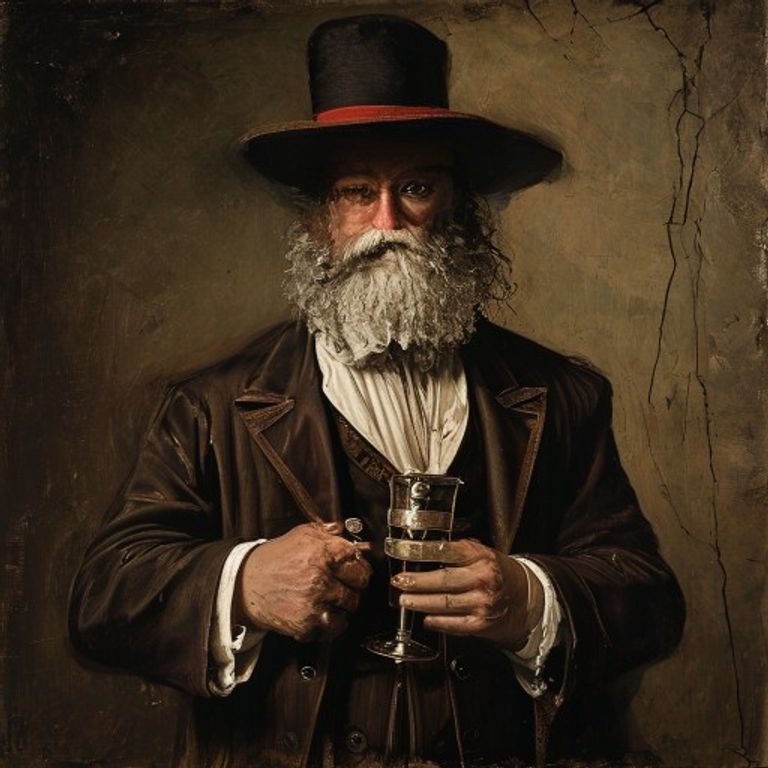
A serial killer invaded homes in Louisiana in the early twentieth century, sparing only residences where jazz music was played at night.
⚠️ Research conducted with the aid of Deep Research is subject to referential ambiguity.
🖥️Clean HTML code using a proprietary tool.
👥 Research by Guilherme Felipe, Curation by Sílvio Lôbo
The Whispering Axe: A Haunted Enigma in New Orleans
In the intricate and often dark tapestry of criminal history, few threads are as persistently and disturbingly fascinating as the New Orleans Axeman Case. A series of brutal and inexplicable murders that terrorized the city in 1918 and 1919 not only shocked its inhabitants but also left a trail of mystery that, to this day, defies logic and police investigation.
1. The Context and the Incident: The Horror Emerging from the Shadows
The backdrop for this wave of violence was a bustling New Orleans. World War I still influenced daily life, and the city, a cultural and port melting pot, was seething with a mixture of joy and apprehension. It was in this setting that, between 1918 and 1919, a shadowy figure, armed with an axe, began to sow terror.
The attacks were shockingly similar: doors of homes broken down, victims found in their homes, and the cause of death unequivocally a brutal axe blow. The most disturbing element was the apparent randomness of the victims and the absence of any clear motive, such as robbery or personal revenge. Terror spread like a contagious disease, turning the city into a stage of fear.
2. Timeline of Events: The Blows of Fate
An exact reconstruction of the timeline is hindered by the chaotic nature of the events and the documentation of the era. However, the most notorious attacks that defined the case occurred in a concentrated period:
- May 1918: The first known attack. Joseph Moniz is found dead in his home, victim of an axe blow.
- June 1918: William Dardain and his wife, Josephine Dardain, are attacked. William dies, Josephine survives and reports the presence of a man with an axe.
- August 1918: Bernhard Hayman is murdered in his residence.
- September 1918: Charles Tramonte and his wife, Rose Tramonte, are attacked. Both die.
- October 1918: Gus Koch and his wife, Mary Koch, are the victims. Both also die.
- November 1918: Louis Tommasino and his wife, Mary Tommasino, are found dead.
- January 1919: Mike Pepitone is murdered in his home.
- March 1919: Steve Mello and his wife, Clara Mello, are the last known victims of the series.
After these attacks, the brutal murders attributed to the "Axeman" ceased as abruptly as they began.
3. Main Theories: Deciphering the Enigma
Over the decades, various theories have attempted to shed light on the Axeman's identity and the nature of his crimes. They range from the rational to the supernatural:
3.1. Police and Scientific Theories (Most Likely):
- Serial Killer: The most widely accepted hypothesis by the police of the time and by later investigators is that of a serial killer. The brutality, the repetition of the modus operandi (the axe), and the apparent absence of a specific motive point to an individual with severe psychological problems. Phrenology and other pseudosciences of the era may have been used in profiling attempts, but the lack of modern forensic technology limited the possibilities.
- Revenge or Misunderstanding: While less likely given the apparent randomness of the victims, some investigators considered the possibility that the attacks were directed at a specific group of people with whom the perpetrator had some kind of unapparent grudge or dispute.
- Italian Gangs: New Orleans at the time had a strong Italian community, and rumors of involvement by local mafias or gangs circulated. However, the nature of the crimes and the lack of a clear connection to territorial or criminal disputes weakened this theory.
3.2. Alternative, Conspiracy, or Paranormal Theories:
- The Revenge of Italian Immigrants: A popular theory, though without concrete evidence, suggests that the attacks could have been retaliation for an injustice committed against Italian immigrants. This theory is often linked to lynchings or unjust arrests of community members.
- The Shadow Ghost (or Voodoo): Given New Orleans' mystical atmosphere, theories involving supernatural forces or voodoo rituals emerged. The idea would be that the killer acted under the influence of an entity or spell, which would explain the apparent lack of human motive. This theory, while captivating for local folklore, lacks any empirical basis.
- The Escape of a Maniac: Some accounts mention the possibility that the killer might have come from outside New Orleans, possibly an escapee from a psychiatric institution or a criminal passing through the city.
4. Controversies and Blind Spots: Where the Truth Hides
The Axeman Case is fertile ground for controversies and blind spots in the official investigation, which were crucial to its perpetuation as a mystery:
- Lack of Concrete Clues: Despite the numerous attacks, the police of the time collected little physical evidence that could lead to a suspect. The murder weapon, the axe, was rarely found, and when it was, it contained no usable fingerprints, given the technology of the era.
- Conflicting Testimonies: Descriptions of the attacker varied among witnesses. Some spoke of a tall, strong man, others of a more stout figure. The lack of an accurate composite sketch contributed to the confusion.
- The "Axeman's" Letter: One of the most intriguing and controversial points is the letter sent by someone claiming to be the "Axeman" to the newspaper Times-Picayune in 1919. In the letter, the author threatened to continue his attacks unless the city played jazz music in the streets on the night of March 19, 1919. The police even issued an alert for musicians to play. The theory is that the letter was a hoax, an attempt to gain attention or create even greater panic, but it also raised the possibility of a criminal with a twisted sense of humor or a desire for notoriety.
- Ignored Suspects: Reports and speculation suggest that some suspects were briefly considered but quickly dismissed due to a lack of solid evidence or because they were too influential figures to be implicated without a strong basis. The lack of detailed records of these internal investigations contributes to the mystery.
- Loss of Files: Over time, it is likely that some of the original official investigation files have been lost, whether due to negligence, fires, or simply the disorganization of old case documents.
5. Curiosities and Legacy: The Echo of the Axe
The Axeman Case transcended the boundaries of police chronology to become an urban legend and an icon of New Orleans culture:
- Cultural Influence: The case has inspired countless stories, books, songs, and even films. The dark, silent figure of the killer, acting in the shadows of the night, has become an archetype of terror and mystery. The city of New Orleans, with its gothic and mysterious atmosphere, became the perfect setting for this legend.
- The Night of Jazz: The "Axeman's" letter's demand for jazz on the night of March 19, 1919, is one of the most famous curiosities of the case. Popular belief is that the city did indeed issue a "decree" for music to be played, a testament to the fear that hung over the population and the authorities' willingness to do anything to appease the supposed killer.
- Current Status: The case is officially considered unsolved. Although there was a period of intense investigation at the time, without a confessed or convicted suspect, the Axeman's identity remains a mystery. New Orleans authorities have not formally reopened the case in recent years, but it continues to be studied and discussed by historians, criminologists, and mystery enthusiasts.
The New Orleans Axeman, whether a real individual, an urban ghost, or a combination of both, continues to whisper his stories in the dark alleys and forgotten corridors of history. A grim reminder that, even in the most vibrant cities, the shadows of the past can hold secrets that time refuses to fully reveal.



