


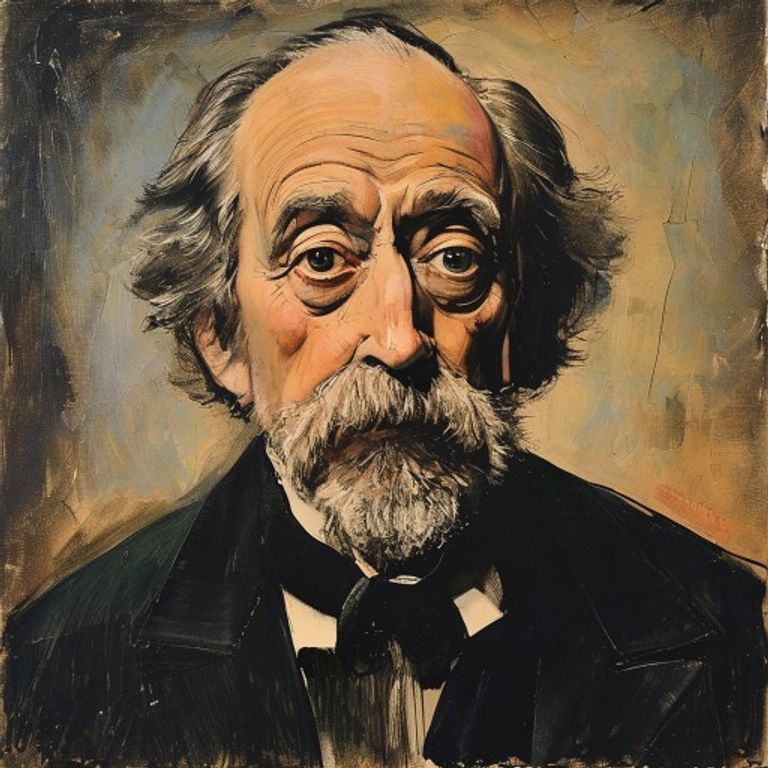
The 1895 judicial trial for 'gross indecency' that led the writer to prison and social ruin, exposing the intolerance of Victorian society toward homosexuality at the time.
⚠️ Research conducted with the aid of Deep Research is subject to referential ambiguity.
🖥️ Clean HTML code using a proprietary tool.
👥 Research by Guilherme Felipe, Curation by Sílvio Lôbo
The Oscar Wilde Enigma: The Unresolved Case of a Genius's Downfall
Oscar Wilde. The name evokes images of elegance, sharp intellect, and a scandal that shook Victorian society. But beyond the fame and the tragedy of his personal life, a veil of mystery hangs over the events that led to his ruin and, for some, a premature end. This article aims to unravel the layers of one of the most persistent enigmas in literature and history: the "Oscar Wilde Case," an intricate puzzle whose pieces seem to have been deliberately shuffled.
1. The Context and the Incident: Where, When, and How the Mystery Began
The mystery does not lie in a specific crime, but in the sudden and devastating downward spiral of Oscar Wilde, culminating in his arrest, trial for "gross indecency," and subsequent sentencing to two years of hard labor in 1895. The stage for this drama was Victorian London, a world of rigid appearances and hypocritical morality. The society that so acclaimed him for his literary genius was the same one that, with relentless fury, crushed him upon discovering his homosexual relationships, which were illegal and socially condemned at the time.
The incident that triggered the chain of events was the formal accusation made by John Douglas, 9th Marquess of Queensberry, father of Lord Alfred Douglas (known as "Bosie"), Wilde's lover. In February 1895, Queensberry left a card for Wilde at the Albemarle Club with the following note: "For Oscar Wilde, posing somdomite" (misspelled in the original). This provocation was the trigger, but what unfolded revealed much more than a simple scandal of manners. For many, it was an orchestrated judicial persecution, where the law was used as a weapon to destroy an individual.
The Escalation to Trial
Wilde, impulsively advised by Bosie and others, decided to sue Queensberry for libel. This was a catastrophic error. The libel trial in April 1895 quickly turned into a trial against Wilde. Queensberry's defense strategy, skillfully conducted by lawyer Edward Carson, exposed Wilde's private life in a public and humiliating way, turning Wilde from accuser into the accused. What began as an attempt to defend his honor became the prelude to his destruction.
2. Timeline of Events
A chronological reconstruction of the crucial events sheds light on the speed and ruthlessness with which Wilde's downfall was consummated:
- February 20, 1895: The Marquess of Queensberry leaves the provocative note at the Albemarle Club, precipitating Wilde's action.
- April 18, 1895: Start of Wilde's libel trial against Queensberry. The prosecution turns the case into an attack against Wilde.
- April 25, 1895: Wilde is arrested on charges of "gross indecency" based on the Labouchère Amendment of 1885.
- April 26, 1895: Wilde is brought to trial at the Old Bailey.
- May 28, 1895: Wilde's trial ends with his sentencing to two years of hard labor, the maximum penalty.
- November 19, 1895: Wilde is released from Pentonville prison.
- 1897: Wilde publishes "De Profundis," a poignant letter written in prison, reflecting on his life and suffering.
- November 19, 1900: Oscar Wilde passes away in Paris at age 46, in a rented room at the Hôtel d'Alsace, under circumstances that still generate debate.
3. Main Theories
The "Oscar Wilde Case" is not a traditional police case with a crime to be solved, but rather a historical and social enigma. The theories surrounding his ruin and death focus on different aspects: judicial persecution, the cruelty of society, and the circumstances of his death.
3.1. Judicial Persecution and Societal Cruelty (Most Likely Hypothesis)
Logic: This is the most widely accepted interpretation, anchored in historical accounts and the analysis of the legislation of the time. Wilde was a victim of a society that, on one hand, delighted in his audacity and intelligence, but on the other, did not tolerate the violation of its moral norms. The trial was, in essence, a form of "judicial lynching" disguised as law enforcement. Lawyer Edward Carson, with the complicity of the legal system, used the law to dismantle Wilde's life, exposing intimate details to prove a crime that, for many, was simply an act of love.
- Evidence: The trial records reveal Carson's aggressive tactics. Period accounts describe the public fervor against Wilde. The very nature of the Labouchère Amendment, which criminalized "acts against nature" and was used selectively against homosexuals, points to legislation of a moralistic and punitive nature.
3.2. Conspiracy Theories and Political Influence
Logic: Some argue that the persecution of Wilde was more than a social reaction. It is speculated that powerful figures, perhaps within the government or the aristocracy, saw in Wilde a symbol of decadence that threatened the established order, and that they orchestrated his downfall to remove this threat. The influence of Lord Queensberry, a man of strong character and connections, is undeniable.
- Evidence/Arguments: The speed and forcefulness of the judicial action, the apparent lack of compassion from judges and jurors, and the desire to purge Wilde's influence from public life are cited as indications of an orchestrated action. The absence of concrete evidence of a formal conspiracy, however, keeps this theory in the realm of speculation.
3.3. Post-Prison and Deteriorating Health (Theory on his Death)
Logic: This theory focuses on the degrading conditions of his imprisonment and the devastating impact it had on his physical and mental health. Wilde left prison ill, impoverished, and emotionally shattered. His premature death in 1900 is seen by many as a direct consequence of the suffering inflicted during his incarceration.
- Evidence: Medical reports from the time and witness accounts describe Wilde's decline after prison. The official cause of his death was syphilitic meningitis, but a weakened immune system due to harsh prison conditions may have been a crucial aggravating factor.
- Controversy: The discussion over whether the syphilis was contracted during prison or was pre-existing and aggravated by the conditions adds a layer of complexity.
3.4. Paranormal or Supernatural Theories (Extremely Speculative)
Logic: Although without any factual or scientific basis, the tragic and almost "cursed" nature of Wilde's downfall occasionally leads to speculation about occult or supernatural influences. The idea that he "attracted" disgrace or that dark forces were at play is more a reflection of the emotional impact of his story than an objective analysis.
- Evidence: Non-existent. This line of thought is purely speculative and devoid of any grounding in verifiable facts.
4. Controversies and Blind Spots
The "Oscar Wilde Case" is full of controversies and clues that, then or now, remain obscure. The official investigation was, in fact, the trial itself, and that is where the greatest flaws lie.
- The Decision to Sue Queensberry: This is perhaps the biggest blind spot. Wilde, a man known for his verbal wit, acted impulsively, ignoring the advice of friends who predicted disaster. Why was he so stubborn? The influence of Bosie is often cited, but the depth of that influence and the reason Wilde was so susceptible remain in debate.
- The Failure of the Defense: Wilde's defense in the trials was widely considered inadequate. Wilde's lawyer, Charles Gill, failed to effectively counter Edward Carson's tactics. Were there strategic failures or a lack of resources?
- Ignored Testimonies and Evidence: During Wilde's trial, testimonies were presented that today seem biased or were not properly examined. The way "gross indecency" was defined and applied was vague and subject to interpretation, allowing for a wide scope for accusations based on rumors and enmities.
- The Disappearance of Evidence: Later reports suggest that some of Wilde's correspondence, which could have offered deeper context about his relationships and mental state, was lost or destroyed over time. The exact fate of some of his personal belongings and documents after his death is uncertain.
- Prison Conditions: Victorian prison conditions were notoriously brutal. The type of hard labor and deprivation Wilde suffered are described as inhumane and potentially intentionally severe, beyond what the law stipulated, as a form of moral punishment.
5. Curiosities and Legacy
The cultural impact of the "Oscar Wilde Case" is immeasurable. His story has become an archetype of the struggle between artistic genius and social intolerance.
- Literary Legacy vs. Scandal: Despite his life being marked by scandal, Wilde's work – including plays like "The Importance of Being Earnest" and "Salomé," as well as his novels and essays – continues to be celebrated for its wit, insight, and unmistakable style.
- Symbol of LGBTQ+ Persecution: Wilde is, for many, one of the first martyrs of oppression against the LGBTQ+ community. His story has inspired countless activists and artists over the decades.
- Current Status: The case has not been reopened in the sense of a new criminal trial, as the conviction occurred long ago and laws have changed drastically. However, the case remains alive in historical and academic debate. The public and researchers continue to analyze the events, seeking to understand the nuances of justice, morality, and social persecution in the Victorian era. The figure of Wilde, despite the tragedy, has ascended to the status of a cultural icon, resignifying his suffering into strength for future generations.
- The Post-Mortem "Museum": The Hôtel d'Alsace, where Wilde spent his final days, was turned into a museum in his honor, a testament to the persistence of his memory and the fascination his enigma continues to exert on the world.
The "Oscar Wilde Case" has no simple solution. It is a grim reminder of how prejudice and social rigidity can destroy lives, even the most brilliant ones. The clues may be lost in time, but the story of his downfall, with its controversies and blind spots, continues to echo, challenging us to question the shadows of history and to seek the truth where it hides, even in cases that seem to have been archived by life itself.



