


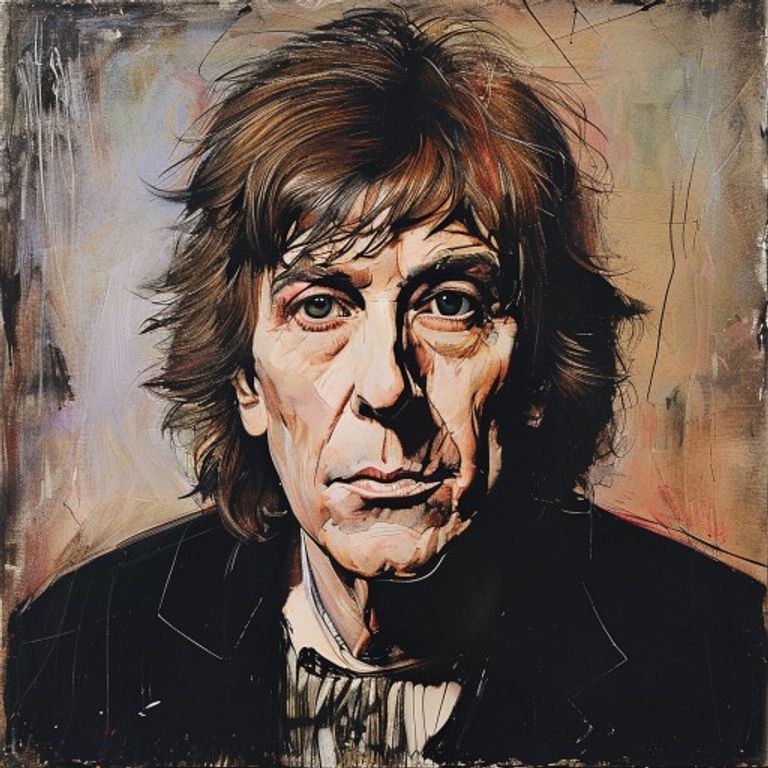
One of the most famous urban legends in music, claiming that the Beatles' bassist died in 1966 and was replaced by a look-alike, based on alleged clues found on album covers.
⚠️ Research conducted with the aid of Deep Research is subject to referential ambiguity.
🖥️ Clean HTML code using a proprietary tool.
👥 Research by Guilherme Felipe, Curated by Sílvio Lôbo
The Beatle Enigma: Unraveling the "Paul McCartney Death Case"
For a long time, the shadow of a premature death and an inexplicable mystery has loomed over the music world. The legend that Paul McCartney, one of the greatest icons of the Beatles, died in 1966 and was replaced by a look-alike is one of the most enduring and fascinating conspiracy theories in pop culture history. This documentary article aims to investigate the birth of this hypothesis, analyze the "facts" that fuel it, and separate reality from rampant speculation with the analytical rigor the subject demands.
1. The Context and the Incident: Where, When, and How the Mystery Began
The origin of the "Paul McCartney Death Case" dates back to the autumn of 1966, a period of intense creative fervor for the Beatles. The band, following the release of the revolutionary album "Revolver" and McCartney's controversial statement about being more popular than Jesus, was immersed in grueling tours and a process of musical evolution that would distance them from live performances. The "incident" that supposedly sealed the fate of the real Paul McCartney was never officially recorded. Popular legend, fueled by independent articles and radio shows in subsequent decades, suggests a tragic car accident. The most common narrative points to a rainy night in London, where McCartney, after an argument with other band members or simply exhausted, decided to drive alone. The car allegedly hit a tree, resulting in his instant death. The impact was said to be so devastating that McCartney's body was disfigured, making identification impossible. What followed, according to the theory, was a collusion to hide the truth. The other Beatles members, led by manager Brian Epstein, were desperate to keep the group's success machine running. Faced with the impossibility of revealing the death of one of their core members, they allegedly found a look-alike with remarkable physical similarities and trained him to take on the role of Paul McCartney.
2. Timeline of Events (Theoretical and Factual): A Chronological Reconstruction
It is crucial to distinguish between proven events and the elements that make up the conspiracy theory. * 1966: * PROVEN FACT: The Beatles release the critically acclaimed album "Revolver". * PROVEN FACT: Paul McCartney's controversial statement regarding the Beatles' popularity compared to Jesus Christ. * PROVEN FACT: The Beatles perform their final official tour. * **SPECULATION/THEORY:** The alleged car accident of Paul McCartney in London. * **SPECULATION/THEORY:** The selection and training of a look-alike. * 1967: * PROVEN FACT: Release of "Sgt. Pepper's Lonely Hearts Club Band", an album that features some of the "clues" pointed out by theorists. * **SPECULATION/THEORY:** The look-alike is already integrated into the band and participating in recordings. * Subsequent Years: * PROVEN FACT: The continuous and resounding career of Paul McCartney, both with the Beatles and in his solo career. * **SPECULATION/THEORY:** The dissemination of the theory through articles, radio shows, books, and, more recently, the internet.
3. The Main Theories: Hypotheses, Conspiracies, and the Paranormal
The complexity of the "Paul McCartney Death Case" manifests in the variety of theories that attempt to explain it. They range from psychological interpretations and coincidences to elaborate conspiracy narratives. * The Look-alike Conspiracy Theory ("Paul is Dead" - PID): * **Logic:** This is the central theory. It believes that Paul McCartney died in 1966 and was replaced by a look-alike, usually identified as William Shears or Billy Shears (a reference to the song "Glass Onion"). The "proofs" are interpreted as clues left intentionally by the remaining Beatles members, or by the look-alikes themselves, in their songs, album covers, and music videos. * **Common "Evidence":** * **"Sgt. Pepper's Lonely Hearts Club Band" Cover:** The grave with the letters "P.C." written in flowers, the hand over McCartney's head (a sign of death in some Eastern cultures), the McCartney bass turned downwards (he played bass with his right hand, but the look-alike was supposedly left-handed – a common error in the theory, as McCartney is left-handed). * **Song Lyrics:** Interpretations of lines like "He blew his mind out in a car" from "A Day in the Life", or "I buried Paul" which would be John Lennon's lament. * Backmasking: The belief that hidden messages are heard when playing certain songs in reverse. * Post-1966: The alleged change in McCartney's behavior, appearance, and even musicality. * Disinformation or Elaborate Hoax Theory: * **Logic:** This perspective suggests that the look-alike story was a prank or a deliberate marketing strategy by the band or the record label to generate publicity and interest around the group. The release of ambiguous clues and the promotion of rumors would be part of a larger plan. * **Arguments:** The extravagant nature of the theory, the timing of its popularization (decades after the alleged event), and the interest it generated in itself. * Psychological Hypothesis and Pareidolia: (Proven Fact: Pareidolia is the psychological phenomenon of perceiving meaningful patterns in ambiguous stimuli) * **Logic:** Explains the "strength" of the "clues" through the human tendency to find patterns and meanings where none exist (pareidolia). In a state of fandom or strong connection to the band, fans project their desires and fears, finding confirmations for a pre-existing idea. The death of such an important public figure is a trigger for speculation. * **Arguments:** The subjectivity of interpretations, the lack of concrete evidence that withstands scientific scrutiny, and the innate nature of human perception. * Paranormal/Occult Theories: (Speculation) * **Logic:** Some more extreme strands suggest supernatural interventions, occult rituals, or communication with the afterlife as elements that would explain the replacement or the alleged death of McCartney. * **Arguments:** These theories lack any empirical foundation and are based on esoteric beliefs.
4. Controversies and Blind Spots: Inconsistencies and Ignored Clues
The investigation of the "Paul McCartney Death Case" is full of inconsistencies and blind spots that fuel conspiracy theories. * **Lack of Concrete Evidence of Death:** There has never been an official police report, a death certificate, or even a reliable account of a car accident involving Paul McCartney in 1966. The "witnesses" cited in articles are often anonymous or their statements are based on rumors. * **Contradictions in Testimonies (Theoretical):** The theorists themselves present conflicting versions regarding the details of the accident, the identity of the look-alike, and the motivations for the cover-up. * The "Fact" of Being Left-Handed: One of the most cited "clues" is the alleged dexterity of McCartney and the left-handedness of the look-alike. However, Paul McCartney is, in fact, left-handed and plays bass with his left hand. This basic contradiction undermines many of the arguments based on the difference in manual dominance. * **"Evident" Clues That Were Not Ignored:** The "clues" on album covers and in songs were widely discussed and analyzed by the media and fans at the time. Many of them were subjective interpretations or artistic references that were misunderstood later. * **The Longevity and Unwavering Activity of "McCartney":** The successful solo career of Paul McCartney, which spans decades after the alleged event, with countless public appearances, concerts, and recordings, is the greatest counterpoint to the theory. Would a look-alike, no matter how skilled, maintain this artistic and biological consistency for so long?
5. Curiosities and Legacy: Cultural Impact and Current Status
The "Paul McCartney Death Case" transcended the music world to become a cultural phenomenon. * **The "Paul Factor":** Paul McCartney is such an iconic figure that the idea of his replacement becomes more plausible to some than accepting the simple evolution of an artist. * **The Seduction of Mystery:** In a world increasingly saturated with information, mystery offers a refuge and an invitation to speculation. The "Paul is Dead" theory provides an intriguing and complex narrative for fans to unravel. * **The Power of the Internet:** The rise of the internet and social media has allowed the theory to spread globally, with new "clues" being constantly added and debated. * **Current Status:** The case remains shelved in terms of official investigation, as there has never been a formal investigation to be reopened. It lives in the realm of urban legend and popular culture. Paul McCartney, in interviews, has joked about the theory, acknowledging its persistence and the humor it can generate, but always vehemently denying any truth to it. The "Paul McCartney Death Case" is a testament to the power of narrative, human imagination, and the enduring fascination with inexplicable mysteries. While logic points to the untruth of the theory, the legend, fueled by an ocean of speculation, will continue to echo, an intriguing reminder that, sometimes, the truth can be stranger (or simpler) than the fiction we create around it. The absence of proven facts in favor of subjective interpretations ensures that this enigma remains one of the most fascinating and disturbing chapters in music history.



