


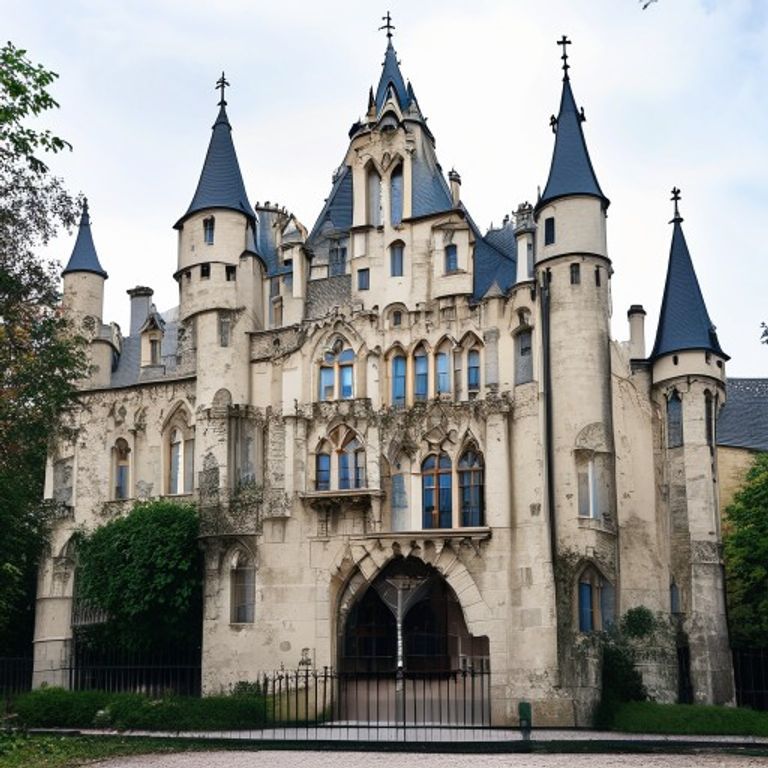
A parish priest in a small French village suddenly acquired immeasurable wealth in the nineteenth century, generating legends about Templar treasures and the Holy Grail.
⚠️ Research conducted with the assistance of Deep Research is subject to referential ambiguity.
🖥️Clean HTML code using a proprietary tool.
👥 Research by Guilherme Felipe, Curation by Sílvio Lôbo
The Enigma of Rennes-le-Château: A Treasure of Secrets and Suspicions
In the heart of southern France, nestled in the verdant hills of the Occitanie region, lies the small village of Rennes-le-Château. Once a peaceful place, it has become the epicenter of one of the most persistent and fascinating mysteries of modern history. What began with the arrival of a humble parish priest in 1885 has blossomed into decades of speculation, investigation, and narratives that defy logic and reason, involving lost treasures, religious secrets, and conspiracies of global magnitude.
1. The Context and the Incident: A New Priest, A New Mystery
In 1885, Father Bérenger Saunière was appointed parish priest of the church of Saint-Marie-Madeleine in Rennes-le-Château. The church, a medieval building in ruins, required extensive renovations. During these works, supposedly in 1891, Saunière discovered an ancient parchment hidden inside a pillar of the altar. This parchment contained an enigmatic Latin text that, after translation, revealed a series of indecipherable numbers and symbols.
The exact nature of the discovery and the content of the parchment remain the subject of intense debate. Some accounts suggest they were slightly altered biblical verses, while others point to secret codes. What is an undeniable fact is that, from this discovery, Saunière's life underwent a drastic transformation. He began to undertake a campaign of restoration and beautification of the church and its presbytery, which included the construction of the Magdala Tower and a luxurious villa, all financed by means that were never fully explained.
2. Timeline of Key Events
- 1885: Bérenger Saunière arrives in Rennes-le-Château as parish priest.
- 1891 (approximate date): Saunière claims to have discovered a parchment during renovations at the church.
- 1892-1910: Period of intense construction and renovation activity by Saunière, with considerable expenses.
- 1911: The Diocese of Carcassonne initiates an investigation into Saunière's finances and conduct.
- 1915: Saunière is suspended from his priestly duties for "selling masses."
- 1917: Death of Bérenger Saunière. The mystery of his finances and the origin of his wealth remains.
- 1950s: The case gains public notoriety with the publication of the book "Le Trésor Maudit de Rennes" by Gérard de Sède, which popularized the investigations of Pierre Plantard.
- 1960s: Pierre Plantard and Philippe de Chérisey develop the theory of the Merovingian lineage and the Priory of Sion, connecting Saunière to a centuries-old conspiracy.
- 1970s: Declassification of some documents from the Historical Research Institute (IHR), which seemed to support some of the theories.
- 1980s: The case reaches its peak popularity with the book "The Holy Blood and the Holy Grail" by Michael Baigent, Richard Leigh, and Henry Lincoln, which introduced the case to an international audience and popularized the link with Mary Magdalene and Jesus Christ.
- 1990s: The authenticity of many of the documents central to the Priory of Sion theories is contested and largely discredited by historians and cryptographers.
3. Main Theories: A Mosaic of Possibilities
The absence of definitive answers has given rise to a myriad of theories, some more grounded in fact, others purely speculative:
3.1. Material Treasure Theories
- The Visigothic Treasure: The region was home to a Visigothic kingdom, and it is believed that Saunière may have discovered a treasure of gold coins and artifacts left by this people. The hypothesis is that the parchments contained clues to its whereabouts.
- The Knights Templar Treasure: Linked to the legend of the Knights Templar, who are said to have hidden vast riches in secret locations to protect them before the order's dissolution. The connection to Rennes-le-Château is speculative but popular.
3.2. Religious and Genealogical Secret Theories
- The Secret of Mary Magdalene: One of the most prominent theories, popularized by the book "The Holy Blood and the Holy Grail." It suggests that Saunière discovered evidence that Mary Magdalene was not a prostitute but the wife of Jesus and mother of his children, and that her lineage survived through the centuries. The treasure, in this case, would be more of a historical and religious secret than a material one.
- The Merovingian Lineage: Proposed by Pierre Plantard and linked to the Priory of Sion. This theory posits that Saunière discovered documents proving the continuity of the lineage of the Merovingian kings, descendants of Jesus and Mary Magdalene, and that this lineage held secret power over the world.
- Church Gold: A more mundane explanation suggests that Saunière discovered a treasure belonging to the Church itself, possibly hidden during periods of historical turmoil, such as the French Wars of Religion.
3.3. Fraud and Deception Theories
- Saunière's Deception: Many investigators and historians believe that Saunière, a man in financial difficulties, forged the discovery of the parchment to obtain funds from the faithful and the curious, using the aura of mystery surrounding the church. The ostentatious wealth would be the result of donations, the sale of fake relics, and possibly embezzlement of diocesan funds.
- The Creation of the Priory of Sion: Critics point to the strong influence of Pierre Plantard and Philippe de Chérisey in popularizing conspiracy theories around Rennes-le-Château. The authenticity of documents such as the "Annexe" and "Mémoires" that supposedly underpin the existence of the Priory of Sion is widely contested, with evidence suggesting they were fabricated in the 1950s and 1960s.
3.4. Paranormal and Occult Theories
- Rituals and Magic: Some less academic branches suggest that the secrets of Rennes-le-Château involve occult knowledge, pagan rituals, or even magical practices, which Saunière may have discovered.
4. Controversies and Blind Spots: The Shadows of Investigation
The case is rife with inconsistencies and gaps that fuel speculation:
- The Nature of the Parchment: The original parchment, if it existed in its alleged form, has disappeared. The existing copies are of dubious authenticity, and their content is open to multiple interpretations. Police and diocesan reports from the time do not mention the discovery in detail, focusing more on Saunière's finances.
- Saunière's Finances: The investigation by the Diocese of Carcassonne in 1911 was never fully conclusive regarding the origin of Saunière's wealth. He was accused of "selling masses" (simony), but the magnitude of his expenses suggests something more substantial.
- Priory of Sion Documents: The authenticity of the documents underpinning the Priory of Sion theory has been seriously questioned by historians. Official investigations, when conducted, often encountered a lack of concrete evidence and the proliferation of forgeries.
- Conflicting Testimonies: Various accounts from people who knew Saunière and reported his activities and conversations have presented inconsistencies over time, making it difficult to discern the truth.
- Missing Evidence: Over the decades, some objects and documents associated with the case have disappeared or been lost, hindering further investigations and forensic analyses.
5. Curiosities and Legacy: A Living Mystery
The case of Rennes-le-Château has transcended the sphere of local history to become a global cultural phenomenon:
- Impact on Fiction: It has inspired countless books, films, documentaries, and games, solidifying its place in the popular imagination as a symbol of ancient secrets and hidden treasures.
- Tourism and Speculation: Rennes-le-Château has become a popular tourist destination, attracting thousands of visitors annually in search of answers or simply fascinated by the mystery. The local economy is partly driven by this curiosity.
- Current Status: The case remains officially "unsolved." Although the Priory of Sion theory has been largely discredited by the academic community, the fascination with treasures, religious secrets, and conspiracies keeps the enigma alive. There are no official investigations currently underway, but the mystery continues to inspire new researchers and enthusiasts to sift through the remnants of the past in search of a key to unraveling the secrets of Rennes-le-Château. The silence of the French hills perhaps forever holds the promise of a truth that escapes our understanding.



