


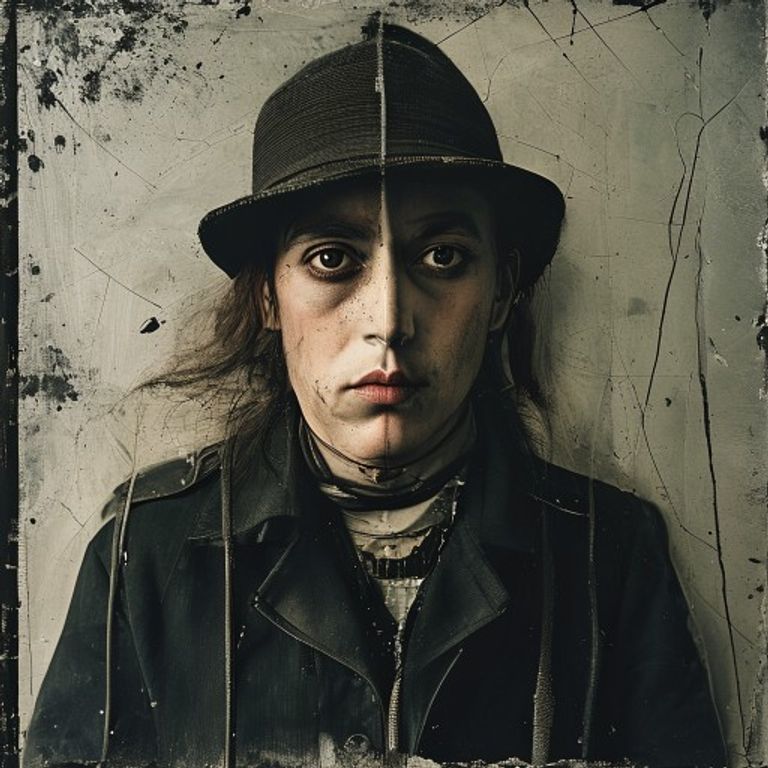
The 1914 assassination of Archduke Franz Ferdinand by a Serbian nationalist, an event that triggered the network of alliances leading to World War I.
⚠️ Research prepared with the aid of Deep Research is subject to referential ambiguity.
🖥️ Clean HTML code using a proprietary tool.
👥 Research by Guilherme Felipe, Curation by Sílvio Lôbo
The Trigger of the Great War: Unraveling the Mystery of the Sarajevo Assassination
On the sunny morning of June 28, 1914, the city of Sarajevo, then part of the Austro-Hungarian Empire, was the stage for a visit that promised to be a spectacle of imperial unity. Archduke Franz Ferdinand, heir to the Austrian throne, was touring the city in an open-top car, accompanied by his wife, Duchess Sophie Chotek. What followed, however, was not a parade of pomp, but the spark for one of the most devastating conflicts in human history: World War I. The assassination, perpetrated by a young Serbian nationalist, cast a veil of mystery and controversy that persists to this day, fueling theories and questions about the true forces behind that fateful event.
1. The Context and the Incident: Where, When, and How the Mystery Began
Sarajevo, in 1914, was a cauldron of ethnic and political tensions. Bosnia and Herzegovina, annexed by the Austro-Hungarian Empire in 1908, housed a diverse population with strong Serbian nationalist sentiments and longings for union with independent Serbia. The visit of Archduke Franz Ferdinand, one day after the important Serbian national date, St. Vitus Day, was seen by many as a provocation.
The assassination plan was orchestrated by a secret group of Serbian nationalists known as the Black Hand (or Ujedinjenje ili Smrt – Union or Death), with branches in Serbia. The goal was to destabilize Austro-Hungarian rule in Bosnia and foster the creation of a Greater Serbia. The attack itself was a series of coordinated attempts that, through a combination of luck, incompetence, and crucial decisions, culminated in macabre success.
2. Timeline of Events
- Morning of June 28, 1914: Archduke Franz Ferdinand and Duchess Sophie arrive in Sarajevo.
- The first assassination attempt occurs near the Miljacka River. One of the conspirators, Nedeljko Čabrinović, throws a bomb at the Archduke's car. The bomb bounces off and explodes under the following car, seriously injuring some officers and bystanders.
- Franz Ferdinand, surprisingly, insists on continuing with the official schedule and heading to the town hall.
- After the speech at the town hall, the Archduke decides to visit the wounded in the hospital.
- Due to a communication error or an unauthorized detour by the driver, the car carrying the Archduke and his wife makes a wrong turn, stopping directly in front of where one of the conspirators, Gavrilo Princip, was standing.
- Gavrilo Princip, seeing the unexpected opportunity, draws his pistol and fires at the couple. The Archduke and the Duchess die shortly after due to their fatal wounds.
- The Austro-Hungarian police begin a frantic investigation, arresting several suspects, including Princip and other members of the Black Hand.
3. The Main Theories
The official Austro-Hungarian investigation, quickly conducted, pointed to the Black Hand as the sole party responsible and to the indirect involvement of the Serbian government through elements of its armed forces and intelligence services. However, over the years, other theories have emerged, attempting to explain the complex intricacies behind the attack:
Official and Police Theory: The Black Hand and the Serbian Connection
This is the widely accepted thesis corroborated by official reports of the time. It is believed that the Black Hand, a secret ultra-nationalist Serbian organization, planned and executed the attack. The Austro-Hungarian government accused the Serbian government of having prior knowledge and, possibly, of having supported the conspirators, although the extent of this involvement has always been a point of contention.
Logic: The existence of fervent Serbian nationalism, the desire for unification with Serbia, and the presence of the Black Hand as an active organization willing to use violence against Austrian rule underpin this theory. The declassification of some archives, while not conclusive, suggests that some low-level Serbian officers may have had knowledge and provided logistical assistance to the conspirators.
Conspiracy Theories: A Game of Greater Powers
Some theories speculate that the Black Hand may have been just a pawn in a larger game, manipulated by foreign powers interested in destabilizing Europe.
- Russia Theory: Russia, an ally of Serbia, allegedly encouraged or tolerated the attack to create a pretext for a conflict with Austria-Hungary, which viewed Austrian expansion in the Balkans with concern.
- Germany Theory: Other hypotheses suggest that Germany, an ally of Austria-Hungary, could have played a role, perhaps to force a quick and decisive war before Russia and France were fully prepared for a large-scale conflict.
- Financial/Occult Elite Theory: More marginal theories point to secret groups with economic or ideological interests in triggering a world war to reconfigure the global political and economic map.
Logic: The context of complex alliances and imperial rivalries in pre-WWI Europe provides fertile ground for these speculations. The speed and escalation of the conflict after the attack led some to question whether it was not just the trigger, but a deliberately provoked event.
Alternative/Paranormal Theories: The Intervention of the Inexplicable
Although they lack any empirical evidence, more exotic theories have emerged, exploring the unusual side.
- Predictions and Prescience: Some authors point to alleged predictions or dreams of future events that preceded the attack, suggesting an element of fatalism or even inexplicable external intervention.
- Synchronicities: Analyses of supposedly "coincidental" events before and during the attack have been interpreted by some as signs of a fated destiny or unconventional influences.
Logic: These theories are based on the idea that the event was so monumental that it transcends conventional explanations, seeking refuge in parapsychological or mystical phenomena. They are, however, the theories least supported by any form of serious investigation.
4. Controversies and Blind Spots
Although the Austro-Hungarian investigation was relatively quick, it was marked by blind spots and controversies that fuel the mystery:
- The Role of the Serbian Secret Service: The connection between the Black Hand and the Serbian government, especially the Military Intelligence Service, was never fully elucidated. Later reports suggest that some officers had knowledge, but the extent of the support and the direct order for the attack to happen remain nebulous. Colonel Dimitrije Ljotić and Major Vojislav Tankosić are frequently mentioned in relation to the supply of weapons and training.
- The Official Investigation: Critics point out that the Austro-Hungarian investigation was rushed, aiming to incriminate Serbia to justify military action. The lack of an independent and thorough investigation on Serbian territory is a point of criticism.
- Lost or Destroyed Evidence: The turbulence of the war that followed inevitably led to the loss or destruction of documents and potential evidence. Archives declassified later shed new light, but also left significant gaps.
- Conflicting Testimonies: As with many large-scale historical events, witness accounts vary in detail, which is understandable given the chaotic nature of the event and the trauma. The interpretation of these testimonies was often shaped by the political agendas of the time.
- Incompetence in Execution and Response: The fact that the attack was planned by a group of young people with limited resources, and that the first attempt failed spectacularly, raises questions about the ability of such a group to orchestrate an event of such magnitude without some form of support or tolerance. Similarly, the decision to change the route of the motorcade to visit the wounded, exposing the Archduke again to the conspirators, seems to have been a grotesque security failure.
5. Curiosities and Legacy
The Sarajevo assassination was not just a historical event; it became a cultural icon and a symbol of how a single act can trigger global consequences.
- The Car and the Pistol: The car used by the Archduke, a Gräf & Stift, and Gavrilo Princip's pistol, an FN Model 1910, became historical relics and objects of fascination. Princip's weapon is on display at the Museum of Military History in Vienna.
- The Assassination as a Catalyst: The subsequent declaration of war by Austria-Hungary against Serbia, triggering the European alliance system, is a grim reminder of the fragility of peace and the ease with which tensions can escalate.
- Current Status: The case, in terms of criminal investigation, was closed with the conviction and execution of some conspirators and the exile of others. However, the historical mystery surrounding the involvement of different nations and organizations remains active. Archives continue to be studied and re-evaluated by historians. There has been no formal reopening of the case in a legal sense, but its historical analysis is continuous.
- Cultural Impact: The attack inspired countless books, films, and documentaries, exploring the lives of the conspirators, the victims, and the complex political webs that led to the war. The figure of Gavrilo Princip, in particular, became an ambiguous symbol, seen by some as a national hero and by others as a terrorist.
The Sarajevo assassination remains a historical enigma wrapped in nationalist passion, political intrigue, and the harsh realities of war. While the basic facts are undeniable, the deeper motivations and the extent of the responsibility of different actors remain a fertile ground for investigation, proving that even after more than a century, the shadows of the past still cast their light on the present.



