


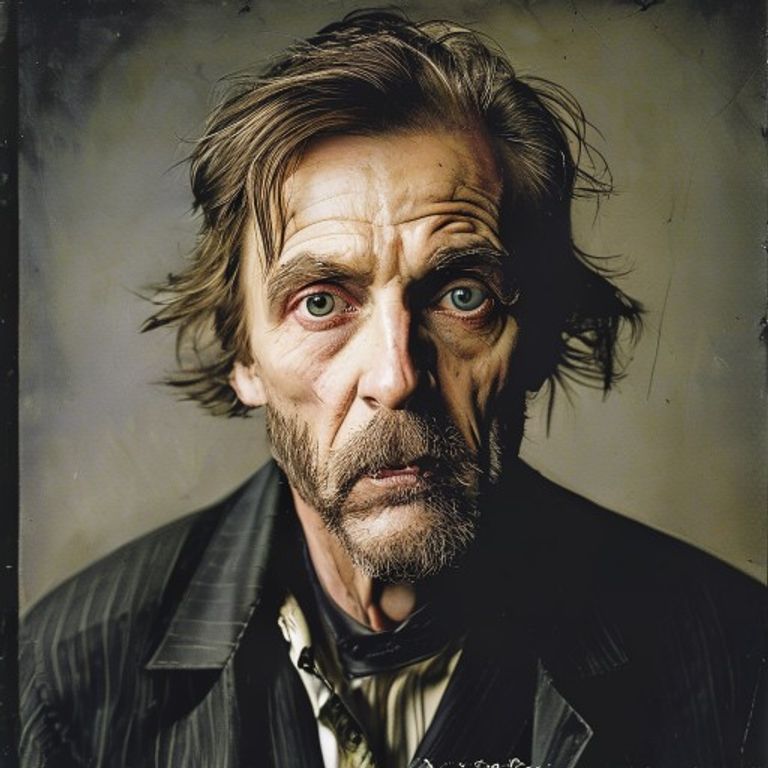
One of the most notorious serial killers in the US, who used his charm to lure and kill dozens of women across several states before being executed in 1989.
⚠️ Research prepared with the aid of Deep Research is subject to referential ambiguity.
🖥️ Clean HTML code using a proprietary tool.
👥 Research by Guilherme Felipe, Curation by Sílvio Lôbo
Ted Bundy: The Shadow of the Smile That Hid a Monster
Amidst the optimistic buzz of the 1970s, a charismatic and seemingly ordinary figure emerged from the darkness, leaving a trail of terror and mystery that would haunt generations. The case of Ted Bundy is not just the story of a serial killer, but a complex puzzle of deception, cold intelligence, and systemic failures that, to this day, leave loose ends and fuel heated debates.
1. The Context and the Incident: Where, When, and How the Mystery Began
Bundy's nightmare, as officially recorded, began to take shape in the early 1970s in disparate locations across the United States. The killer's modus operandi, which involved luring his victims with charm and, often, simulating an injury to ask for help, made him particularly insidious. Initial reports of young women disappearing in areas such as Washington, Oregon, and Utah began to accumulate, but the connection between them took time to be established. At first, authorities dealt with isolated cases, never imagining that a single criminal mind was orchestrating the chaos.
The initial perplexity lay in Bundy's apparent normality. He presented himself as a law student, a Republican political activist, and someone who seemed destined for a promising career. This facade of respectability was his most effective disguise, allowing him to move with impunity for years, confusing the police and terrorizing entire communities. The mystery was not just who the killer was, but how someone with such a public image could be capable of such brutal acts.
2. Timeline of Key Events
- 1974: The year disappearances became alarmingly frequent. Several young women vanished in Washington and Oregon, with police beginning to suspect a pattern.
- 1974 - 1975: Disappearances extended to Utah, Colorado, and Idaho. Victims were generally young women, many of them university students, taken from public places like parks, laundromats, and universities.
- 1975: Ted Bundy is detained in Utah on suspicion of kidnapping. He would become the prime suspect in several disappearance and murder cases.
- 1976: Bundy is tried and convicted in Utah for kidnapping.
- 1977: Bundy escapes custody in Colorado but is recaptured weeks later.
- 1978: A more dramatic escape from a Colorado penitentiary allows Bundy to travel to Florida, where he commits his most notorious attack at the Florida State University sorority house in Tallahassee, killing two young women and violently attacking others.
- 1978: Bundy is arrested again in Pensacola, Florida.
- 1979: Bundy's trial in Miami, Florida, for the murders at Florida State University attracts national and international attention, broadcast live on television.
- 1980: Ted Bundy is sentenced to death.
- 1989: Ted Bundy is executed in the electric chair in Florida.
3. Main Theories
Ted Bundy's mind has always been a fertile field for speculation. Theories about his motivations and methods range from criminal and psychological explanations to the most fantastic ones.
- The Charming and Manipulative Predator Theory (Police and Psychological Hypothesis): This is the most widely accepted theory supported by evidence. It describes Bundy as an individual with above-average intelligence, a master of manipulation and deception. His charisma was his primary weapon, allowing him to approach victims without raising suspicion. The facade of normality was deliberate, masking a deep antisocial personality disorder with traits of psychopathy. Psychiatric reports and Bundy's own behavior in court corroborate this view.
- The "Organized Serial Killer" Theory (Criminal Classification): Based on the characteristics of the crimes, Bundy fits the profile of an "organized serial killer." This implies careful planning, victim selection, the ability to dispose of evidence, and an intelligence that allowed him to avoid capture for so long. He did not act impulsively, but with method, often planning the "hunt" and the concealment of bodies in remote locations.
- The "Psychological Disorder" or "Instability" Theory: Some theories point to moments of apparent instability or "breakdowns" in his behavior, such as the escapes. Although Bundy was calculated, it is possible that the pressure of the investigation or frustration with his "failures" in certain attempts led to bolder and sometimes clumsier acts, such as the escapes themselves.
- Conspiracy Theories (Speculation): Rumors persisted, especially after his death, that Bundy might have had accomplices or that he was not the only one involved in some of the crimes. These theories, however, lack concrete evidence and are often fueled by the very difficulty of believing that a single person could commit so many horrific acts.
- Paranormal or Supernatural Theories (Speculation without Scientific Basis): In cases of mass murderers, it is common for supernatural theories or demonic possession to emerge to explain the inexplicable. While appealing to the popular imagination, these theories have no basis in proven facts or scientific forensics.
4. Controversies and Blind Spots
Despite Bundy's conviction and late confession, the case is far from a closed book for investigators and historians. Several gaps and controversies persist:
- The Exact Number of Victims: Although Bundy confessed to killing 30 women, many investigators and experts believe the real number may be significantly higher. The fact that he operated in several states and that some bodies were never found suggests the official count may be underestimated.
- Ignored or Underestimated Clues: In retrospect, questions arise about whether certain clues could have led to Bundy's arrest sooner. The lack of communication and coordination between different police agencies across various states may have been a significant obstacle.
- Missing or Unused Evidence: In some cases, there were allegations about evidence that was lost or not properly analyzed or presented in court. The nature of the crime, with the concealment of bodies and the lack of direct witnesses in many cases, contributed to this difficulty.
- The Testimony of Carole Ann Boone: Bundy's relationship with Carole Ann Boone, his girlfriend and later wife (they married in court during the trial), is a point of interest and speculation. Her testimony and the dynamics of her relationship with Bundy raise questions about the level of knowledge she might have had regarding his crimes.
- The Role of the Media: The massive and sometimes sensationalist coverage of the case, while essential to maintaining public attention, also raised debates about the influence of the media on judicial processes and the public perception of the defendant.
5. Trivia and Legacy
The case of Ted Bundy transcended the boundaries of police news, becoming a cultural phenomenon that continues to fascinate and frighten:
- The Legacy of the "Smile of Evil": The image of Bundy as an attractive and educated man, capable of committing unspeakable atrocities, challenged preconceived notions about what a serial killer "looks like." This led to a greater understanding of the complexity of psychopathy and the importance of not judging by appearance.
- Impact on Forensic and Investigative Techniques: The magnitude of Bundy's crimes and his ability to move between jurisdictions spurred improvements in interstate collaboration and the use of more advanced forensic techniques, including DNA science, although it was in its infancy at the time.
- Inspiration for Fiction and Documentaries: The Bundy case has inspired countless books, films, TV series, and documentaries, exploring his mind, his crimes, and the impact on his victims and the affected communities.
- Current Status: The case of Ted Bundy is considered officially closed in terms of criminal investigations, with his execution in 1989. However, public and academic interest remains, with new analyses and perspectives constantly emerging, reaffirming his dark place in American criminal history.
Ted Bundy remains a grim reminder of the human capacity for evil, hidden under the mask of normality. His story is a constant warning about the dangers of superficiality and the importance of looking beyond appearances in search of the truth, even when it lies in the darkest depths of the human soul.



