


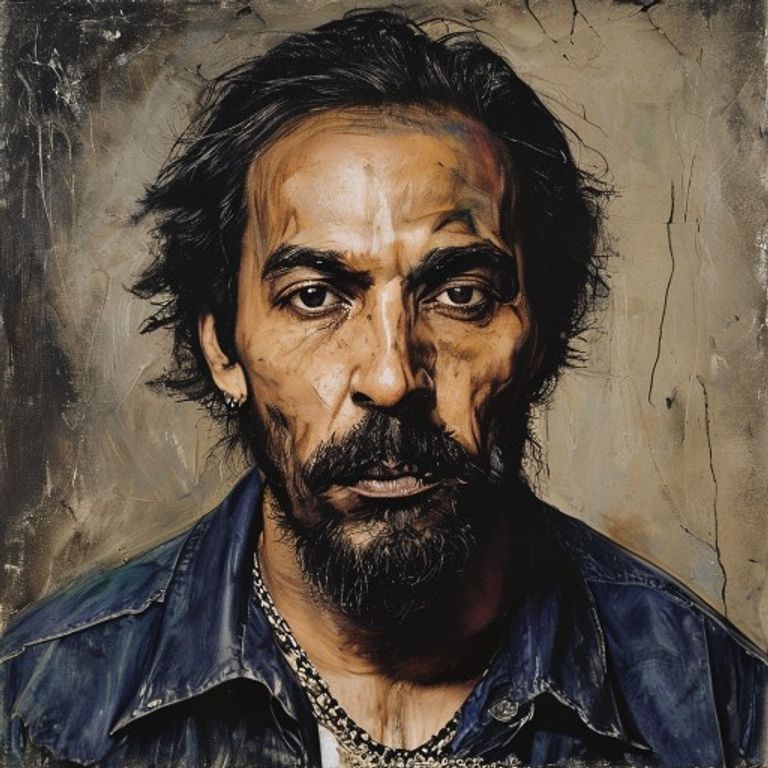
The rap icon was shot in Las Vegas in 1996; after nearly thirty years of mystery, police have made recent arrests, but the mastermind behind the crime remains a subject of debate.
⚠️ Research conducted with the aid of Deep Research is subject to referential ambiguity.
🖥️ Clean HTML code using a proprietary tool.
👥 Research by Guilherme Felipe, Curation by Sílvio Lôbo
The Ghost of the Strip: An Investigation Into the Unsolved Death of Tupac Shakur
Las Vegas, 1996. The neon glow of Sin City hid a mystery that, decades later, still pulses in the shadows of the music industry and the public imagination. The death of Tupac Shakur, one of the greatest icons of global rap, transcends the tragedy of a young and talented artist cut down by violence. It is an intricate puzzle where proven facts blend with persistent speculation, leaving a trail of questions without clear answers.
1. The Context and the Incident: Where, When, and How the Mystery Began
The night of September 7, 1996, would be fateful. Tupac Shakur, then 25, was leaving the boxing match between Mike Tyson and Bruce Seldon at the MGM Grand Garden Arena in Las Vegas. Accompanied by his producer and head of Death Row Records, Suge Knight, Shakur was in his black BMW sedan when he was approached by a white Cadillac containing four unidentified men. What followed was a hail of bullets that would change music history.
The incident occurred around 11:15 PM on the famous Las Vegas Strip. Two shots struck Tupac Shakur in the chest, and others grazed Suge Knight. Shakur was rushed to the University Medical Center, where he fought for his life for nearly a week before succumbing to his injuries on September 13, 1996.
2. Timeline of Key Events
- September 7, 1996, night: Tupac Shakur and Suge Knight attend the Mike Tyson boxing match at the MGM Grand Garden Arena, Las Vegas.
- September 7, 1996, 11:15 PM (approx.): On the way back, Shakur's vehicle is pulled up alongside by a white Cadillac on the Las Vegas Strip. Shots are fired at the vehicle.
- September 7, 1996, 11:20 PM (approx.): Police arrive at the scene. Tupac Shakur is critically wounded.
- September 7, 1996, night: Shakur is transported to the University Medical Center.
- September 13, 1996: Tupac Shakur dies from his injuries.
- Following years: Various police investigations, interrogations, and theories emerge, but the authorship and motives remain obscure.
- 2018: Reports suggest the case may have been reopened or that new evidence was discovered, but without official confirmation.
3. The Main Theories
The lack of a formally indicted culprit and the complex web of rivalries in the 90s rap scene gave rise to a myriad of theories. We present the most prominent ones, separating hypotheses based on concrete evidence from speculation:
Theories Based on Police Investigation and Evidence
- The MGM Grand Lobby Beating Revenge Theory: Shortly before the shooting, Tupac Shakur was involved in a fight in the hotel lobby with Orlando "Baby Lane" Anderson, a member of the Southside Compton Crips gang. It is believed that the shooting was direct retaliation for this incident, with members of Anderson's gang seeking revenge against Shakur and his entourage. This is the strongest official line of investigation, although the identity of the shooters was never definitively established in court.
- The Gang War Theory (East Coast vs. West Coast): The rivalry between Death Row Records (West Coast) and Bad Boy Records (East Coast), led by Christopher "The Notorious B.I.G." Wallace, was at its peak. Although Biggie was murdered about six months later, in March 1997, the theory suggests that the Las Vegas shooting may have been an act of retaliation or an escalation in this broader conflict, possibly orchestrated by figures linked to both labels or their respective fan bases.
Alternative and Conspiracy Theories
- The Suge Knight as Mastermind or Facilitator Theory: Various speculations point to Suge Knight as a central figure. Some suggest he may have planned the attack to get rid of Shakur, who was reportedly planning to leave Death Row Records. Other theories indicate that Knight knew who the shooters were but chose not to cooperate with the police, protecting his own interests or himself from retaliation. His reluctance to fully cooperate with investigations fueled these hypotheses.
- The Escape and Faked Death Theory: One of the most persistent theories, though widely discredited by experts and family members, is that Tupac Shakur faked his own death. Proponents of this theory cite the speed with which he was allegedly cremated, the lack of clear photos of the body, and enigmatic statements by Shakur about his desire to escape life in the spotlight. However, no concrete evidence has ever supported this hypothesis.
- The Las Vegas Police and FBI Involvement Theory: Some conspiracy theories claim that the Las Vegas police and even the FBI may have played a role in covering up the case or even in Shakur's death. These theories are generally based on alleged flaws in the investigation and limited access to official documents by journalists and independent detectives.
4. Controversies and Blind Spots
The official investigation into the death of Tupac Shakur is marked by a series of inconsistencies and blind spots that fuel conspiracy theories:
- Identity of the Shooters: Despite decades of investigation, the precise identity of the shooters and the driver of the white Cadillac has never been officially confirmed in a court of law. Orlando Anderson was considered a key suspect but was never formally charged for the shooting itself, and he died in a separate incident in 1998.
- Lack of Cooperative Witnesses: Many individuals present at the event or linked to Shakur and Knight's circle are reluctant to speak openly to the police, whether out of fear of retaliation or loyalty. This has created a vacuum of crucial information.
- Lost or Ignored Evidence: There have been allegations that some evidence, such as Shakur's own vehicle, was handled improperly or that certain leads were ignored by police early in the investigation.
- Limited Official Reports: Much of the police reports and declassified files on the case remain inaccessible or fragmented, hindering a complete and independent analysis of the actions taken by authorities.
- Suge Knight's Refusal to Cooperate: Suge Knight's silence, especially regarding the identity of the occupants of the white Cadillac, is seen by many as one of the greatest obstacles to resolving the case.
5. Trivia and Legacy
The case of Tupac Shakur's death is not just a criminal mystery, but a cultural phenomenon that continues to reverberate:
- Impact on Music: Shakur's death, along with that of The Notorious B.I.G., marked the end of a controversial era in hip-hop known as the "East Coast-West Coast War" and left an immeasurable void in the musical landscape.
- Posthumous Works: Shakur released more albums after his death than during his lifetime, solidifying his status as a legend and further fueling his legacy and the admiration of his fans.
- Current Status: The case remains officially unsolved. Although there have been times when Las Vegas police indicated the case was active and that new developments could arise, no formal charges have been made regarding the direct shooters. The investigation remains a "cold case," but with a public and media appeal that few unsolved mysteries achieve.
- The Legacy of an Icon: Tupac Shakur became a symbol of struggle, poetry, and rebellion. His music and words continue to inspire millions, while the shadow of his unsolved death hangs as a grim reminder of the fragility of life and the secrets that Sin City tries, in vain, to keep buried.
Until the true perpetrators are brought to justice, or new evidence lifts the veil of mystery, the "Tupac Shakur Death Case" will continue to be one of the most intriguing and painful enigmas in recent history.



