


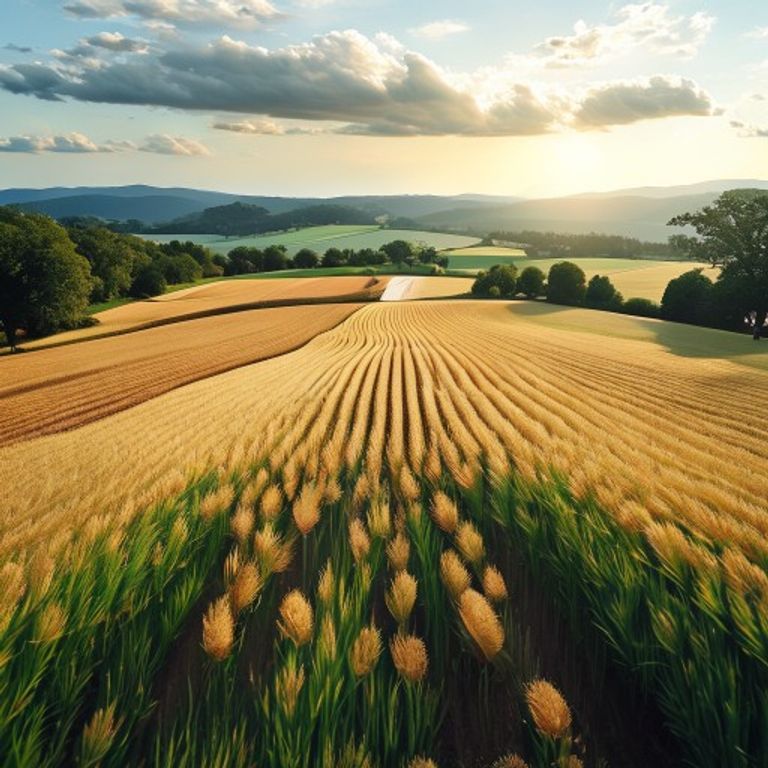
This municipality in the State of Mato Grosso do Sul was home to Manoel de Barros, the poet who 'uninvented' language to sing about the 'small things' of the Pantanal and the purity of simple things.
⚠️ Research elaborated with the aid of Deep Research is subject to referential ambiguity.
🖥️Clean HTML code using a proprietary tool.
👥 Research by Guilherme Felipe, Curation by Sílvio Lôbo
Literature in Campo Grande: Between the Countryside, the Border, and the Metropolis
Campo Grande, the capital of Mato Grosso do Sul, is a city that, despite its relative youth as a consolidated urban center, boasts a rich and multifaceted literary landscape. Situated in the heart of Brazil, at the transition between the Cerrado and the Pantanal, and close to the border with Paraguay and Bolivia, the literature produced in this region reflects the complexity of its cultural identity: an amalgam of indigenous, Pantanal, sertanejo, migrant, and urban influences. Far from being a mere echo of the great literary metropolises, Campo Grande has developed its own voice, marked by the contemplation of nature, the search for a regional identity, and reflection on life on the border and in the constantly expanding city.
Key Voices: Prominent Authors
- Manoel de Barros: Unlearning the Gaze
It is impossible to discuss the literature of Mato Grosso do Sul without paying homage to Manoel de Barros (1916-2015). Although born in Corumbá, his life and work were intrinsically linked to the Pantanal landscape and, for many years, to Campo Grande itself, where he lived and produced much of his poetry. Considered one of the greatest poets in the Portuguese language, Manoel de Barros created a unique universe where "unlearning" things and valuing the minuscule transform language. His poetry, deeply rooted in the observation of nature – insects, frogs, rivers, trees – transcends regionalism to achieve a philosophical universality about life and existence. He deconstructs conventional grammar and logic, inviting the reader to a new way of perceiving the world, an "infancy of words."
- Other Significant Expressions
In addition to the towering figure of Manoel de Barros, the literary scene in Campo Grande is nourished by several other voices that, in different ways, have contributed to the formation and consolidation of the local literary identity:
- Maria da Glória Sá Rosa: Literary critic, university professor, and writer, Sá Rosa is a central figure in the Sul-Mato-Grossense Academy of Letters. Her critical and essayistic work is fundamental to understanding the literary production of the state, while her poetry and prose engage with local memory and landscape.
- Haroldo Corrêa Filho: Poet and chronicler of remarkable sensitivity, Haroldo Corrêa Filho (1942-2023) marked Mato Grosso do Sul poetry with verses that capture the soul of the region, moving between the bucolic and the urban, the melancholic and the hopeful. His work is a poetic record of the life and transformations of Campo Grande and its surroundings.
- Paulo Coelho Machado: Historian and writer, Coelho Machado is the author of extensive works exploring the historical and cultural roots of Mato Grosso do Sul. His books, many of them essayistic and memorialistic, are indispensable sources for understanding the social formation of the region, with a focus on his studies of the Paraguayan War and the history of Campo Grande.
- Ulisses Serra: Poet, chronicler, and journalist, Ulisses Serra (1943-2013) was an important voice in the Campo Grande cultural scene, with a body of work that addresses the city's daily life, the nuances of existence, and keen observation of human beings. His writing is marked by a lyricism that finds beauty in the small things.
- Guilherme de Almeida Marçal: Poet and historian, Marçal is another name that contributes to the rich tapestry of regional literature. His poetic work and historical studies complement each other in exploring the relationship between man and land in Mato Grosso do Sul.
Movements and Themes: The Construction of a Literary Identity
The literature of Campo Grande and Mato Grosso do Sul does not easily fit into strict national movements, developing its own characteristics shaped by local geography, history, and culture.
- Regionalism and the Ever-Present Nature
Regionalism is, without a doubt, one of the driving forces. Not a picturesque and dated regionalism, but one that delves into the existential relationship between man and landscape. The Pantanal and the Cerrado are more than settings; they are characters that shape the language, customs, and worldview of the inhabitants. The vastness of the plains, the richness of biodiversity, and the ancestral wisdom of local communities permeate the works, evoking both the grandeur and fragility of these ecosystems. Nature here is a source of lyricism, but also of critical reflection on human action.
- The Border and Cultural Pluralism
Mato Grosso do Sul's border position with Paraguay and Bolivia, and Brazil's own internal migratory dynamics, have resulted in a cultural melting pot reflected in its literature. Guarani and Spanish influences, the traditions of indigenous peoples, and the arrival of migrants from various parts of Brazil and the world (Japanese, Arabs, Italians, etc.) enrich the narrative, bringing new perspectives and languages. This plurality manifests in the exploration of themes such as displacement, hybrid identity, and cultural shock.
- The Urban and the Modern
With the growth of Campo Grande, literature also turns to the urban experience. The tension between the rural past and the metropolitan present, the challenges of modernity, loneliness in big cities, and the search for meaning in contemporary life become recurring themes. The city, with its contradictions, becomes a stage for narratives that explore the psychology of characters and the social dynamics of the capital of Mato Grosso do Sul.
Publications and Publishing Outlets: Pillars of Dissemination
The consolidation of literature in Campo Grande owes much to dissemination channels and cultural institutions.
- Academies and Institutions
The Sul-Mato-Grossense Academy of Letters (ASL) plays a fundamental role in promoting, preserving, and disseminating the state's literature. Founded in 1978, shortly after the division of Mato Grosso, the ASL brought together and promoted authors, becoming a pillar of the Mato Grosso do Sul literary identity. In addition to it, universities, such as the Federal University of Mato Grosso do Sul (UFMS) and the Catholic University Dom Bosco (UCDB), through their Literature courses, postgraduate programs, and university presses, are important centers for production, research, and publication.
- Publishers and Periodicals
Although Campo Grande does not have the same number of large publishing houses as the centers in the Southeast, the work of local, small, and medium-sized publishers has been and continues to be crucial in giving voice to regional authors. Cultural newspapers and magazines, throughout history, have also played a vital role, with literary supplements that provided space for poems, short stories, chronicles, and essays, contributing to the formation of a reading public and the exchange among writers. Locally produced anthologies and collections are essential for mapping production and discovering new talents.
The Cultural Identity of Campo Grande Reflected in the Work
The literature of Campo Grande is a multifaceted mirror of its cultural identity. It celebrates the tenacity of the Pantanal and Cerrado people, their pragmatic wisdom, and their deep connection to the land. It reflects the subtle melancholy of the vast landscapes and the exuberance of wildlife. At the same time, it does not ignore the tensions of the border, the challenges of urbanization, and the search for a place on the national stage. The influence of indigenous and Paraguayan cultures is evident in linguistic elements, myths, and ways of perceiving the world. There is a constant dialogue between tradition and modernity, between rural and urban, which gives local literature a unique, authentic, and unmistakable flavor. It is a literature that assumes itself as part of an interior Brazil but speaks with its own voice about universal issues.
Conclusion
The literature of Campo Grande and Mato Grosso do Sul is a fertile field, constantly evolving. Far from being marginal, it positions itself as an essential voice for understanding the complexities of a Brazil that pulses beyond the major centers. With Manoel de Barros as its greatest beacon, but with a constellation of talents exploring the richness of its landscape, its people, and its contradictions, the literary production of Campo Grande offers an invitation to reflection and discovery. It is a literature that teaches us to look at the world with the eyes of "unlearning," to value the regional as a path to the universal, and to celebrate diversity as the greatest wealth of our identity.



