


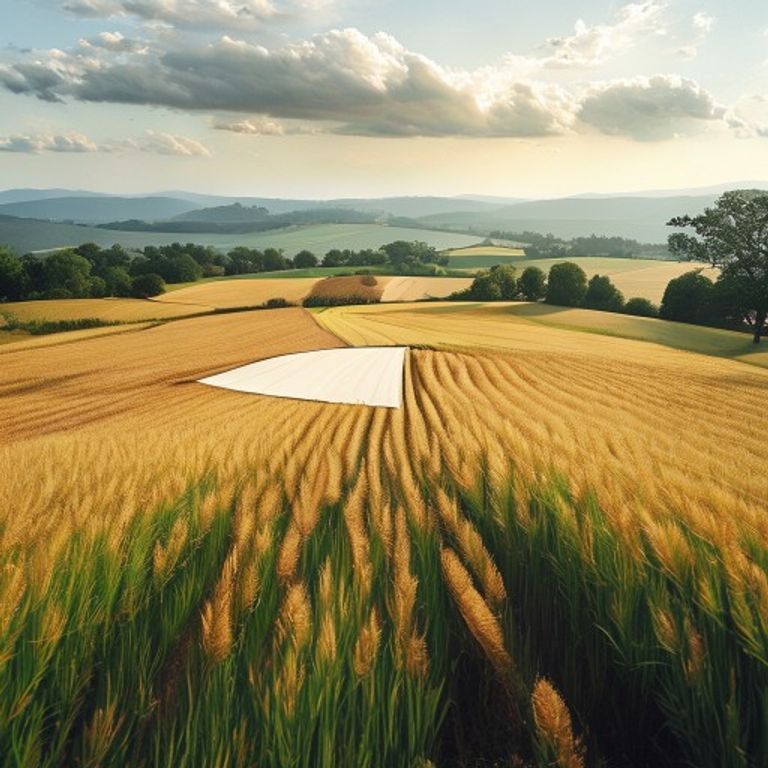
This municipality in the State of Mato Grosso do Sul was home to Manoel de Barros, the poet who "undiscovered" language to sing about the Pantanal, and it is the center of a literary production that unites modernity with regional tradition.
⚠️ Research conducted with the aid of Deep Research is subject to referential ambiguity.
🖥️Clean HTML code using a proprietary tool.
👥 Research by Guilherme Felipe, Curation by Sílvio Lôbo
The Voice of the Land and the River: An Essay on Literature in Campo Grande and Mato Grosso do Sul
Campo Grande, the capital of Mato Grosso do Sul, emerges on the Brazilian literary scene not just as a geographical point, but as an epicenter of voices that echo the richness of a border region, bathed by the rivers of the Pantanal and marked by the confluence of cultures. Literature here is not merely a reflection, but a frame that captures the essence of a "land" and a "river" that shape the identity of its inhabitants. This essay aims to explore the literary landscape of Campo Grande, highlighting its main authors, historical movements, publications, and the profound connection between textual production and local cultural identity.
Prominent Authors: The Heralds of the Mato Grosso do Sul Soul
The literary constellation of Campo Grande and Mato Grosso do Sul is undoubtedly led by Manoel de Barros. Although born in Corumbá, the capital city was his home for much of his life, and his work, which transcends the regional to reach the universal, is the very embodiment of the Pantanal identity. A poet of the minute details, of the "un-beginning" and of "un-importance," Manoel de Barros taught us to see the extraordinary in the ordinary, the science of birds and the philosophy of stones, with an inventive language deeply rooted in the landscape.
Alongside the master, other voices paved the way and continue to enrich this legacy:
- Lobivar Matos: One of the pioneers of literature in the state, his poetry and prose captured the early nuances of local identity, with a keen eye on the region's daily life and challenges.
- Humberto de Carvalho: A poet and intellectual, he contributed significantly to the formation of a literary consciousness in Mato Grosso (before its division) and later in MS.
- Geraldo Roca: With a diverse body of work encompassing poetry, short stories, and novels, Roca explores the history, politics, and social complexities of the border region, with a strong and engaging writing style that sometimes dialogues with magical realism.
- Ruberval Cunha: A poet, essayist, and professor, his work navigates between formal rigor and the search for an authentic expression of the human experience in the region, with a restrained and reflective lyricism.
- Lineu Carlos de Assis: A chronicler and historian, Assis is a bridge between the past and the present, rescuing memories and characters that help weave the state's narrative with humor and sensitivity.
- Maria da Glória Sá Rosa: A poet, essayist, and tireless researcher and literary critic, her work is fundamental in the analysis and dissemination of local production, in addition to her own sensitive and introspective poetry.
- Samuel Medeiros: A poet of the new generation, he brings a contemporary voice, dialoguing with literary heritage and the challenges of the present, with an inventive and imagistic language.
- Ulisses Serra: A poet and journalist, his work stands out for its originality and experimentalism, questioning the boundaries of language.
These and many others — such as Paulo Coelho Machado, Juscelino Mendes, Elizabeth Salomão, and Celso Ricardo — form a rich and multifaceted panorama, where each author contributes a unique texture to the grand tapestry of Mato Grosso do Sul literature.
Movements and Characteristics: The Land that Inspires Writing
Literature in Campo Grande and Mato Grosso do Sul, although not easily classifiable into historically defined national movements, possesses striking characteristics that individualize it and connect it deeply to its context:
- Regionalism and Pantanal Identity: This is the strongest and most distinctive trait. The vastness of the Pantanal, its floods and droughts, its exuberant fauna and flora, the figure of the cowboy, the simplicity of rural life – all of this is transfigured into poetic and narrative language. Nature is not a mere backdrop, but an active character and a source of philosophical inspiration, as so well explored by Manoel de Barros, who elevates it to a universal level.
- Border Literature: Campo Grande is the gateway to the border with Paraguay and Bolivia, a region permeated by cultural flows and exchanges. This condition is reflected in cultural miscegenation, historical conflicts (such as the Paraguayan War), the presence of indigenous languages and "Portunhol," and the narrative of migrations and new identities. Literature addresses the issue of border identity, cultural hybridization, and the geopolitical and human tensions that shape the region.
- Orality and Storytelling: Oral tradition is strong in the region, and many authors incorporate the musicality and spontaneity of speech into their works, whether in poetry or prose. The figure of the "causo" (tale), "legend," and "life story" is central, lending an authentic and engaging tone to the narrative.
- Post-Division Modernism: The division of the state in 1977 spurred a search for a distinct identity for Mato Grosso do Sul, reflected in its literature. Many writers, influenced by Brazilian Modernism, sought a language that was both universal and deeply rooted in the specificities of Mato Grosso do Sul, breaking away from purely descriptive regionalism to achieve a more poetic and symbolic dimension.
- Social and Historical Engagement: There is a significant strand dedicated to recording the state's history, agrarian conflicts, the lives of indigenous peoples, and the social and political construction of the region, often with a tone of denunciation or a rescue of collective memory and human rights.
Relevant Publications: The Pillars of Literary Dissemination
The dissemination of literature in Campo Grande has been supported by institutions and publishers dedicated to giving visibility to local authors, fostering the creation and circulation of works:
- Academia Sul-Mato-Grossense de Letras (ASL): A fundamental institution for preserving literary memory and promoting new talents. ASL organizes events, publishes works by its members, and acts as a unifying hub for intellectuals, serving as a guardian of the local literary tradition.
- Editora UFMS (Federal University of Mato Grosso do Sul Press): Essential for publishing academic works, literary essays, and, at times, fiction and poetry by local authors, contributing significantly to the study and circulation of knowledge and literary production in the state.
- Independent Local Publishers: Publishers such as Letra Livre and Life Editora, among other smaller and independent ones, have played a crucial role in publishing regional authors, often being the first to offer opportunities to new writers and to publish works that would otherwise have difficulty finding a space.
- Literary Supplements and Newspapers: Historically, newspapers such as Correio do Estado and O Estado de Mato Grosso do Sul, as well as defunct or low-circulation cultural magazines, have served as showcases for local poets and chroniclers, publishing their works and fueling literary debate in the capital.
- Anthologies and Collections: Various anthologies have been published, often at the initiative of university professors, ASL itself, or independent groups, bringing together different voices and generations, offering a panorama of the rich and diverse literary production of Mato Grosso do Sul.
The Soul of the Land and Cultural Identity Reflected in Books
The literature of Campo Grande and Mato Grosso do Sul is a profound mirror of the region's cultural identity. It invites us to understand a place where:
- Nature is Master and Character: The Pantanal, the trails of the Cerrado, the imposing Bodoquena mountain range; nature dictates the rhythm of life, inspires philosophy and poetry. The man-nature relationship is symbiotic, one of respect, contemplation, and sometimes confrontation, but always of deep interdependence.
- The Border is a State of Mind: The constant interaction with neighboring cultures (Paraguayan, Bolivian) and with indigenous peoples creates a unique cultural amalgam. This "border" is not just geographical, but mental, reflecting an identity in constant construction, sometimes melancholic, sometimes vibrant, that embraces the multiple and the hybrid.
- Simplicity is Wisdom: The value of small things, the beauty of simple rural life, the "detachment" from grand urban aspirations – all of this is celebrated. It is the philosophy of "less is more," of knowing how to live with the essential, an echo of the wisdom of the Pantanal dweller who finds depth in the everyday.
- Memory and History Shape the Present: Literary narratives often delve into the state's historical roots, from the Paraguayan War, colonization, land struggles, to the division of the state. There is a constant revisiting of the past to understand the present and project the future, giving voice to the silenced and recording significant events.
- Language is a River of Influences: Linguistic regionalism, rural terms, the presence of indigenous and Spanish vocabulary enrich prose and poetry, giving them an unmistakable sound and flavor that celebrate the richness of local speech.
Conclusion: A Look to the Future, Rooted in the Land
Literature in Campo Grande and Mato Grosso do Sul is much more than a collection of works; it is the voice of a people, the breath of a unique landscape, and the pulse of an ever-evolving identity. From the universal lyricism of Manoel de Barros to the engaged narratives of contemporary authors, the local literary production offers a rich and essential panorama for understanding the multiple facets of Brazil. It continues to be fertile ground for new voices that, rooted in the land and bathed by the rivers of its history, promise to continue flourishing and reverberating the soul of Mato Grosso do Sul to the world, reaffirming the importance of art in telling the stories of a land and its people.



