


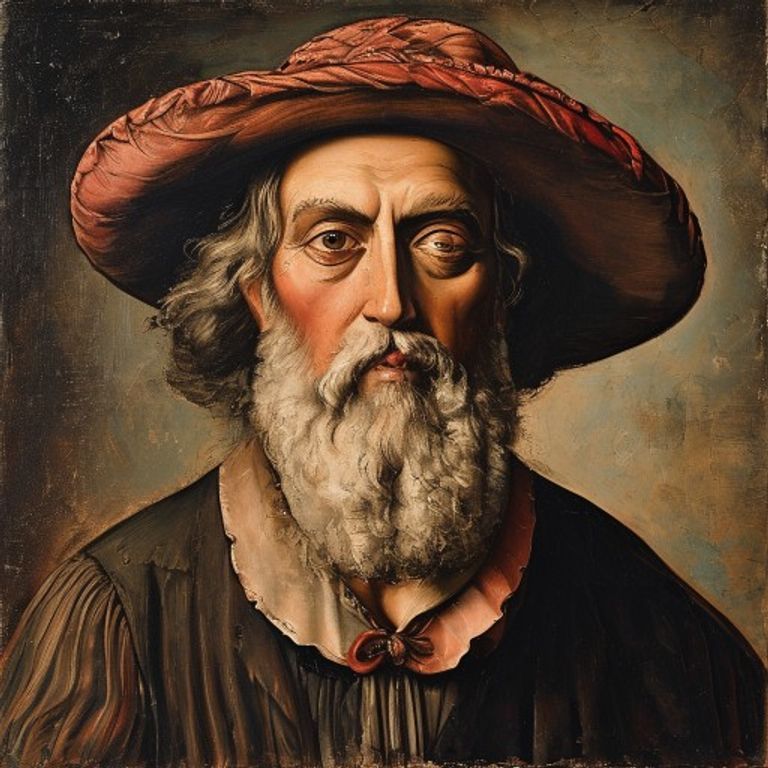
This municipality honors in its name the romantic poet author of 'As Primaveras', whose verses about longing for childhood and homeland are among the most famous and recited in the Portuguese language.
Poetry is a Home: The Literary Scene of Casimiro de Abreu between Longing and Resistance
Casimiro de Abreu, in the Lakes Region of Rio de Janeiro, carries a unique poetic burden: it is the only Brazilian city named in honor of a poet. Before becoming a municipality, it was the district of Barra de São João, where the boy Casimiro José Marques de Abreu lived his "dawn of life." Today, the city breathes literature out of a duty of memory and, more than that, out of a silent effervescence that springs from literary gatherings, municipal plans, and independent publishers.
Unlike large centers, where literature often surrenders to the market, Casimiro de Abreu builds its literary scene as a political act of cultural resistance. Here, the word is not a product – it is heritage and insurgency.
1. Roots and Tradition: The Boy of the Springs
The entire literary history of Casimiro de Abreu inevitably begins with the poet who gave it his name. Casimiro José Marques de Abreu was born on January 4, 1839, at Fazenda da Prata, in Barra de São João, then a district of Cabo Frio. His life was brief and intense: at 13, against his poetic vocation, he was sent by his father to Rio de Janeiro to work in commerce – an activity he hated. At 14, he went to Portugal, where he found the intellectual environment he lacked and wrote most of his work.
In 1859, funded by his father – who disapproved of his son's literary vocation – he published "As Primaveras", his only book during his lifetime. The work consecrated verses that would become the most famous in Brazilian poetry:
"Oh! how I long
For the dawn of my life,
For my dear childhood
That the years bring no more!"
At 21, a victim of the tuberculosis that plagued ultra-romantic poets, Casimiro died at the Indaiaçu farm, where the city that bears his name now stands. He was buried in the Chapel of São João Batista, in Barra de São João, according to his wish.
His importance to Brazilian literature is undeniable: he belonged to the second generation of Romanticism (ultra-romanticism), was a friend of Machado de Assis, and patron of chair no. 6 of the Brazilian Academy of Letters. Literary critic Antonio Candido and poet Carlos Drummond de Andrade dedicated essays to his work, and José Veríssimo consecrated him as one of the most popular poets of the 19th century.
But Casimiro's legacy is not limited to books. He left the city a silent challenge: to live up to a name that is, in itself, synonymous with poetry.
2. The Contemporary Scene: Public Funding and Literary Gatherings as Trenches
If tradition is heavy, the response of contemporary Casimiro de Abreu has been surprisingly light and effective. The major recent milestone for local literature is the Municipal Plan for Books, Reading, Literature, and Public and Community Libraries, sanctioned by Municipal Law no. 2420, of March 8, 2024. This plan places the city at the forefront of the Lakes Region: it is the first municipality in the Litorâneas Lowlands to build public policies for books with active participation from civil society and full support from the public sector.
The plan was gestated at the 1st Seminar of the Municipal Plan for Books, held in April 2022 at the Cineteatro Meus Oito Anos. The event featured speakers such as Renata Costa (former executive secretary of the National Plan for Books and Reading), Maria Chocolate, and Natália Reis – figures from the "Weaving a Reading Network" movement – and was mediated by Adriana Izidoro, manager of the Casimiro de Abreu Reading House – Leitura Viva Project.
Adriana Izidoro emerges as one of the main articulators of the local literary scene. It was her speech that synthesized the spirit of the plan: "It is not enough to have the Law; now civil society must understand that for it to work, it is necessary to follow what is stated in the Plan."
Literary Gatherings: The Pulsating Heart
The spearhead of living literature in Casimiro de Abreu are the literary gatherings. The main one is the Sarau do Poeta (Poet's Gathering), held at the Casimiro de Abreu House Museum, in Barra de São João. Under the direction of Cristiano Pereira, the museum has been transformed into a radiating center of culture, opening its doors to local writers and those from neighboring cities.
The Sarau da Lei (Law Gathering), held in April 2024 to celebrate the sanction of the Municipal Plan for Books, brought together writers, poets, musicians, dance groups (such as the Amlid Dance School, with belly and gypsy dance), storytellers, and the musical group Sopros e Cordas. The event also had a tent for book sales and an exhibition of works by local authors.
Among the writers who actively participate in these gatherings are names that reveal the diversity of the scene:
-
Renato Fulgoni: writer and editor of Aldeia Editora (based in São Pedro da Aldeia, but with strong activity in Casimiro de Abreu). He launched the new edition of the children's book "Tom and His Adventures in Casimiro de Abreu" during the Sarau do Poeta in June 2024. The work gained new colorful layout and updated illustrations.
-
Manuel Filho: local author who launched the book "Prisoners in the Library" during the 1st Seminar of the Municipal Plan for Books.
-
Rosana Silva, Ana Carolina Moreira, Isac Machado de Moura, Maura Pontes: recurring names in the gatherings, representing poetry and prose by female and male authors in the region.
-
Remy Gilliet: musician and poet who is part of the local scene, blending sound and word.
The Academy and Institutions
There is also an institutionalization of literary production through the Casimirense Academy of Letters (ACALE). Although search results do not provide the names of its members, ACALE's presence at official events indicates that the city maintains a structure for valuing local intellectual production, in the mold of traditional academies, but with a contemporary outlook.
3. Themes and Works: The Longing that Became Action
If Casimiro de Abreu (the poet) immortalized longing and childhood as his main themes, the writers of Casimiro de Abreu (the city) have expanded this spectrum. The predominant themes in contemporary local production reflect a dialogue between romantic heritage and the urgencies of the present.
Children's Literature and the Rescue of Local Memory
The most emblematic work of the new generation is "Tom and His Adventures in Casimiro de Abreu" by Renato Fulgoni. The book moves within children's literature with a clear purpose: to introduce the city's geography, history, and affections to new generations. It is a literature of belonging, which transforms the urban space into a fantasy setting.
Poetry and Orality: The Literary Gathering as a Genre
Local poetry is essentially performative. Authors like Rosana Silva and Maura Pontes recite verses that speak of daily life, affective relationships, and the very experience of being a writer in a small town. The literary gathering is not just a place for dissemination – it is, in itself, the predominant literary format: a poetry that is only complete in voice and encounter.
Academic and Research Production
There is also a vein of technical and historical literature, represented by works such as "Prisoners in the Library" by Manuel Filho. The book, launched at the municipal plan seminar, suggests a dialogue between literature and policies for access to reading – a fiction that reflects on the literary creation itself and its place in institutions.
Emerging Themes
The analysis of events and participating authors allows us to identify some recurring thematic lines:
| Theme | Authors/Examples | Characteristics |
|---|---|---|
| Childhood and local memory | Renato Fulgoni ("Tom and His Adventures") | Children's literature that rescues the city's spaces and affections |
| Performative poetry | Rosana Silva, Maura Pontes, Isac Machado de Moura | Verses for recitation at literary gatherings; themes of daily life and affectivity |
| Reflective fiction | Manuel Filho ("Prisoners in the Library") | Narratives that problematize the role of reading and libraries |
| Music and word | Remy Gilliet | Fusion of poetry and musical performance |
4. Conclusion: A City Writing its Future
Casimiro de Abreu could have settled in the shadow of the poet who named it. It could have reduced its literary life to plaques, statues, and the nostalgic cult of "Meus Oito Anos." Instead, it chose the more difficult and beautiful path: that of action.
The sanction of the Municipal Plan for Books in 2024 is a milestone not only for the city but for the entire Lakes Region. It demonstrates that it is possible to build public cultural policies with popular participation, support from the executive branch, and, above all, with the energy of articulators like Adriana Izidoro.
The literary gatherings at the Casimiro de Abreu House Museum, under the direction of Cristiano Pereira, are proof that literature is not a кабинет practice but a collective celebration. By opening its doors to writers like Renato Fulgoni, Manuel Filho, Rosana Silva, and many others, the museum reinvents itself as a living space – a home where poetry is not kept in display cases but recited aloud.
The greatest legacy of Casimiro de Abreu (the poet) was transforming longing into art. The greatest legacy of Casimiro de Abreu (the city) is transforming this heritage into public policy, into literary gatherings, into colorful children's books, and into encounters. Literature, here, is not the past. It is a project for the future.
Sources consulted:
Casimiro de Abreu City Hall (casimirodeabreu.rj.gov.br), Casimiro de Abreu Cultural Foundation (culturacasimiro.rj.gov.br), Renato Fulgoni Writer's Blog, Wikipedia, Itaú Cultural Encyclopedia, Brasil Escola, InfoEscola, Infopédia, G1 Região dos Lagos.
This municipality honors in its name the romantic poet author of 'As Primaveras', whose verses about longing for childhood and homeland are among the most famous and recited in the Portuguese language.
Poetry is a Home: The Literary Scene of Casimiro de Abreu between Longing and Resistance
Casimiro de Abreu, in the Lakes Region of Rio de Janeiro, carries a unique poetic burden: it is the only Brazilian city named in honor of a poet. Before becoming a municipality, it was the district of Barra de São João, where the boy Casimiro José Marques de Abreu lived his "dawn of life." Today, the city breathes literature out of a duty of memory and, more than that, out of a silent effervescence that springs from literary gatherings, municipal plans, and independent publishers.
Unlike large centers, where literature often surrenders to the market, Casimiro de Abreu builds its literary scene as a political act of cultural resistance. Here, the word is not a product – it is heritage and insurgency.
1. Roots and Tradition: The Boy of the Springs
The entire literary history of Casimiro de Abreu inevitably begins with the poet who gave it his name. Casimiro José Marques de Abreu was born on January 4, 1839, at Fazenda da Prata, in Barra de São João, then a district of Cabo Frio. His life was brief and intense: at 13, against his poetic vocation, he was sent by his father to Rio de Janeiro to work in commerce – an activity he hated. At 14, he went to Portugal, where he found the intellectual environment he lacked and wrote most of his work.
In 1859, funded by his father – who disapproved of his son's literary vocation – he published "As Primaveras", his only book during his lifetime. The work consecrated verses that would become the most famous in Brazilian poetry:
"Oh! how I long
For the dawn of my life,
For my dear childhood
That the years bring no more!"
At 21, a victim of the tuberculosis that plagued ultra-romantic poets, Casimiro died at the Indaiaçu farm, where the city that bears his name now stands. He was buried in the Chapel of São João Batista, in Barra de São João, according to his wish.
His importance to Brazilian literature is undeniable: he belonged to the second generation of Romanticism (ultra-romanticism), was a friend of Machado de Assis, and patron of chair no. 6 of the Brazilian Academy of Letters. Literary critic Antonio Candido and poet Carlos Drummond de Andrade dedicated essays to his work, and José Veríssimo consecrated him as one of the most popular poets of the 19th century.
But Casimiro's legacy is not limited to books. He left the city a silent challenge: to live up to a name that is, in itself, synonymous with poetry.
2. The Contemporary Scene: Public Funding and Literary Gatherings as Trenches
If tradition is heavy, the response of contemporary Casimiro de Abreu has been surprisingly light and effective. The major recent milestone for local literature is the Municipal Plan for Books, Reading, Literature, and Public and Community Libraries, sanctioned by Municipal Law no. 2420, of March 8, 2024. This plan places the city at the forefront of the Lakes Region: it is the first municipality in the Litorâneas Lowlands to build public policies for books with active participation from civil society and full support from the public sector.
The plan was gestated at the 1st Seminar of the Municipal Plan for Books, held in April 2022 at the Cineteatro Meus Oito Anos. The event featured speakers such as Renata Costa (former executive secretary of the National Plan for Books and Reading), Maria Chocolate, and Natália Reis – figures from the "Weaving a Reading Network" movement – and was mediated by Adriana Izidoro, manager of the Casimiro de Abreu Reading House – Leitura Viva Project.
Adriana Izidoro emerges as one of the main articulators of the local literary scene. It was her speech that synthesized the spirit of the plan: "It is not enough to have the Law; now civil society must understand that for it to work, it is necessary to follow what is stated in the Plan."
Literary Gatherings: The Pulsating Heart
The spearhead of living literature in Casimiro de Abreu are the literary gatherings. The main one is the Sarau do Poeta (Poet's Gathering), held at the Casimiro de Abreu House Museum, in Barra de São João. Under the direction of Cristiano Pereira, the museum has been transformed into a radiating center of culture, opening its doors to local writers and those from neighboring cities.
The Sarau da Lei (Law Gathering), held in April 2024 to celebrate the sanction of the Municipal Plan for Books, brought together writers, poets, musicians, dance groups (such as the Amlid Dance School, with belly and gypsy dance), storytellers, and the musical group Sopros e Cordas. The event also had a tent for book sales and an exhibition of works by local authors.
Among the writers who actively participate in these gatherings are names that reveal the diversity of the scene:
-
Renato Fulgoni: writer and editor of Aldeia Editora (based in São Pedro da Aldeia, but with strong activity in Casimiro de Abreu). He launched the new edition of the children's book "Tom and His Adventures in Casimiro de Abreu" during the Sarau do Poeta in June 2024. The work gained new colorful layout and updated illustrations.
-
Manuel Filho: local author who launched the book "Prisoners in the Library" during the 1st Seminar of the Municipal Plan for Books.
-
Rosana Silva, Ana Carolina Moreira, Isac Machado de Moura, Maura Pontes: recurring names in the gatherings, representing poetry and prose by female and male authors in the region.
-
Remy Gilliet: musician and poet who is part of the local scene, blending sound and word.
The Academy and Institutions
There is also an institutionalization of literary production through the Casimirense Academy of Letters (ACALE). Although search results do not provide the names of its members, ACALE's presence at official events indicates that the city maintains a structure for valuing local intellectual production, in the mold of traditional academies, but with a contemporary outlook.
3. Themes and Works: The Longing that Became Action
If Casimiro de Abreu (the poet) immortalized longing and childhood as his main themes, the writers of Casimiro de Abreu (the city) have expanded this spectrum. The predominant themes in contemporary local production reflect a dialogue between romantic heritage and the urgencies of the present.
Children's Literature and the Rescue of Local Memory
The most emblematic work of the new generation is "Tom and His Adventures in Casimiro de Abreu" by Renato Fulgoni. The book moves within children's literature with a clear purpose: to introduce the city's geography, history, and affections to new generations. It is a literature of belonging, which transforms the urban space into a fantasy setting.
Poetry and Orality: The Literary Gathering as a Genre
Local poetry is essentially performative. Authors like Rosana Silva and Maura Pontes recite verses that speak of daily life, affective relationships, and the very experience of being a writer in a small town. The literary gathering is not just a place for dissemination – it is, in itself, the predominant literary format: a poetry that is only complete in voice and encounter.
Academic and Research Production
There is also a vein of technical and historical literature, represented by works such as "Prisoners in the Library" by Manuel Filho. The book, launched at the municipal plan seminar, suggests a dialogue between literature and policies for access to reading – a fiction that reflects on the literary creation itself and its place in institutions.
Emerging Themes
The analysis of events and participating authors allows us to identify some recurring thematic lines:
| Theme | Authors/Examples | Characteristics |
|---|---|---|
| Childhood and local memory | Renato Fulgoni ("Tom and His Adventures") | Children's literature that rescues the city's spaces and affections |
| Performative poetry | Rosana Silva, Maura Pontes, Isac Machado de Moura | Verses for recitation at literary gatherings; themes of daily life and affectivity |
| Reflective fiction | Manuel Filho ("Prisoners in the Library") | Narratives that problematize the role of reading and libraries |
| Music and word | Remy Gilliet | Fusion of poetry and musical performance |
4. Conclusion: A City Writing its Future
Casimiro de Abreu could have settled in the shadow of the poet who named it. It could have reduced its literary life to plaques, statues, and the nostalgic cult of "Meus Oito Anos." Instead, it chose the more difficult and beautiful path: that of action.
The sanction of the Municipal Plan for Books in 2024 is a milestone not only for the city but for the entire Lakes Region. It demonstrates that it is possible to build public cultural policies with popular participation, support from the executive branch, and, above all, with the energy of articulators like Adriana Izidoro.
The literary gatherings at the Casimiro de Abreu House Museum, under the direction of Cristiano Pereira, are proof that literature is not a кабинет practice but a collective celebration. By opening its doors to writers like Renato Fulgoni, Manuel Filho, Rosana Silva, and many others, the museum reinvents itself as a living space – a home where poetry is not kept in display cases but recited aloud.
The greatest legacy of Casimiro de Abreu (the poet) was transforming longing into art. The greatest legacy of Casimiro de Abreu (the city) is transforming this heritage into public policy, into literary gatherings, into colorful children's books, and into encounters. Literature, here, is not the past. It is a project for the future.
Sources consulted:
Casimiro de Abreu City Hall (casimirodeabreu.rj.gov.br), Casimiro de Abreu Cultural Foundation (culturacasimiro.rj.gov.br), Renato Fulgoni Writer's Blog, Wikipedia, Itaú Cultural Encyclopedia, Brasil Escola, InfoEscola, Infopédia, G1 Região dos Lagos.



