


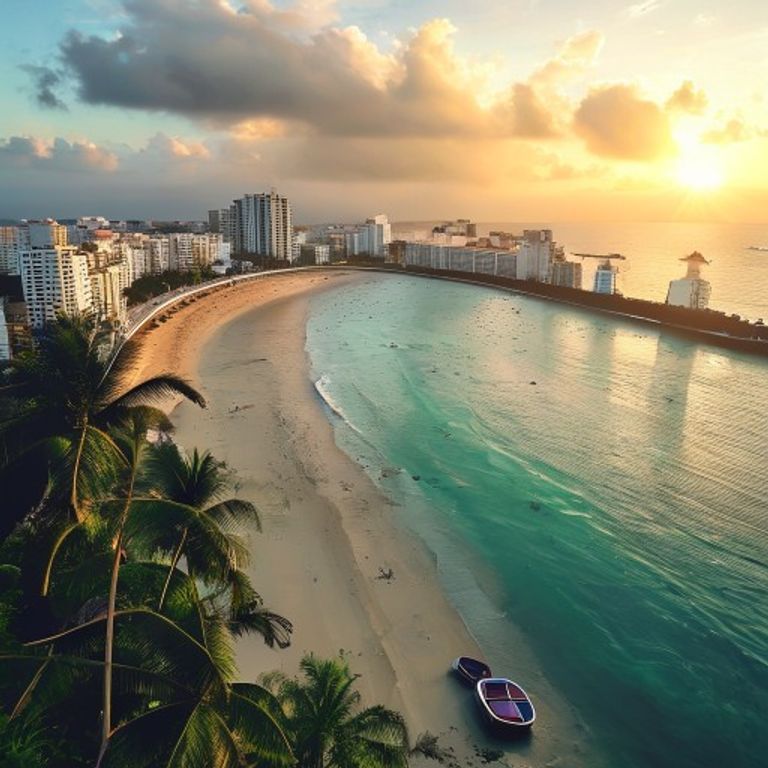
This municipality in the State of Pernambuco is the land of Manuel Bandeira, João Cabral de Melo Neto, and Clarice Lispector, in addition to being the soil where Ariano Suassuna founded the Armorial Movement to value popular roots.
⚠️ Research elaborated with the aid of Deep Research is subject to referential ambiguity.
🖥️Clean HTML code using a proprietary tool.
👥 Research by Guilherme Felipe, Curation by Sílvio Lôbo
Recife (2): A Vibrant Literary Mosaic in Pernambuco
The city of Recife, capital of Pernambuco, boasts a rich and multifaceted literary tradition that spans centuries and solidifies it as one of the most vibrant cultural centers in Northeast Brazil. Far from static homogeneity, Recife's literary production is a constantly transforming mosaic, shaped by the historical, social, and geographical specificities of the region. This essay aims to unveil the contours of this literary identity, exploring its main authors, movements, publications, and how the city is reflected in its pages.
Key Authors and Their Recife Roots
The list of authors born in or deeply connected to Recife is extensive and spans generations, each contributing with their unique vision to the literary landscape.
- Manuel Bandeira: Although his work transcends borders, the poet, who resided in Recife for many years and whose family has strong ties to the city, is a seminal figure. His verses, marked by melancholy, apparent simplicity, and profound humanity, frequently evoke landscapes and feelings that refer to his Pernambucan childhood and youth.
- Clarice Lispector: Born in Ukraine but raised in Pernambuco, Clarice became one of the most important voices in Brazilian literature. Her introspective, existential, and innovative work, with a strong influence from the Recife environment in her early formation, explores the human soul with unparalleled depth.
- Ariano Suassuna: One of the most prominent Brazilian intellectuals and playwrights, Suassuna is synonymous with Pernambuco. His work, deeply rooted in the Northeastern popular imagination, sertanejo culture, and orality, celebrates popular culture, humor, religiosity, and the bravery of the people. Plays like "O Auto da Compadecida" are unquestionable milestones.
- Carlos Pena Filho: A poet and professor, Pena Filho is a fundamental name in contemporary Recife poetry. His work, often linked to daily life, social criticism, and formal experimentation, established an important dialogue with the city's literary tradition.
- Ferreira Gullar: Despite his vast work covering different phases and themes, the poet and art critic maintained a strong connection with the Northeast and Recife, where he lived for a period. His reflections on art and society resonate with the cultural effervescence of Pernambuco.
Movements and Publications that Shaped the Scene
Throughout its history, Recife has witnessed the flourishing of literary movements and the emergence of publications that were essential for the dissemination and consolidation of intellectual production.
- The Generation of 1922 and Modernism in Pernambuco: Although the epicenter of modernism was São Paulo, Recife was not oblivious to new aesthetic proposals. Authors like Manuel Bandeira, even from afar, dialogued with the avant-garde. Publications like the magazine "Revista Universitária" were important spaces for debate and dissemination.
- The Experimental Theater of Recife (TER): Founded in 1954, TER, with strong leadership from Ariano Suassuna, revolutionized Brazilian theater. Its dramatic production, intrinsically linked to Pernambucan cultural identity, influenced not only theater but also prose and poetry literature.
- Independent Publications and Cooperatives: Throughout the decades, literary production in Recife has been marked by the strong presence of independent initiatives and publishing cooperatives, which seek to overcome publication difficulties and promote local authors. Literary magazines, anthologies, and independent imprints are fundamental in this process.
- Post-64 Literature: After the military coup of 1964, Recife, like other Northeastern capitals, saw the emergence of literature that, in many cases, addressed repression, censorship, and the search for new forms of expression, often veiled.
Recife's Cultural Identity Reflected in Literature
The soul of Recife, with its history marked by colonization, miscegenation, social struggles, and the richness of its folklore, finds a faithful mirror in the literary works produced within its bounds.
- Orality and Popular Imagination: The strength of orality, present in Recife's daily life, permeates the work of authors like Ariano Suassuna, who rescues and values the universe of storytellers, improvisers, and local legends. The world of cordel literature, with its epic narratives and charismatic characters, is also an inexhaustible source of inspiration.
- The City and its Landscape: The streets, rivers, bridges, the sea, and the city's architecture frequently materialize on the pages of books. Recife's unique atmosphere, with its heat, colors, and vibrant ambiance, is sensitively described by many authors, making the city a character in itself.
- Social Struggles and Diversity: Recife's literature does not shy away from addressing the city's social complexities, inequalities, conflicts, and rich cultural diversity. African, indigenous, and European influences, life in communities, and class issues are recurring themes.
- Humor and Melancholy: The duality between contagious humor, present in popular culture, and a often subtle and profound melancholy, which characterizes part of the literary production, is a distinctive mark of Recife's literature.
In summary, literature in Recife (2) is a living testament to the vibrant Pernambucan cultural identity. It is a production that, far from being confined to rigid labels, constantly reinvents itself, dialoguing with the past, interpreting the present, and projecting the infinite possibilities of its rich literary heritage.



