


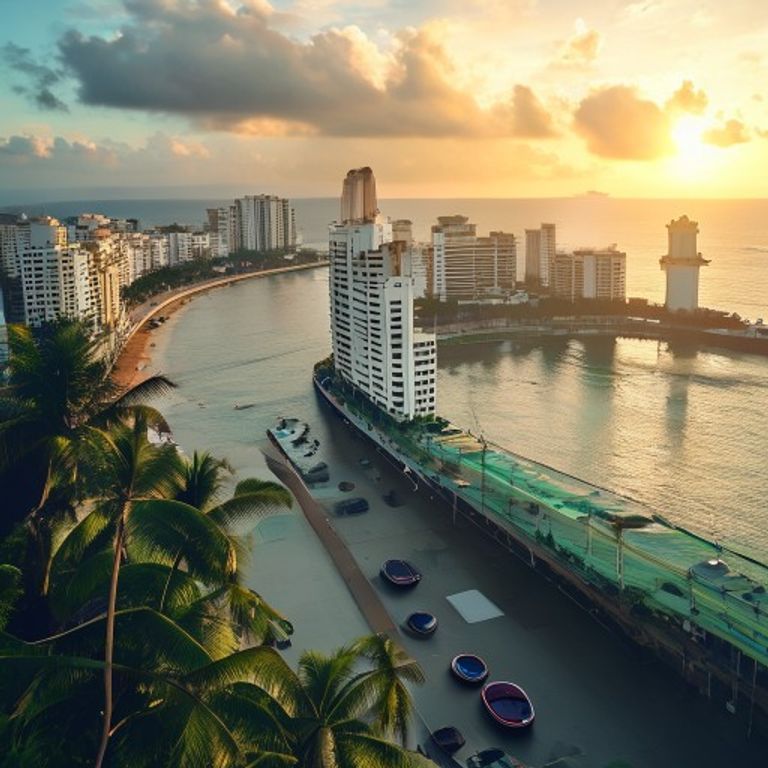
This municipality in the State of Pernambuco is the land of Manuel Bandeira and João Cabral de Melo Neto, and was also the ground where Ariano Suassuna founded the Armorial Movement, exalting Northeastern culture.
⚠️ Research elaborated with the aid of Deep Research is subject to referential ambiguity.
🖥️Clean HTML code using a proprietary tool.
👥 Research by Guilherme Felipe, Curation by Sílvio Lôbo
Introduction: The Port of Letters and Cultural Effervescence
Recife, the capital of Pernambuco, emerges on the Brazilian literary scene as a true port of ideas and a cultural melting pot, whose historical and social effervescence is indelibly reflected in its written production. From the first breaths of Colonial Brazil, through the liberation movements and modernity, the city has been a cradle and refuge for a pleiad of talents who knew how to translate the complexity of its people, landscape, and memory into works of profound impact. This essay seeks to unravel the layers of Recife's literature, exploring its most prominent authors, the movements that shaped it, the publications that disseminated it, and, crucially, how local cultural identity is woven into the fabric of its narratives and poems.
Fundamental Voices: Authors Who Shaped Recife's Literary Identity
Recife's literature is multifaceted, embracing lyrical poetry, essayistic prose, engaged drama, and sharp short stories. Among the most outstanding names, some have become pillars of Brazilian literature:
- Manuel Bandeira (1886-1968): Although he lived most of his life in Rio de Janeiro, Bandeira was born in Recife, and the city of his childhood remains a poetic ghost in his work. The affective memory of old Recife, its streets, its people, and the sea, permeates poems like "Evocação do Recife" (Evocation of Recife), transfiguring his hometown into a mythical and inaugural space of his sensibility. His poetry, which evolved from Parnassianism to Modernism, always carried the mark of deep subjectivity and a search for the essence of things.
- Gilberto Freyre (1900-1987): More than a sociologist, Freyre was a writer of singular prose, whose work profoundly influenced Brazil's self-image. A native of Recife by birth and conviction, Freyre analyzed the formation of Brazilian society from the perspective of the Pernambucan plantation house (casa-grande) and slave quarters (senzala). His works, notably Casa-Grande & Senzala (The Masters and the Slaves), Sobrados e Mocambos (Mansions and Slums), and Ordem e Progresso (Order and Progress), are true literary panoramas that, with rich and sensory language, unveil miscegenation and cultural syncretism as keys to understanding national identity. His research, rooted in local experience, transcended geographical and disciplinary boundaries.
- João Cabral de Melo Neto (1920-1999): Born in Recife, Cabral is one of the greatest poets in the Portuguese language, known for his dry, objective, and constructivist poetry. His work, which departs from confessional lyricism in pursuit of almost architectural precision, is profoundly marked by the landscape and social issues of the Northeast. Morte e Vida Severina (Death and Life of a Severino), his popular Christmas play, is a timeless allegory about drought, misery, and the resilience of the sertanejo people, with the Capibaribe River, which flows through Recife, as one of the settings for the journey.
- Ariano Suassuna (1927-2014): Although born in Paraíba, Suassuna settled in Recife and became one of the most fervent defenders and creators of genuinely Northeastern and Brazilian art. His work, encompassing theater, novels, and poetry, is the quintessence of the Armorial Movement, which he conceived. Plays like Auto da Compadecida (A Dog's Will) and novels like Romance d'A Pedra do Reino e o Príncipe do Sangue do Vai-e-Volta (The Saga of the Stone Kingdom and the Prince of Blood of the Come-and-Go) delve into the world of cordel literature, mamulengo (puppet theater), and popular traditions, creating an epic imaginary deeply rooted in sertanejo culture.
- Ascenso Ferreira (1895-1965): A poet who sang the streets, rivers, "cocos" (a type of folk song), and "embolos" (a fast-paced folk musical form) of Recife and Pernambuco. His poetry, with strong orality and musicality, celebrates daily life, popular festivals, and the region's "cabocla" (mixed-race, rural) identity, with a lyricism that approaches the vernacular and popular spontaneity.
- Raimundo Carrero (1947-): A prominent contemporary novelist, Carrero is a voice that delves into the fantastic, the grotesque, and the depths of the human soul, often setting his stories in a mythical and timeless Northeast. His dense prose, which incorporates elements of magical realism, explores themes such as desire, violence, and popular religiosity in works like As Sete Pontas do Iceberg (The Seven Tips of the Iceberg) and Somos Pedras que se Consomem (We Are Stones That Consume Themselves).
- Marcelino Freire (1967-): A representative of vibrant contemporary literature, Marcelino Freire is a short story writer acclaimed for his visceral and urban writing. His short narratives, often brutal and with a strong social and sexual charge, explore the margins of society, the contradictions of modern Recife, and identities in flux, as seen in Contos de Amor Sujo (Dirty Love Stories) and Nossos Ossos (Our Bones).
Literary Movements and Intellectual Circles
Recife's literature is defined not only by individual authors but also by movements and circles that catalyzed production and debate:
- Modernism and Northeastern Regionalism: Recife was one of the effervescent poles of Brazilian Modernism in the 1920s, with intellectuals such as Gilberto Freyre, Cícero Dias, Osório Borba, and Joaquim Cardozo. This regionalist modernism sought its own language and themes rooted in the particularities of the Northeast, moving away from European mimetism and the exclusive focus on the Rio-São Paulo axis. The valorization of cultural roots, miscegenation, and the region's social problems was central.
- The 1945 Generation and Post-Modernist Poetry: Although the "1945 Generation" is a national label, names like João Cabral de Melo Neto and Ledo Ivo (who spent part of his youth in Recife) brought to the Recife scene a concern with form, language purification, and a certain lyrical restraint, in contrast to the formal freedom of the early modernists.
- The Armorial Movement: Founded by Ariano Suassuna in 1970, the Armorial Movement was one of Brazil's most original aesthetic proposals. With its epicenter in Recife, it sought to create erudite art from the popular roots of the Northeast, merging elements of cordel literature, viola music, mamulengo, woodcuts, and folk dances. Its manifesto proposed an art that was "Northeastern and Brazilian, yet universal," combating acculturation and affirming a distinct identity.
Publications and Spaces for Dialogue
The literary vitality of Recife has been and continues to be sustained by important dissemination channels and meeting spaces:
- Historical and Contemporary Periodicals: The Diário de Pernambuco, with its old literary supplement, and other magazines like Revista do Norte (early 20th century) and Revista do Livro (Book Review), played a crucial role in promoting new talents and debating ideas. Currently, independent publications and cultural supplements keep the flame of criticism and creation alive.
- Publishing Houses and the Local Publishing Market: The Companhia Editora de Pernambuco (CEPE) plays a fundamental role in publishing Pernambucan authors, rescuing classics, and launching new voices. In addition to CEPE, a growing number of independent publishers, such as Mariposa and Vacatussa, demonstrate the resilience and effervescence of Recife's publishing market, offering alternatives and a plurality of styles.
Recife's Cultural Identity Reflected on the Pages
The literature of Recife is a multifaceted mirror of its cultural identity, a synthesis of historical, social, and geographical complexities:
- Miscegenation and Syncretism: Gilberto Freyre's work is the starting point for understanding how the fusion of races and cultures (indigenous, African, European) shaped not only society but also the Recife and Brazilian psyche. Subsequent literature frequently revisits this tapestry, exploring the tensions and riches resulting from this complex heritage.
- The Duality of the Sertão and the Mata Zone: Pernambuco is a state of striking geographical contrasts, with the opulence of the sugarcane Mata Zone and the aridity of the sertão. This duality is reflected in literature, whether in Ascenso Ferreira's poetry celebrating the coastal "coco," or in João Cabral's poetry dramatizing drought and migration, or in Ariano Suassuna's mythical universe, which transports the sertão to a universal stage.
- Popular Culture and Magical Imaginary: Folklore, legends, religious festivals, cordel literature, and mamulengo are inexhaustible sources for authors like Ariano Suassuna and Raimundo Carrero, who elevate these elements to the level of erudite art, but without losing the connection with popular wisdom and the magical imaginary that permeates Recife life.
- Urban Complexities and Memory: Recife, with its rivers, bridges, and colonial and modern architecture, is a character in itself. Manuel Bandeira evokes it with nostalgia; Marcelino Freire explores its urban depths and social contradictions. The city, with its inequalities and beauties, is a constant stage for narratives that capture the soul of its inhabitants.
Conclusion: A Constantly Renewing Legacy
Literature in Recife is a rich and vibrant tapestry, woven with the threads of Pernambucan history, culture, and soul. From the evocative verses of Manuel Bandeira to the profound analyses of Gilberto Freyre, from the poetic austerity of João Cabral to the epic universe of Ariano Suassuna, and from contemporary voices that unveil the urban landscape and the fantastic, the city continues to be an inexhaustible source of inspiration. The legacy of the great masters coexists with the vitality of new talents, ensuring that the "Port of Letters" remains a lit beacon in the Brazilian literary landscape, a constant invitation to rediscover its infinite stories and identities.



