


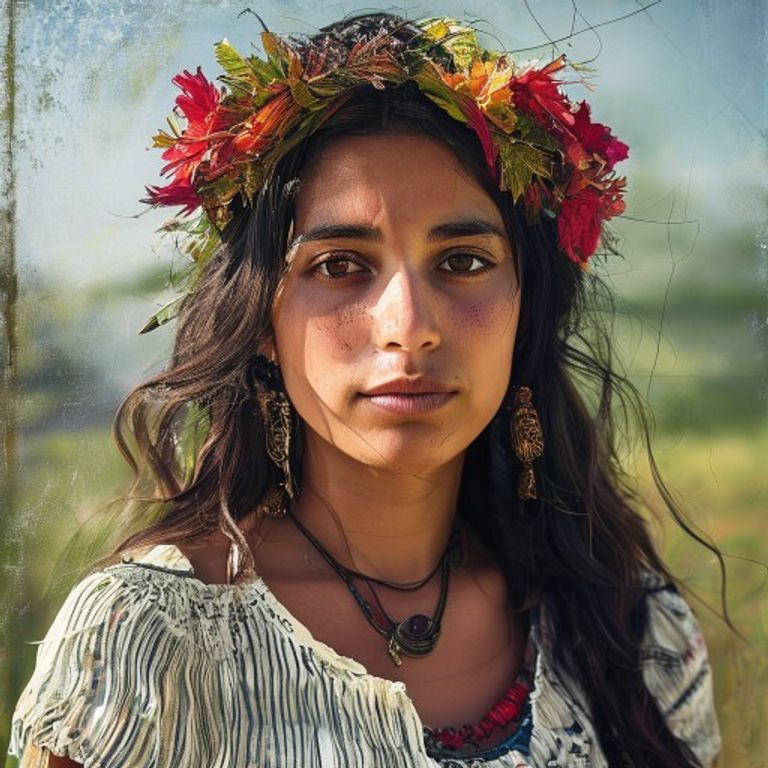
This municipality in the State of Piauí is the birthplace of Torquato Neto, a fundamental poet and lyricist of Tropicália, and of H. Dobal, whose verses captured the essence of the landscape and daily life of the Piauí capital with lyrical precision.
⚠️ Research elaborated with the aid of Deep Research is subject to referential ambiguity.
🖥️Clean HTML code using a proprietary tool.
👥 Research by Guilherme Felipe, Curation by Sílvio Lôbo
The Literature of Teresina: An In-depth Look at Voices, Movements, and Identity
Brazilian literature, vast and multifaceted, often hides in its geographical corners gems of intellectual production that, although fundamental to understanding regional nuances, remain on the margins of the more widely publicized national canon. Teresina, the capital of Piauí, emerges in this scenario as a fertile cradle of talents and a vibrant stage for the effervescence of ideas, movements, and publications that have shaped and continue to shape the state's cultural identity. Far from the coast and immersed in a peculiar urban sertão, the "Green City" has forged a literature with its own characteristics, deeply rooted in its social, geographical, and human context.
Teresina: Setting and Literary Matrix
Teresina's unique position, being the only capital in the Northeast that is not coastal, imbues its cultural production with a distinct character. The absence of the sea and the striking presence of the Poti and Parnaíba rivers, along with the hot climate and lush vegetation (hence the epithet "Green City"), serve as a constant backdrop for the imagination of its writers. Teresina's literature frequently reflects the duality between geographical isolation and the aspiration for modernity, the strong connection with the natural environment, and the pulse of urban life. This matrix is visible both in poetry that evokes the heat and landscape and in prose that unveils local social complexities and human dramas.
Prominent Authors and Their Contributions
The literary richness of Teresina is manifested in the diversity and depth of its authors, spanning generations and styles:
- Da Costa e Silva (1885-1950): Although born in Amarante, his strong connection with Piauí and his influence as one of the first academics of the Brazilian Academy of Letters (ABL) mark the literary pre-history of the state. His poetry, of a Parnassian-Symbolist nature, inaugurated a poetic sensibility that would echo for decades.
- Lucídio Freitas (1888-1961): One of the founders of the Piauiense Academy of Letters (APL), his work spans poetry and prose, being an important cultural articulator and one of the pillars of literary institutionalization in Teresina.
- H. Dobal (1922-1991): A poet, journalist, and literary critic, Dobal is a central figure in Piauí's modernity. His poetry, initially linked to social and existential themes, evolved into a more refined form, marked by reflection on language and time. He was a great supporter of new talents.
- Fontes Ibiapina (1923-1988): One of Piauí's greatest chroniclers and short story writers, Ibiapina masterfully captured Teresina's daily life, portraying the humor, idiosyncrasies, and dramas of ordinary people with a colloquial and engaging language.
- Mário Faustino (1930-1962): Although he lived in Teresina for a short time, his Piauí origin and his poetic and critical work had a tremendous impact on the national scene. His poetry, of formal rigor and philosophical depth, and his work as a critic for Jornal do Brasil, paved the way for modern Brazilian poetry.
- Torquato Neto (1944-1972): A poet, journalist, composer, and filmmaker, Torquato is the great icon of Piauí and Brazilian counterculture. His multifaceted, visceral, and provocative work, linked to Tropicalismo, reflected a spirit of renewal and questioning that resonated far beyond Piauí's borders.
- Assis Brasil (b. 1941): A novelist, short story writer, essayist, and literary historian, Assis Brasil is a tireless productive force. His novelistic work, which explores everything from historical novels to experimental fiction, is a vast panorama of the culture and history of Piauí and Brazil. He is also an important organizer of anthologies and studies on Piauí's literature.
- Cineas Santos (b. 1952): A poet, chronicler, essayist, and professor, Cineas is an important contemporary voice, with a body of work that dialogues with tradition and modernity, marked by a keen perception of daily life and a lyricism that finds beauty in simple things.
- Salgado Maranhão (b. 1953): A poet of national and international recognition, Salgado Maranhão, although he consolidated his career in Rio de Janeiro, carries the roots and cadence of Piauí in his poetry. His work is of great imagistic and rhythmic power, exploring themes such as memory, nature, and the human condition.
- Francisco Dantas (b. 1942): A short story writer and novelist, his work stands out for its acidity and social criticism, exploring with depth the intricacies of the human soul and the contradictions of Piauí society.
- Homero Castelo Branco (b. 1956): A poet and essayist, his poetry is marked by erudition and attention to form, exploring philosophical and existential themes with rare sensitivity.
Literary Movements and Associations
Literature in Teresina was not made solely of isolated voices, but also of movements and institutions that propelled its development:
- The Piauiense Academy of Letters (APL): Founded in 1917, the APL played and continues to play a fundamental role in preserving literary memory, fostering the production of new authors, and disseminating Piauí's culture. Its members represent the pantheon of local intellectuals.
- Piauí Modernism: Although late compared to the center-south of the country, modernism found fertile ground in Teresina for aesthetic renewal. Groups and individuals such as H. Dobal, Mário Faustino, and Torquato Neto, each in their own way, reinterpreted and gave new directions to local literature, incorporating elements of modernity without losing regional identity. The magazine A Cidade (1940s) was an important space for debate.
- Tropicalismo and Counterculture: The figure of Torquato Neto is inseparable from the impact of Tropicalismo on Piauí's literature and art. His audacity and experimentalism opened doors for a generation of artists who challenged norms and sought new forms of expression.
- Contemporary Movements: Currently, Teresina is witnessing a proliferation of literary collectives, poetry readings, and spoken word events, which democratize access to literature and give voice to young talents, keeping the literary scene dynamic and plural.
Important Publications
The circulation and dissemination of literature in Teresina were and are made possible by various publications:
- Historical Newspapers and Magazines: Periodicals such as O Norte (early 20th century), Diário do Piauí, and later O Dia and Jornal da Manhã served as important platforms for the publication of poems, short stories, chronicles, and essays, revealing many talents. Literary magazines such as Literatura e Arte and Cadernos de Teresina also played a crucial role.
- Local and University Presses: EDUFPI (Federal University of Piauí Press) is a pillar in the publication of works by Piauí authors, as well as academic studies. Other local publishers, such as Halley and Quimera, have contributed to the diversification of the publishing market and the publication of new voices.
- Anthologies and Collections: Several anthologies organized by researchers such as Assis Brasil or Cineas Santos have been fundamental in mapping and presenting Piauí's literary production to a wider audience.
The Cultural Identity of Teresina Reflected in Books
Teresina's literature is a multifaceted mirror of its cultural identity. The elements that define it are intrinsic to the experience of living in the city and in Piauí:
- Heat and Landscape: The intense tropical climate, the rivers, the trees, the dust, and the green are recurring images. Poetry and prose often explore the individual's relationship with this environment, which can be both suffocating and welcoming.
- The Urban Sertão: Teresina's peculiarity as an inland capital in the sertão is reflected in the duality between modernity under construction and the persistence of rural traits and traditions. This generates a complex and sometimes melancholic sense of belonging.
- Speech and Daily Life: The chronicle, in particular, and Teresina's short stories stand out for their ability to capture the oral tradition, humor, and the particularities of local language and behavior. The "Teresinense" becomes both character and narrator.
- Social and Existential Criticism: Many authors address social inequalities, political problems, and existential anxieties incisively. There is a quest to unravel the complexities of the human soul in a context often forgotten or marginalized.
- Memory and Belonging: The search for memory, nostalgia for a changing past, and reflection on what it means to be from Piauí and Teresina are constant themes, weaving a narrative of identity and resistance.
Conclusion
The literature of Teresina is, without a doubt, a rich universe still largely to be explored by the general public and national critics. Far from being an appendage to the production of major centers, it possesses autonomy, its own voice, and a depth that places it as an essential part of the Brazilian literary mosaic. From the pioneers to the contemporaries, including the modernists and countercultural figures, Teresina's authors and those based in the city have built a body of work that not only narrates and poetizes Teresina but also dialogues with universal issues, proving that literature, in its essence, transcends geographical barriers and builds bridges between the particular and the universal, between the heat of the urban sertão and the vastness of human imagination.



