


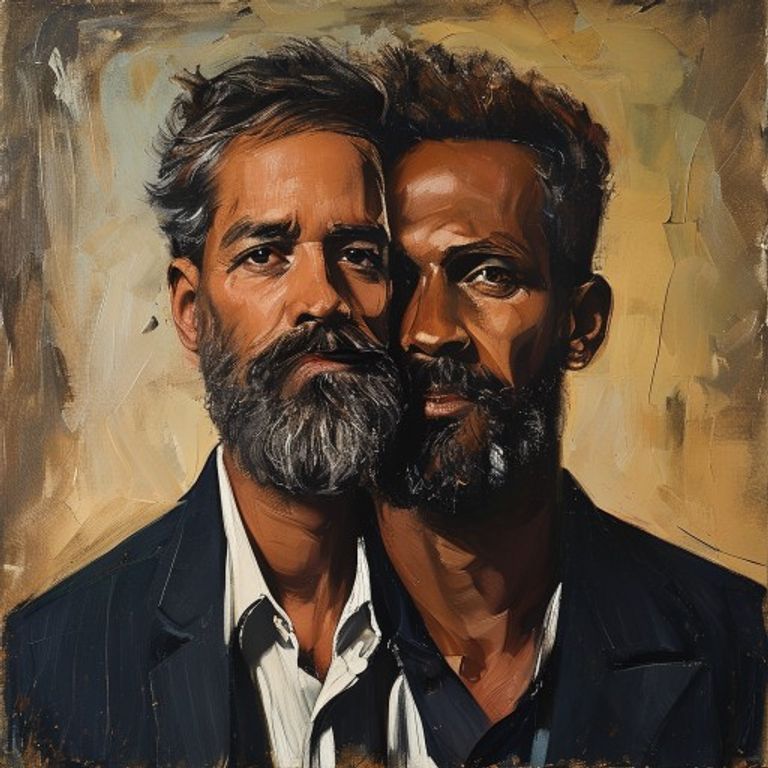
This municipality in the State of Sergipe honors in its name the leader of the Recife School, Tobias Barreto, a philosopher and poet who revolutionized Brazilian thought with his defense of monism and literary realism.
⚠️ Research elaborated with the aid of Deep Research is subject to referential ambiguity.
🖥️Clean HTML code using a proprietary tool.
👥 Research by Guilherme Felipe, Curation by Sílvio Lôbo
The Literary Effervescence in Tobias Barreto: A Critical Look at Its Voices and Memories
The literature of a region is often a complex mirror of its history, its illustrious and anonymous characters, and the nuances of its cultural identity. In the case of Tobias Barreto, a municipality in Sergipe that bears the name of one of Brazil's greatest intellectuals, this premise manifests in a particular way, intertwining the legacy of its patron with the voices of those who came after. This essay seeks to outline a panorama of literature in Tobias Barreto, focusing on its main authors, the movements that shaped it, the publications that disseminated it, and, crucially, how the spirit of Sergipe, and more specifically the "Tobias-Barretista" spirit, is reflected in its pages.
The Patronymic and the Intellectual Matrix
It is impossible to discuss literature in Tobias Barreto without first honoring the figure who lends his name to the municipality: Tobias Barreto de Meneses (1838-1889). Although his work is primarily philosophical, legal, and critical, his impact on the formation of 19th-century Brazilian thought was immense, inaugurating the so-called Recife School and introducing Darwinism and Germanism to the intellectual scene. His vigorous prose, his abolitionist and reformist ideas, and his critical method of analyzing social, legal, and philosophical reality established an intellectual matrix that, even if not directly fictional, fostered an environment of reflection and questioning. The very fact that the municipality adopted his name is already a declaration of appreciation for intellect, for the word, and for the capacity to reform thought, characteristics that, by resonance, one would expect to find in the local literary production.
Main Authors and Their Legacies
Although Tobias Barreto's fame is more linked to philosophy than fiction, the municipality and its region have produced significant literary voices, many of them immersed in the particularities of the Sergipe hinterland:
- Tobias Barreto de Meneses: As a foundational figure, his works such as Estudos Alemães and Questões do Direito Público, despite not being fiction, are monuments of Brazilian essayistic prose. His clarity of thought and the strength of his arguments serve as inspiration for any writer seeking to impact their time.
- José Sampaio (1893-1951): Considered one of the greatest fiction writers from Sergipe and a notable representative of regionalism, José Sampaio is perhaps the author who most directly embodies the literary soul of Tobias Barreto. Born in the current municipality of Tobias Barreto (formerly Campos do Rio Real), his work is a deep dive into the daily life of the sertanejo. His most famous novel, O Caboclo (1923), is a vivid portrait of rural life, droughts, social injustices, and the resilience of the rural man. His prose is marked by a language that captures regionalisms and popular wisdom, transforming local reality into universal material. Other works such as Terra Sem Sol and O Último Cabra reinforce his commitment to the authentic representation of the Northeast.
- Armando Fontes (1899-1970): Although his work was broader in the Sergipe and national scene, Armando Fontes, a poet and essayist, is part of the intellectual panorama that revered and was influenced by the legacy of Tobias Barreto. His poetry, which sometimes leaned towards symbolism and later opened up to a more modernist language, contributed to the diversification of literary creation in Sergipe, indirectly dialoguing with the search for a unique identity that Tobias Barreto's thought had already initiated.
Literary Movements and Their Local Resonances
The literature of Tobias Barreto, in the sense of its production originating from or inspired by the region, dialogues with important Brazilian literary movements:
- Social Romanticism and Abolitionism: Although Tobias Barreto (the thinker) was a critic of Romanticism, his ideals of social justice and his fervent defense of abolitionism indirectly connect with the social concerns of Condoreiro Romanticism. His work, in this sense, paved the way for engaged literature.
- Naturalism and Regionalism: It is in Naturalism and, more explicitly, in Regionalism, that the literature of Tobias Barreto finds its high point with José Sampaio. The rawness of life in the sertão, the analysis of social conditions, the influence of the environment on the individual – central themes of Naturalism – are abundantly explored in his works. Regionalism, in turn, allows José Sampaio to give voice to the peculiarities of the Sergipe dialect, customs, and landscapes, elevating the local to universal status.
- Modernism and the Rediscovery of Brazil: Even without a modernist group directly linked to the municipality, the intellectual effervescence of Sergipe in the 20th century, which included figures like Godofredo Filho, absorbed the modernist precepts of seeking a national and regional identity. The valorization of the "caboclo" and the "sertanejo" in José Sampaio's work anticipates, in a way, this rediscovery of the deep Brazil that Modernism so cherished.
Important Publications
The dissemination of the literature of Tobias Barreto and Sergipe in general depended on periodicals and publishers, often with regional reach but significant impact:
- Local Newspapers and Magazines: In the late 19th and early 20th centuries, newspapers such as O Estado de Sergipe and literary magazines from the capital, Aracaju, were vital for the publication of poems, short stories, and essays by authors like José Sampaio and Armando Fontes. They served as a stage for the first manifestations of many talents.
- Publishers from Sergipe: Over time, the emergence of small publishing houses in Sergipe and the work of the Academia Sergipana de Letras (founded in 1929), of which José Sampaio was a member, were crucial for the consolidation of many works, including reissues of classics and the publication of new talents who kept the flame of local literature alive.
- Anthologies: Various anthologies of Sergipe literature frequently include excerpts from José Sampaio's works and references to the intellectual legacy of Tobias Barreto, ensuring the perpetuity of their contributions.
The Local Cultural Identity Reflected in Books
Literature in Tobias Barreto is a treasure for understanding the cultural identity of its people:
- Rurality and the Sertanejo: Life in the countryside, tobacco cultivation, the drama of drought, June festivals, and popular religiosity are recurring elements, especially in José Sampaio's work. He not only describes the setting but penetrates the psychology of the sertanejo, revealing their dignity, their oral wisdom, and their incessant struggle.
- Language and Orality: The incorporation of regional vocabulary, popular sayings, and the cadence of Sergipe speech enrich the texts, lending them authenticity and closeness to lived reality. Literature thus becomes a valuable linguistic record.
- Social Justice and Criticism: Following in the wake of Tobias Barreto's (the philosopher's) critical thought, the literature of José Sampaio and other authors from the region often addresses social inequalities, labor exploitation, and lack of opportunities, becoming a tool for denunciation and awareness.
- Memory and Belonging: By narrating the stories and traditions of their people, these authors contribute to the construction and preservation of collective memory, strengthening the sense of belonging to the land and Sergipe culture.
- The Legacy of Thought: The very naming of the municipality and the reverence for its intellectual patron imbue the literary atmosphere with a sense of valuing study, reflection, and the capacity to question and innovate, characteristics that, although intangible, manifest in the depth of their works.
Conclusion
Literature in Tobias Barreto is a fertile field, rooted in a robust intellectual legacy and flourishing in narratives that paint the social and cultural panorama of the Sergipe hinterland with vibrant colors. From Tobias Barreto de Meneses, who with his prodigious mind paved paths for critical thinking in Brazil, to José Sampaio, who gave voice and soul to the "caboclo" and the local landscapes, the region demonstrates a unique ability to transform reality into art. The permanence of their works and the constant rediscovery of their themes attest to the timeless relevance of this production, which not only narrates the history of a people but celebrates the richness of a cultural identity forged in word and thought.



