


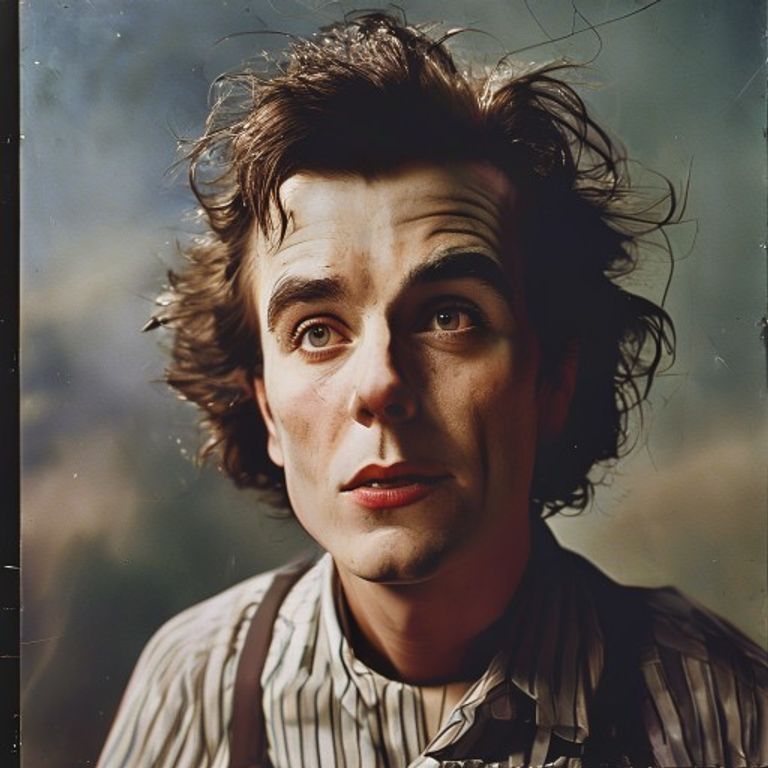
Directed by Frank Lloyd and released in 1935, Mutiny on the Bounty remains one of the fundamental milestones of Hollywood's golden age. Based on the novel by Charles Nordhoff and James Norman Hall, this nautical epic not only captured the public's imagination by portraying the legendary 1789 rebellion on the HMS Bounty, but also set new standards for adventure cinema, becoming the only film in history to win the Academy Award for Best Picture without winning in any other category.
Analysis and Plot
The narrative of Mutiny on the Bounty is a study of the clash between the rigid discipline of the British Royal Navy and the utopian freedom found in Tahiti. The plot follows Lieutenant William Bligh (Charles Laughton), an officer whose obsession with regulations and austerity borders on sadism, and First Lieutenant Fletcher Christian (Clark Gable), an aristocratic officer with a humanist morality. The mission is simple in theory: transport breadfruit seedlings from Tahiti to the Caribbean colonies.
However, the voyage turns into a nightmare of cruelty. Bligh imposes brutal physical punishments for trivial infractions, while the ship suffers from water shortages and prolonged isolation. Upon arriving in Tahiti, the crew discovers a paradise of abundance and sexual freedom. Conflict becomes inevitable on the return voyage: the contrast between the tyranny imposed by Bligh and the idyllic life they were deprived of incites Christian to lead the mutiny, taking control of the ship and abandoning Bligh and his few loyalists in a drifting boat.
The Outcome: Meanings and Consequences
The film's ending is not an absolute triumph. Unlike a conventional hero narrative, the film addresses the consequences of the insurrection. Bligh, in a display of almost superhuman tenacity, manages to navigate the boat for thousands of miles until reaching civilization, maintaining discipline among his men under atrocious conditions. The final reunion, where Christian is portrayed in a state of melancholic decay in the isolation of the islands, while Bligh returns to seek revenge, suggests that although the mutiny was a moral victory against tyranny, the system — represented by Bligh — is a relentless and unbreakable force. The film makes it clear that rebellion is an act of despair that, while justified, comes at too high a price.
Cast and Notable Performances
The production is carried on the shoulders of three giants:
- Charles Laughton (Bligh): Delivers one of the most complex performances of his career. He does not make Bligh a cartoon villain, but a deeply troubled man whose blind loyalty to the law renders him incapable of empathy.
- Clark Gable (Christian): The choice of Gable, an MGM star known for his virile persona, humanized the character and ensured the audience was on the side of the mutineers, balancing Laughton's dramatic weight.
- Franchot Tone (Roger Byam): The character who serves as the "conscience" of the story, observing events from the point of view of a young officer who finds himself torn between his two mentors.
Behind the Scenes and Controversies
The filming was marked by constant tension. The conditions at sea were authentic and dangerous; the crew faced real storms and scurvy simulated with historical accuracy. Clark Gable initially detested his role, even threatening to leave the production because he did not feel comfortable wearing short pants and period wigs (which he considered unmanly). Furthermore, there were reports of an intense rivalry between Laughton's methodological rigor and Gable's more intuitive acting style.
A relevant historical curiosity is that the film, although based on real events, significantly alters the figure of Bligh. In reality, William Bligh was an exceptional navigator and a man less sadistic than fiction suggests; the image of the "tyrannical villain" was solidified by this film and the book that preceded it, shaping popular historical perception to this day.
Legacy
Mutiny on the Bounty is a triumph of MGM production under the supervision of Irving Thalberg. It defined the Hollywood "epic adventure" genre. Its influence can be seen in numerous later productions, from the 1962 version with Marlon Brando to the 1984 film The Bounty. The film remains a powerful reflection on power, institutional authority, and the human desire for freedom, resonating with modern audiences just as much as it did in 1935.
Researched Sources
- AFI Catalog of Feature Films (catalog.afi.com)
- IMDb - Trivia and Production Notes (imdb.com)
- Turner Classic Movies - Articles and Film History (tcm.com)
- Britannica - Historical context of the Bounty Mutiny (britannica.com)
- Rotten Tomatoes - Critical consensus and historical retrospectives (rottentomatoes.com)



