


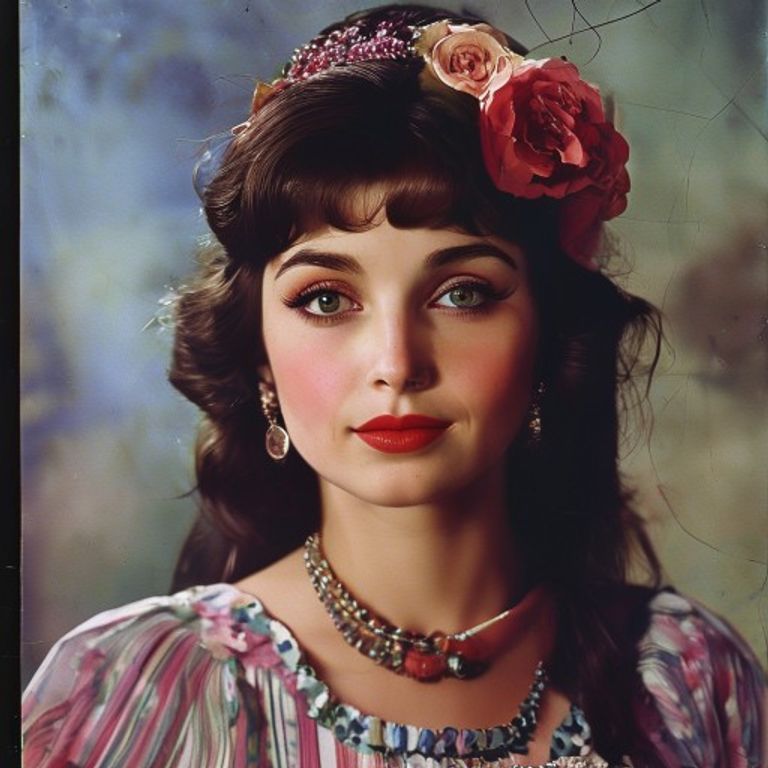
Directed by the master of melodramas and sophisticated comedies, George Cukor, My Fair Lady (1964) established itself as one of the most sumptuous monuments of Hollywood's golden age of musicals. Starring Audrey Hepburn and Rex Harrison, this cinematic adaptation of the smash Broadway hit—itself inspired by George Bernard Shaw's play Pygmalion—transcended mere entertainment to become a satirical study on class divisions, the social rigidity of the Edwardian era, and complex gender power dynamics, winning eight Academy Awards and forever marking the history of pop culture.
Analysis and Plot
The narrative of My Fair Lady follows the arrogant and misogynistic phonetics professor Henry Higgins (played masterfully by Rex Harrison). Higgins firmly believes that an individual's intonation, accent, and vocabulary irrevocably define their place in the rigid British social pyramid. On a rainy night in Covent Garden, he meets Eliza Doolittle (Audrey Hepburn), a young street flower girl whose cockney dialect—heavily laden with slang and distorted pronunciations—is classified by Higgins as a "crime against the English language."
Accompanied by his new friend and colleague in linguistic studies, Colonel Hugh Pickering (Wilfrid Hyde-White), Higgins makes a bold wager: he guarantees that, within six months, he can transform the humble flower girl into a woman so refined that she could pass for a duchess at an embassy ball. Attracted by the promise of improving her life and getting a job at a real flower shop, Eliza agrees to submit to Higgins' intense and often cruel training regimen.
The learning process is marked by exhausting phonetic repetition sessions, subtle psychological torture, and Eliza's isolation from her original environment. One of the film's most celebrated turning points is the "The Rain in Spain" sequence, in which Eliza finally manages to pronounce her vowels "correctly," triggering an euphoric musical celebration between her, Higgins, and Pickering.
However, Eliza's ultimate test occurs in two stages. The first is at the traditional Ascot horse races, where, despite her impeccable diction and stunning appearance, she shocks the aristocracy by momentarily forgetting her refined manners and enthusiastically shouting at one of the horses: "Move your bloomin' arse!" The second stage, the Embassy Ball, is an absolute success. Eliza fascinates everyone, including the sharp-witted Zoltan Karpathy, a rival phonetics expert to Higgins, who declares her a legitimate Hungarian princess.
The dramatic conflict reaches its peak after the ball. Upon returning home, Higgins and Pickering celebrate the winning of the bet as a purely personal triumph, completely ignoring Eliza's effort, feelings, and uncertain future. Feeling discarded as a mere laboratory object, Eliza confronts Higgins in a heated physical and verbal argument, deciding to leave the professor's residence to seek her own identity and independence.
The End of the Journey: Deconstruction of the Ending and Hidden Meanings
The conclusion of My Fair Lady is one of the most debated topics by film critics, historians, and gender theorists. After fleeing Higgins' house, Eliza seeks refuge with his mother, Mrs. Higgins (Gladys Cooper), who harshly reprimands her son's childish and egocentric behavior. Higgins locates Eliza and tries to convince her to return, but she firmly rejects him with the anthem of independence "Without You," making it clear that the world will continue to spin perfectly without his tutelage.
Higgins returns home alone and, in a moment of melancholic introspection, realizes how accustomed he has become to her presence ("I've Grown Accustomed to Her Face"). He turns on his gramophone to listen to the first recordings of Eliza's cockney voice. Suddenly, Eliza herself enters the room quietly. Upon noticing her presence, instead of showing affection or apologizing, Higgins pulls his hat over his eyes, leans back in his armchair, and utters the famous final line: "Eliza, where the devil are my slippers?" The film ends with a subtle smile on Eliza's face before the screen fades to black.
Hidden Meanings and Subtext:
- George Bernard Shaw's Critique vs. the Hollywood Version: In Shaw's original play, Pygmalion, Eliza never returns to Higgins; she marries the young and devoted Freddy Eynsford-Hill and opens her own flower shop. Shaw detested the idea of a romantic ending, arguing that it would ruin the character's female emancipation. However, the Broadway musical and George Cukor's film adaptation softened this ending, suggesting a domestic return.
- The "Slipper" Dynamic: Higgins' final line can be read in two conflicting ways. The conservative reading suggests that Eliza capitulated and accepted her role of domestic submission and caregiver to Higgins. On the other hand, the modern psychological reading proposes that the line is Higgins' emotional defense—a mask of arrogance to hide his extreme vulnerability. Eliza, by smiling, understands that she now holds emotional power over him; she knows that the great and infallible phonetics professor is, in fact, a man dependent on her presence to survive emotionally.
Cast and Standout Performances
The cast of My Fair Lady is a triumph of casting and dramatic delivery, although surrounded by complex artistic choices:
- Audrey Hepburn (Eliza Doolittle): Although criticized at the time for the musical dubbing (detailed below), Hepburn's dramatic and physical performance is extraordinary. She transitions masterfully from the slapstick comedy of the flower girl Eliza to the melancholic elegance of the aristocratic Eliza. Her expressive eyes in the final scenes convey all the pain of lost identity and the search for dignity.
- Rex Harrison (Professor Henry Higgins): Harrison immortalized the role. He did not sing in the traditional sense; instead, he used the Sprechgesang technique (speaking while singing to the rhythm of the music), which gave his character a conversational, arrogant, and rhythmically intellectual tone. His performance is a masterclass in comedic timing and aristocratic cynicism. He won the Academy Award for Best Actor for his brilliant performance.
- Stanley Holloway (Alfred P. Doolittle): As Eliza's opportunistic father, Holloway steals every scene he is in. His musical numbers, such as "With a Little Bit of Luck" and "Get Me to the Church on Time," bring a vibrant energy and a scathing critique of the hypocrisy of Victorian and bourgeois morality.
- Wilfrid Hyde-White and Gladys Cooper: Hyde-White delivers a Colonel Pickering of paternal sweetness essential to contrast with Higgins' coldness. Gladys Cooper, as Mrs. Higgins, serves as the voice of reason and common sense, representing the true intellectual and social sophistication of the era.
Behind the Scenes, Dubbing, and the Great 1964 Oscar Controversy
The behind-the-scenes of My Fair Lady are filled with dramas and controversies that have become part of Hollywood folklore, starting with the casting of the female lead.
The Snubbing of Julie Andrews: Julie Andrews had played Eliza Doolittle on Broadway with immense critical success. However, powerful studio head Jack Warner refused to cast her in the film, justifying that she was not a well-known enough name in cinema to guarantee the return of a massive 17-million-dollar budget (a fortune at the time). Warner opted for international star Audrey Hepburn.
The Ghost of Marni Nixon: Audrey Hepburn accepted the role sincerely believing she would sing all her songs. She underwent intensive vocal rehearsals. However, during post-production, Warner executives decided that Hepburn's vocal range was not adequate for the complexity of Frederick Loewe's score. They secretly hired Marni Nixon—the legendary "ghost singer" of Hollywood, who had already dubbed Natalie Wood in West Side Story (1961) and Deborah Kerr in The King and I (1956)—to record about 90% of Eliza's songs. Upon discovering that her voice had been almost entirely replaced, Hepburn left the studio furious, although she returned the next day with a professional attitude.
The Revenge of Mary Poppins: The dubbing controversy severely damaged Audrey Hepburn's reputation during the 1964 awards season. Meanwhile, Julie Andrews was quickly hired by Walt Disney to star in Mary Poppins. The result was historic: in the 1965 Oscar nominations, Audrey Hepburn was dramatically snubbed in the Best Actress category, while Julie Andrews was not only nominated but won the award. In her Golden Globe acceptance speech, Andrews subtly joked by thanking "Jack Warner for making all of this possible."
Critical Reception, Box Office, and Legacy
Despite the casting controversies, My Fair Lady was an overwhelming commercial and critical success. The film grossed over 72 million dollars in its original run (equivalent to hundreds of millions of dollars today, adjusted for inflation), financially saving Warner Bros. from risky investments of that decade.
Critics of the time unanimously praised Gene Allen's monumental production design and Cecil Beaton's iconic costumes (especially the white lace dress with black ribbons and the monumental hat worn by Audrey at Ascot). Bosley Crowther of The New York Times described the production as "one of the best musicals of the century, a film that captures the magical essence of theater with the visual grandeur that only cinema can provide."
Enduring Legacy:
- The film won 8 Oscars, including Best Picture, Best Director (George Cukor), and Best Actor (Rex Harrison).
- Cecil Beaton's visual aesthetic directly influenced the world of high fashion for decades, being frequently honored in runway shows by brands like Chanel and Dior.
- The narrative structure of the "transformation challenge" established by the film inspired dozens of subsequent pop culture productions, from classic romantic comedies like Pretty Woman (1990) to teen hits like She's All That (1999) and the television series The Simpsons (in the episode "My Fair Laddy").
My Fair Lady remains a glorious testament to the technical peak of Hollywood studios, a visually stunning spectacle that, behind the unforgettable songs and dazzling costumes, hides a sharp and timeless discussion about class, identity, and the human need not to be molded by the expectations of others.
Researched Sources
- https://www.imdb.com/title/tt0058385/
- https://www.rottentomatoes.com/m/my_fair_lady
- https://www.boxofficemojo.com/title/tt0058385/
- https://www.afi.com/catalog/catalog-of-feature-films/
- https://www.oscars.org/oscars/ceremonies/1965



