


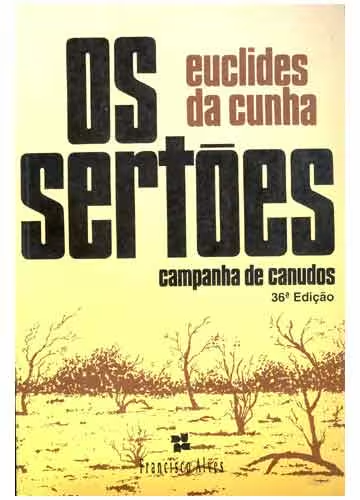
"Os Sertões: Campanha de Canudos" by Euclides da Cunha was divided into three parts: "The Land," "The Man," and "The Fight."
In "The Land," Euclides described the Bahian sertão. He began by explaining the relief of the Brazilian Central Plateau. He then described the sertanejo landscape: dry, hot days and cold nights, full of leafless, thorny trees.
In the second part, "The Man," the author characterized the sertanejos and told the story of Antônio Conselheiro, the leader of the Canudos settlement. Euclides highlighted the differences between the sertanejos and those from the coast, concluding that the sertanejos were isolated from civilization and therefore deprived of cultural and material goods.
Antônio Vicente Mendes Maciel (Conselheiro), the leader of Canudos, was a reflection of the sertanejos. He was born in Quixeramobim, Ceará, where he worked and soon married. When he was betrayed by his wife, he decided to wander through the sertão. After ten years, Antônio Vicente reappeared as the religious leader Antônio Conselheiro.
Many sertanejos followed Conselheiro on his pilgrimage. However, the situation worsened when the religious leader settled in the old Canudos farm. People came from everywhere. The settlement, according to the authorities, was a haven for criminals. Enough jagunços (hired gunmen), cruel and fearless men, were gathered there to form a battalion.
The government of the State of Bahia decided to organize an expedition to dismantle the Canudos settlement. The first expedition, led by Lt. Pires Ferreira, was sent in November 1896. Strategically positioned, better prepared, and with a greater understanding of the territory and its tricks, the jagunços emerged victorious. The second expedition, commanded by Major Febrônio de Brito, was ambushed and defeated.
With great popular support, the third expedition, the Moreira César Expedition, departed from Monte Santo in February 1897 and invaded Canudos in March. Colonel Moreira César died, and the expedition failed. The soldiers scattered into the caatingas (dry scrubland).
The soldiers' flight was felt throughout the country. The jagunços' victory was considered an outrage to the Republic. It was a threat of the restoration of the Monarchy... (the sertanejos didn't even understand the republican reforms: civil marriage, taxation, and the separation of Church and State).
Battalions from all states were mobilized to destroy Canudos. General Artur Oscar led them. With the help of Lieutenant Colonel Siqueira de Meneses, a cunning commander, the soldiers fought and won, despite repeating the same mistakes as previous expeditions.
The victory of the government forces, achieved after successive reinforcements, was consolidated when the September Seventh Trench was built. Canudos was surrounded but resisted with hunger and thirst until October 5th. The prisoners were beheaded.
BIBLIOGRAPHY
ANDRADE, Juan C. P. de. Euclidesite: vida e obra de Euclides da Cunha. São Paulo: [s.n], 2000. Available at http://euclidesite.tripod.com.br. Accessed in Nov. 2001.
ANDRADE, Olímpio de Sousa. História e interpretação de 'Os Sertões'. 3rd ed. rev. and enl. São Paulo: EDART, 1966. CUNHA, Euclides da. Os Sertões: campanha de Canudos. São Paulo: Martin Claret, 2002.
Juan Carlos
"Os Sertões: Campanha de Canudos" by Euclides da Cunha was divided into three parts: "The Land," "The Man," and "The Fight."
In "The Land," Euclides described the Bahian sertão. He began by explaining the relief of the Brazilian Central Plateau. He then described the sertanejo landscape: dry, hot days and cold nights, full of leafless, thorny trees.
In the second part, "The Man," the author characterized the sertanejos and told the story of Antônio Conselheiro, the leader of the Canudos settlement. Euclides highlighted the differences between the sertanejos and those from the coast, concluding that the sertanejos were isolated from civilization and therefore deprived of cultural and material goods.
Antônio Vicente Mendes Maciel (Conselheiro), the leader of Canudos, was a reflection of the sertanejos. He was born in Quixeramobim, Ceará, where he worked and soon married. When he was betrayed by his wife, he decided to wander through the sertão. After ten years, Antônio Vicente reappeared as the religious leader Antônio Conselheiro.
Many sertanejos followed Conselheiro on his pilgrimage. However, the situation worsened when the religious leader settled in the old Canudos farm. People came from everywhere. The settlement, according to the authorities, was a haven for criminals. Enough jagunços (hired gunmen), cruel and fearless men, were gathered there to form a battalion.
The government of the State of Bahia decided to organize an expedition to dismantle the Canudos settlement. The first expedition, led by Lt. Pires Ferreira, was sent in November 1896. Strategically positioned, better prepared, and with a greater understanding of the territory and its tricks, the jagunços emerged victorious. The second expedition, commanded by Major Febrônio de Brito, was ambushed and defeated.
With great popular support, the third expedition, the Moreira César Expedition, departed from Monte Santo in February 1897 and invaded Canudos in March. Colonel Moreira César died, and the expedition failed. The soldiers scattered into the caatingas (dry scrubland).
The soldiers' flight was felt throughout the country. The jagunços' victory was considered an outrage to the Republic. It was a threat of the restoration of the Monarchy... (the sertanejos didn't even understand the republican reforms: civil marriage, taxation, and the separation of Church and State).
Battalions from all states were mobilized to destroy Canudos. General Artur Oscar led them. With the help of Lieutenant Colonel Siqueira de Meneses, a cunning commander, the soldiers fought and won, despite repeating the same mistakes as previous expeditions.
The victory of the government forces, achieved after successive reinforcements, was consolidated when the September Seventh Trench was built. Canudos was surrounded but resisted with hunger and thirst until October 5th. The prisoners were beheaded.
BIBLIOGRAPHY
ANDRADE, Juan C. P. de. Euclidesite: vida e obra de Euclides da Cunha. São Paulo: [s.n], 2000. Available at http://euclidesite.tripod.com.br. Accessed in Nov. 2001.
ANDRADE, Olímpio de Sousa. História e interpretação de 'Os Sertões'. 3rd ed. rev. and enl. São Paulo: EDART, 1966. CUNHA, Euclides da. Os Sertões: campanha de Canudos. São Paulo: Martin Claret, 2002.
Juan Carlos



