


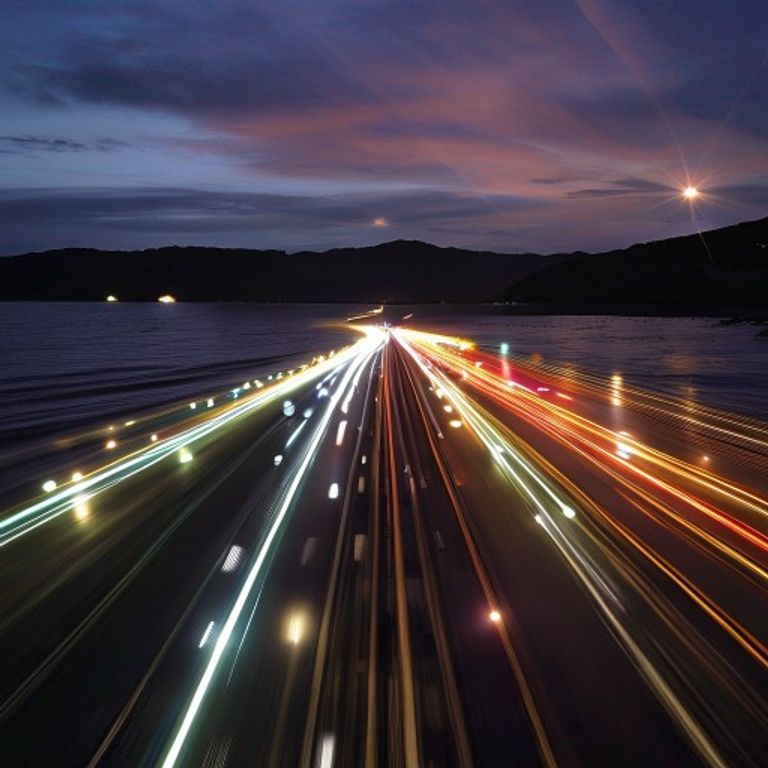
Commercial aircraft crews and radar operators in New Zealand tracked a series of anomalous lights flying in a coordinated manner in 1978.
⚠️ Research elaborated with the aid of Deep Research is subject to referential ambiguity.
🖥️Clean HTML code using a proprietary tool.
👥 Research by Guilherme Felipe, Curation by Sílvio Lôbo
The Enigma of the Kaikoura Lights: A Flight of the Unknown Over New Zealand
The sky, that vast nocturnal veil that so often calms us with the constancy of its stars, can, at unexpected moments, unveil mysteries that defy comprehension. The Kaikoura Lights Incident, which occurred on the night of December 19, 1978, is one of those enigmas that, decades later, still echo in the minds of enthusiasts of the inexplicable and skeptics alike. A series of anomalous lights hovering over the southern coast of New Zealand, observed by hundreds of witnesses, including flight crews, initiated one of the most intriguing and persistent cases in modern ufology.
1. The Context and the Incident: Where, When, and How the Mystery Began
The small and picturesque town of Kaikoura, situated on the northeast coast of New Zealand's South Island, transformed on that fateful night of December 19, 1978, into the stage for an unusual celestial spectacle. What began as a quiet evening, with residents enjoying the coastal scenery, quickly evolved into a scene of admiration and perplexity when a set of vibrant, erratically moving lights appeared in the sky. The lights did not behave like conventional aircraft, nor like known meteorological phenomena, triggering a wave of observations and reports that, at the time, were widely publicized by local and international media.
The incident was not limited to superficial observations. Several eyewitnesses reported seeing luminous objects of different sizes and shapes, which seemed to maneuver in a coordinated manner, executing movements impossible for known aeronautical technology. The absence of sound, the disturbing silence that accompanied the lights, added an extra layer of mystery to the already surreal experience.
2. Timeline of Events
The chronological reconstruction of events, although complex due to the diffuse nature of the observations, reveals a sequence of sightings that extended over a considerable period:
- Night of December 19, 1978 (approximately 10:00 PM NZDT): The first reports of anomalous lights begin to emerge around Kaikoura.
- Continuing into the early morning of December 20, 1978: The lights are observed by hundreds of people, including flight crews and local residents. Reports describe different formations and behaviors of the lights.
- Reports and Testimony Collection: In the following weeks and months, the Royal New Zealand Air Force (RNZAF) and local police collect dozens of witness testimonies.
- Official Investigations: The RNZAF, under the leadership of Commander R. L. C. Smith, conducts a preliminary investigation.
- Declassification of Files (later): Years later, parts of the files related to the incident are declassified, generating new interest and debate.
3. Main Theories
The Kaikoura Lights Incident has generated a myriad of theories, ranging from the rational to the esoteric. Each attempts to make sense of what was seen that night:
3.1. Conventional and Scientific Explanations:
- Natural Atmospheric Phenomena: The most "down-to-earth" theory suggests that the lights could have been caused by rare meteorological phenomena, such as ball lightning, unusual auroras australis (although the geographical location and time are not ideal for typical auroras), or even the reflection of terrestrial lights on high-altitude clouds. However, the erratic behavior and coordinated movements of the lights make this explanation difficult to sustain for all observations.
- Conventional or Experimental Aircraft: The hypothesis that the lights were military aircraft (whether secret or in training) was also raised. The fact that the RNZAF investigated the case lends weight to this possibility. However, the secrecy surrounding such operations could explain the lack of official identification of the aircraft. The question remains: what kind of technology would allow for such maneuvers and absence of sound?
- Meteorological or Lighting Balloons: Some reports suggest that the objects could have been meteorological balloons or lighting balloons used for research or entertainment purposes. However, again, the dynamic behavior and maneuvers attributed to the objects seem to go beyond the capabilities of conventional balloons.
3.2. Alternative and Paranormal Theories:
- Vehicles of Extraterrestrial Origin (UFOs): This is undoubtedly the most popular and persistent theory. The inexplicable nature of the lights, their apparent intelligence, and the lack of conventional explanation have led many to believe it was contact with alien technology. The absence of sound and the observed flight capabilities fuel this hypothesis.
- Cold War Experiments/Government Conspiracies: A variation of the experimental aircraft theory suggests that governments (perhaps the US or the Soviet Union, amidst the Cold War) could have been testing secret technologies in the region, and the incident was an inadvertent or deliberate demonstration. The secrecy surrounding such operations would be the reason for the lack of definitive answers.
- Collective Consciousness or Psychic Phenomena: Some less conventional theories suggest that the phenomenon may have had a psychic origin or been the result of an emergent collective consciousness state, possibly influenced by unknown environmental factors.
4. Controversies and Blind Spots
The official investigation of the Kaikoura Lights Incident, although conducted by the RNZAF, is marked by controversies and blind spots that perpetuate the mystery:
- Flaws in the Official Investigation: Critics point out that the RNZAF investigation, while collecting numerous testimonies, was not sufficiently in-depth. Reports suggest that many potential pieces of evidence, such as radar records or specific meteorological data, were not fully explored or were prematurely discarded.
- Conflicting Testimonies and Interpretations: The sheer volume of testimonies, while a strong point, also introduces complexity. Different witnesses described objects of varying shapes and sizes, and interpretations of the movements varied, allowing theories to mold themselves to different aspects of the accounts.
- "Missing" or Unpresented Evidence: There are reports that photographs and videos were taken at the time, but many never surfaced or were considered of low quality to provide definitive conclusions. The withholding of information by government agencies is a constant suspicion in cases like this.
- The Role of the Media: Initial media coverage was intense, but it may also have contributed to the dissemination of inaccurate or sensationalized information, obscuring the basic facts amidst speculation.
5. Curiosities and Legacy
The Kaikoura Lights Incident transcended the borders of New Zealand, becoming an emblematic case in the history of ufology and public interest in inexplicable phenomena.
- Cultural Impact: The event has inspired documentaries, articles, books, and discussions that continue to this day. Kaikoura has become, for many, a pilgrimage site for UFO enthusiasts, fueling local tourism and folklore.
- Current Status of the Case: Officially, the case remains classified as "unresolved" by New Zealand authorities. Although the RNZAF concluded that there was no threat to national security, the explanations offered leave many questions unanswered for the more skeptical. The files related to the incident, although partially declassified, still contain gaps and details that fuel speculation.
- The Legacy of Mystery: The Kaikoura Lights Incident serves as a poignant reminder that, even in an increasingly mapped and understood world, the sky still holds secrets. It forces us to question our own perceptions and to consider the possibility that not everything we observe can be easily explained by conventional science. The enigma of Kaikoura continues to shine, metaphorically, in the firmament of unsolved mysteries.



