


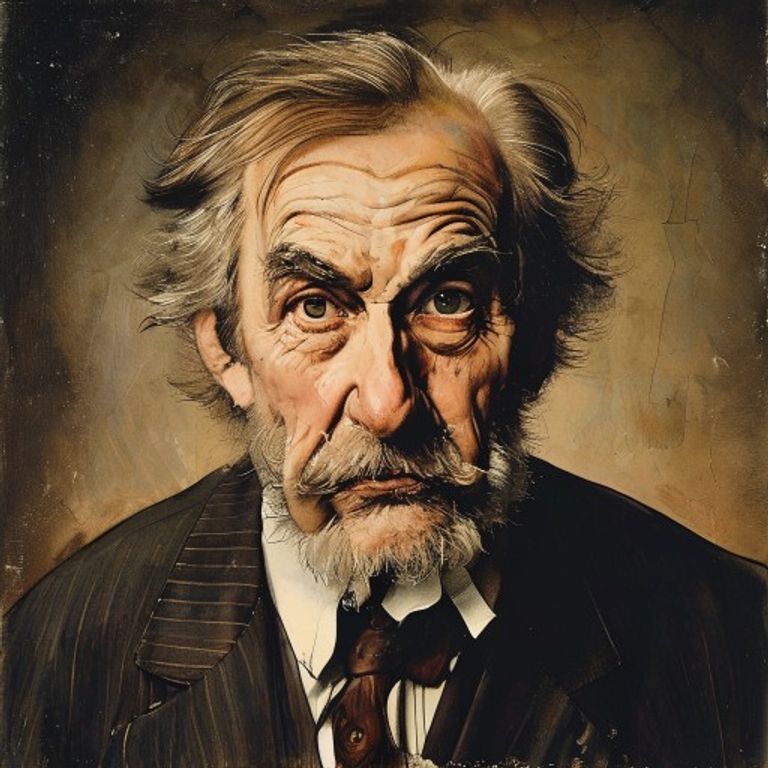
A renowned British explorer ventured into the dense Amazon rainforest in Brazil in search of a legendary and advanced lost city and disappeared forever.
⚠️ Research conducted with the aid of Deep Research may be subject to referential ambiguity.
🖥️Clean HTML code using a proprietary tool.
👥 Research by Guilherme Felipe, Curation by Sílvio Lôbo
Percy Fawcett and the Enigmatic Disappearance in the Amazon: An Endless Search
By [Your Name], Senior Investigative Journalist
1. The Context and the Incident: The Call of "Z"
The dense and impenetrable Amazon Rainforest, in the early 20th century, was one of the last bastions of mystery and the unknown on the planet. It was in this setting of wild beauty and relentless dangers that Percy Harrison Fawcett, a renowned British explorer, cartographer, and officer of the Royal Geographical Society, embarked on his last and fatal expedition. In 1925, Fawcett, accompanied by his eldest son, Jack Fawcett, and his son's friend, Raleigh Rimell, disappeared without a trace in the Brazilian jungle while searching for a lost city he called "Z", an advanced civilization that, according to his theories, existed in the depths of the forest.
The expedition departed from São Paulo, Brazil, in April 1925, heading towards the Alto Xingu region. The last known contact with the group occurred on May 29, 1925, via a telegram sent from Dead Horse Creek (now known as Correio Eletrônico, in the state of Mato Grosso), where Fawcett reported that he planned to head north in search of "Z". After this date, the sepulchral silence of the jungle took over, marking the beginning of one of the greatest exploration mysteries of the century.
2. Timeline of Events: A Trail of Silence
- 1906-1913: Percy Fawcett undertakes several expeditions through South America, mapping borders and developing his fascination with ancient and lost civilizations, fueling his belief in the existence of "Z".
- 1920: Fawcett publishes his book "Lost Trails, Lost Cities", detailing his theories about "Z" and the ruins he believed he had discovered.
- March 1925: Fawcett departs from London for a new expedition to Brazil, funded by a group interested in his quest.
- April 1925: Fawcett, Jack Fawcett, and Raleigh Rimell begin the expedition from São Paulo.
- May 29, 1925: The last known contact. A telegram from Percy Fawcett from "Dead Horse Creek" indicates his intention to proceed north.
- July 1925: Fawcett's wife, Nina Fawcett, concerned about the lack of news, begins to pressure the Royal Geographical Society and the Brazilian government for search actions.
- 1925-1930s: Several search expeditions are organized, without success in finding any trace of the explorers.
- 1950s: Reports from indigenous tribes about the disappearance, but without clear and conclusive confirmation.
- Later Years: Numerous speculations and new expeditions, fueling the myth surrounding the disappearance.
3. The Main Theories: The Amazon Labyrinth
Percy Fawcett's disappearance has opened a range of hypotheses, varying from the scientific to the paranormal, each attempting to decipher the enigma of the forest:
-
Hypothesis of Accident or Illness (Scientific/Police):
This is the most pragmatic and frequently considered explanation. The Amazon is a hostile environment, full of tropical diseases (malaria, yellow fever), dangerous animals (jaguars, venomous snakes, caimans), and navigation challenges. A fall, an animal attack, a sudden illness, or simply a lack of supplies could have been fatal for the group. Reports from later search expeditions, though inconclusive, generally rely on this premise.
-
Murder by Hostile Indigenous Tribes:
Fawcett and his team might have encountered an isolated and hostile tribe, which attacked them to defend their territory or out of suspicion. There are unconfirmed and sometimes contradictory reports from some indigenous people who allegedly witnessed or participated in events related to the disappearance, but the information is fragmented and difficult to verify.
-
Integration with Isolated Tribes:
A less dramatic theory would be that Fawcett and his companions, perhaps out of admiration or necessity, decided to integrate with an isolated indigenous tribe, abandoning their previous lives. Although unlikely for a man with the clear mission of proving the existence of "Z", it cannot be entirely ruled out given the isolated nature of certain communities.
-
The Legend of "Z": Was the Lost City Found?
Fawcett's own obsession with "Z" raises the possibility that he found what he was looking for. Some theories suggest that he and his men were taken prisoner or settled in this advanced civilization, living the rest of their lives there, far from the outside world. Isolated and unverified reports from later expeditions, claiming to have sighted unusual ruins or people with different customs, fuel this line of thought.
-
Conspiracy and Paranormal Theories:
Over the decades, more exotic theories have emerged. Some suggest that Fawcett was captured by agents of rival governments (perhaps seeking information about natural resources), or that he and his team fell victim to paranormal phenomena or even extraterrestrial intervention. These theories lack any factual evidence and are based on speculation.
4. Controversies and Blind Spots: Shadows in the Investigation
The official and unofficial searches that followed Fawcett's disappearance were marked by inaccuracies, conflicting information, and the inherent difficulty of exploring the Amazon. Several blind spots and controversies emerge from the analysis of the events:
- Fragmented and Contradictory Information from Indigenous Witnesses: Reports from indigenous tribes were often collected through intermediaries, with linguistic and cultural barriers that could lead to misunderstandings or misinterpretations. Some reports pointed to an attack, others to survival.
- Lost or Unanalyzed Evidence: Reports from expeditions claiming to have found personal belongings of the Fawcett family or clues were rarely well-documented, or the artifacts were lost over time. The lack of rigorous forensic examination in the early investigations is a critical point.
- Fawcett's Telegram: The last telegram, although existing, is vague about the exact location and immediate plans, leaving room for various interpretations of the expedition's course.
- Resistance to New Searches: After several fruitless and expensive expeditions, there was some resistance from certain institutions to fund new incursions, which may have left undiscovered clues.
- The Official Report (or lack thereof): There is no single, conclusive official report that has definitively "closed" the case in a satisfactory manner. Each search expedition presented its own findings and conclusions, often not corroborated by others.
5. Curiosities and Legacy: The Unwavering Fascination
The Percy Fawcett case has transcended the realm of exploration and become a cultural icon, fueling the imagination of generations:
- The Lost City of Z: The legend of "Z" has become synonymous with ancient and lost civilizations in the Amazon, inspiring countless books, films (such as 2016's "The Lost City of Z"), and documentaries.
- Inspiration for Indiana Jones: George Lucas stated that the figure of Percy Fawcett was one of the inspirations for the creation of the adventurous archaeologist Indiana Jones, demonstrating the explorer's impact on popular culture.
- Continuous Searches: Despite over 90 years having passed, Fawcett's story continues to attract adventurers and researchers. New expeditions and satellite image analyses relentlessly seek to unravel the mystery.
- Current Status: The case of Percy Fawcett, Jack Fawcett, and Raleigh Rimell officially remains a missing persons case. No bodies have been recovered, and no theory has been conclusively proven. The Amazon continues to guard its secrets, and Fawcett's legacy is that of a man who got lost in his own quest, but who, in doing so, captured the world's imagination.



