


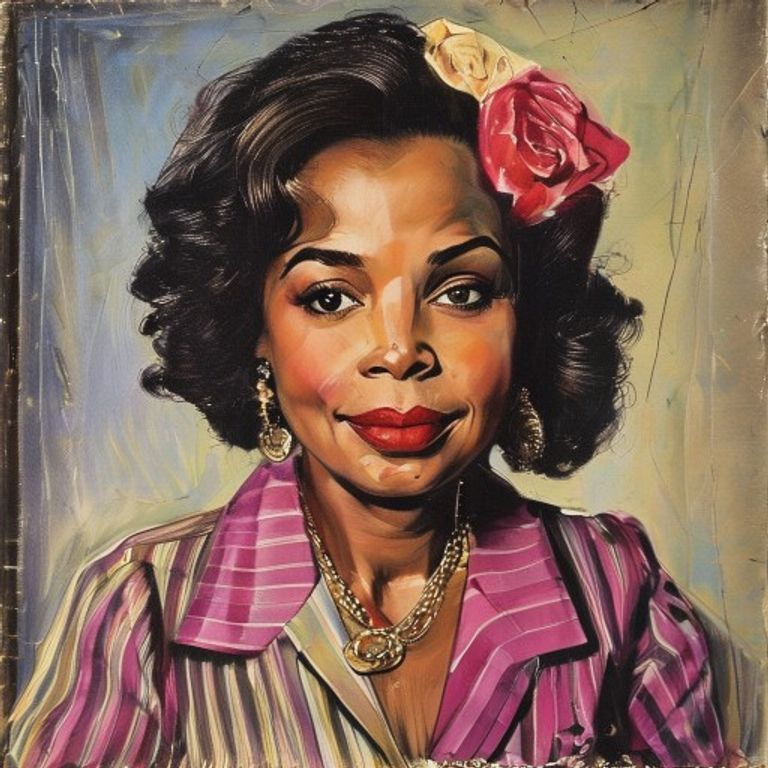
The wrongful conviction of an Australian mother in 1980 for the disappearance of her daughter, after she claimed a dingo had taken the baby from their tent at an isolated campsite.
⚠️ Research conducted with the aid of Deep Research is subject to referential ambiguity.
🖥️ Clean HTML code using a proprietary tool.
👥 Research by Guilherme Felipe, Curation by Sílvio Lôbo
The Dingo Mystery and the Search for Truth: The Lindy Chamberlain Case
The overwhelming silence of the vast and untamable Australian Outback holds secrets that defy human understanding. Among them, the case of Lindy Chamberlain stands out as a legal and social drama that paralyzed a nation, exposing the fragilities of justice and the dangerous dance between faith, doubt, and the relentless course of events. What began as a family tragedy at an isolated campsite turned into a judicial battle of epic proportions, leaving a persistent question echoing through the generations: who really took little Azaria Chamberlain?
1. The Context and the Incident: The Cry in the Night
Everything unfolded at Uluru (formerly known as Ayers Rock), a geological and spiritual icon of Australia, on August 17, 1980. The couple Michael and Lindy Chamberlain, pastors of the Seventh-day Adventist Church, were camping with their three children: Aron, 9, Reagan, 4, and the newborn Azaria, just nine weeks old.
The night was cold and the couple had returned to their tent to rest. Lindy, exhausted, breastfed Azaria and placed her in her sleeping bag, in the infant tent, a few meters from the main tent. That was when the unthinkable happened. According to Lindy's account, she heard a sharp cry and, upon turning, saw a dingo leaving Azaria's tent with something in its mouth. Michael quickly ran outside, but it was too late. Little Azaria had disappeared.
2. Timeline of Events
The chronological reconstruction of the facts is essential to understand the complexity of the case:
- August 17, 1980: The disappearance of Azaria Chamberlain from the campsite at Uluru. Lindy Chamberlain reports seeing a dingo leaving the baby's tent with something in its mouth.
- August 1980: Intensive searches are carried out in the area. Traces of blood and baby clothes are found near a dingo den, but Azaria's body is never recovered.
- October 1980: Lindy Chamberlain is arrested and charged with murder. The police begin to build a case against her, based on her apparent calm and details interpreted as suspicious.
- September 1982: The first trial. Despite the lack of conclusive forensic evidence, Lindy Chamberlain is found guilty of murder and sentenced to life imprisonment. Michael is considered an accessory but is acquitted.
- February 1986: After nearly four years in prison, an appeal is accepted. New evidence emerges, including the testimony of a tourist who claims to have seen a dingo with a child in its arms at the time of the disappearance, and the discovery of Azaria's jumpsuit in a distant area, consistent with the hypothesis of a dingo attack.
- June 1987: Lindy Chamberlain is released from prison.
- September 1988: A forensic inquest confirms that the wounds found on Azaria were consistent with a dingo attack.
- 1995: A new inquest, requested by the family, maintains the cause of death as unknown.
- 2006: A new death inquest is opened, with new evidence being presented.
- 2012: The fourth death inquest, presided over by Coroner John Abernethy, officially declares that Azaria Chamberlain was killed by a dingo.
3. The Main Theories
Over the years, several theories have attempted to explain Azaria's disappearance, each with its own logic and basis of support:
3.1. Dingo Attack Theory (Official and Accepted Hypothesis)
This is the theory that prevailed in subsequent investigations and was confirmed in the 2012 inquest. The logic is simple and direct: dingoes, wild animals native to the Outback, are opportunistic predators. A baby sleeping in an open tent a few meters away would be a tempting and easily accessible target. Evidence supporting this theory includes:
- Lindy's initial account.
- The discovery of clothing fragments and signs of blood near a dingo den.
- The impossibility of Azaria's body having been hidden or completely destroyed by a dingo, given the time and conditions.
- The testimony of a tourist who allegedly saw a dingo with something in its arms at the time of the incident.
- Azaria's jumpsuit found at a considerable distance from the campsite, which would be compatible with the animal moving away.
3.2. Homicide Theory by Lindy Chamberlain
This was the central theory of the prosecution in the first trial, which led to Lindy's conviction. The logic behind this hypothesis, although contested by many, was based on:
- The police and prosecution's interpretation of Lindy's apparent lack of despair after the disappearance, viewed as unusual coldness.
- The belief that Lindy might have killed her daughter to avoid raising another child in an environment she considered difficult or for religious purposes, a controversial interpretation of her faith.
- The absence of a "body" (i.e., complete remains) which, in the investigators' view, could have been hidden by Lindy.
- The discovery of scissors and a brush near the tent, which were interpreted as "crime instruments" by the prosecution, but which could have just been personal hygiene items.
3.3. Conspiracy Theory (Less Common, but Present in Certain Narratives)
Although not a central theory in the case, some more marginal speculations suggested that there could be a larger conspiracy, perhaps involving the Australian government itself or local groups, to frame Lindy Chamberlain. The logic here is vague and without a solid factual basis, but it feeds on distrust of authorities and the dramatic narrative of the case. These theories are, for the most part, speculation without proof.
3.4. Paranormal/Supernatural Theories (Extremely Speculative)
In cases of deep mystery, theories exploring the inexplicable always arise. In the Chamberlain case, although there are no prominent reports of paranormal phenomena directly linked to the disappearance, the wilderness and the mysticism associated with Uluru could fuel speculation about unknown forces. However, these theories lack any factual or scientific basis.
4. Controversies and Blind Spots
The Lindy Chamberlain case is a case study in investigative failures and judicial biases. Several controversies and blind spots have been pointed out over the years:
- Interpretation of Lindy's Reaction: Lindy's apparent calm was interpreted as guilt by the police. However, the science of psychology explains that different people react to trauma in distinct ways, and religious faith can also provide a coping mechanism.
- Insufficient Forensic Evidence: In the first trial, forensic evidence was scarce and often misinterpreted. The lack of a complete body should not, in itself, be proof of murder, especially in an environment with active wildlife.
- Gender and Religious Bias: Critics point out that Lindy may have been targeted by prejudice for being a woman, a mother, and a member of a religious minority (Seventh-day Adventists), whose customs could be misunderstood by the Australian society of the time.
- Disappearance of Crucial Evidence: Azaria's jumpsuit was found in 2004 (and not in 1986, as erroneously reported in some popular sources), a crucial detail that reinforced the dingo theory. Its late location and the circumstances of its discovery raised questions about the competence of the initial investigation.
- Public and Media Pressure: The intense media coverage and public pressure to find a culprit, especially after the initial shock of the disappearance, may have influenced the investigations and the trial.
- The Lack of a More Comprehensive Inquest at the Beginning: The initial investigation focused excessively on Lindy as a suspect, neglecting the in-depth investigation of the dingo attack hypothesis.
5. Trivia and Legacy
The Lindy Chamberlain case transcended newspaper headlines, becoming a cultural phenomenon and a milestone in Australian legal history.
- Cultural Impact: The case inspired the book "Evil Angels" by John Bryson, which served as the basis for the acclaimed film "A Cry in the Dark" (1988), starring Meryl Streep as Lindy Chamberlain. The film played a significant role in changing public perception of the case.
- "A Dingo Took My Baby": This phrase, although often quoted out of context or sarcastically, became a cultural reference, encapsulating the tragedy and the mystery.
- Legislative Changes: The Lindy Chamberlain case led to reforms in the Australian legal system, especially regarding death inquests and the admissibility of evidence.
- Legacy of Doubt and Distrust: The case left a scar on public trust in authorities and the judicial system. Lindy's fight for justice, even after her release, is a testament to her resilience.
- The Danger of Preconceived Hypotheses: The case serves as a grim reminder of how an initial hypothesis, when embraced with fervor, can blind investigators to other possibilities, leading to devastating injustices.
The case of Azaria Chamberlain, in its essence, is a tragedy on multiple levels. It is the loss of a child, the torture of an innocent mother, and a dark mirror that reflects the dangers of haste, prejudice, and the relentless search for answers in a world where, sometimes, the silence of the desert is the only true witness.



