


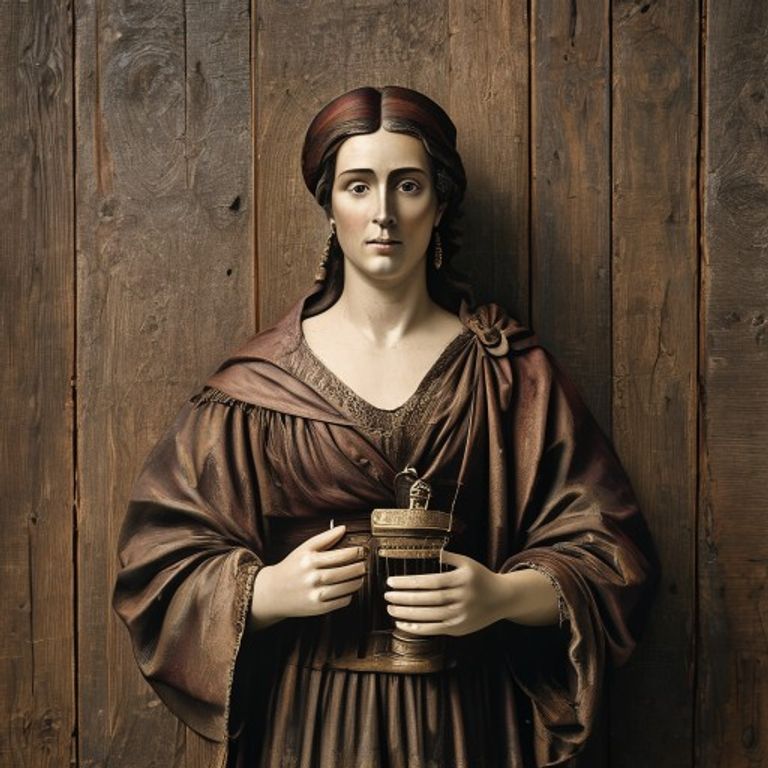
Brazil's first major civil codification, of liberal and individualistic inspiration, which governed the country's private life for nearly a century.
⚠️ Research prepared with the aid of Deep Research is subject to referential ambiguity.
🖥️ Clean HTML code using proprietary tools.
👥 Research by Guilherme Felipe, Curation by Sílvio Lôbo
The Enigma of the 1916 Civil Code: A Legal Mystery Unraveled?
In a period of profound social and legal transformation in Brazil, the year 1916 is not remembered solely for the enactment of the new Civil Code, a work that would shape private relations for decades. It also holds an enigmatic episode behind the scenes, a whisper in the halls of the legislative power that, to this day, resonates as a mystery to be solved: the "1916 Civil Code Case." This article aims to delve into the depths of this enigma, separating facts from speculation in search of the truth hidden behind the pages of the law.
1. The Context and the Incident: Where, When, and How the Mystery Began
The mystery did not manifest as a crime of passion or a conventional espionage plot. The "1916 Civil Code Case" is, in its essence, an intellectual and administrative enigma, intrinsically linked to the process of drafting and approving the new legal diploma. The epicenter of the controversy lies in the alleged and inexplicable alteration of a crucial article, Article 1,571, during the final stages of the bill's passage through the National Congress.
The 1916 Civil Code, designed to replace the Commercial Code of 1850 and consolidate civil laws, was the result of years of debate and revision. The central figure in its conception was the jurist Clóvis Beviláqua, appointed to the revision commission. The original version of Article 1,571, proposed and defended by Beviláqua, dealt specifically with the dissolution of civil marriage and established the irrevocability of matrimony, aligning with the moral and religious precepts of the time. However, the version that finally entered into force contained a subtly different wording, which opened room for interpretation and generated disagreements regarding the original intent.
The incident, therefore, was not a singular, dated event, but rather a retrospective discovery, or even a suspicion that hovered over the minutes and annals of the era. The central question is: how and by whom was this alteration, seemingly small but with profound legal implications, introduced? The lack of clear records and a satisfactory official explanation opened space for one of the most intriguing enigmas of Brazilian law.
2. Timeline of Events
Reconstructing the exact timeline of a bureaucratic mystery is a challenge, but the main milestones can be traced based on legislative processes and official publications:
- 1902: Start of the work of the Civil Code revision commission, under the presidency of Lafayete Rodrigues Pereira and with the prominent participation of Clóvis Beviláqua.
- 1909: Presentation of the first Civil Code project to the Chamber of Deputies.
- 1910-1915: Processing of the project, with intense debates and revisions in both legislative houses (Chamber and Senate). It is during this period that the wording changes supposedly occurred.
- January 1916: The project is approved by both legislative houses.
- January 10, 1916: Enactment of the Civil Code by Law No. 3,071.
- January 1, 1917: Entry into force of the Civil Code.
- Subsequent decades: The emergence of debates and speculations about the alteration of Article 1,571, with jurists and historians pointing out inconsistencies between Beviláqua's original project and the final enacted text.
The complexity lies in the fact that the minutes of the sessions and the preparatory documents are not always conclusive. The agility or lack of rigor in certain stages may have obscured the exact moment of the intervention, if it occurred deliberately at all.
3. The Main Theories
The enigma of Article 1,571 gave rise to several theories, each with its own logic, from the most pragmatic to the most fantastic. It is crucial to analyze the plausibility of each:
3.1. Scientific and Police Hypotheses (Adapted to the Legal Context)
- Theory of Drafting/Copying Error: The most "earthly" explanation suggests that the alteration was not intentional, but rather the result of human error during the typing, copying, or revision of the texts. The complexity of drafting such an extensive code and the haste in its approval could have led to mistakes in transposing ideas into formal language. Clóvis Beviláqua's wording may have been subtly modified without malicious intent, merely by oversight.
- Theory of Third-Party Action with Legal Motivation: This hypothesis suggests that one or more members of the revision commission or legislators, considering Beviláqua's original wording excessively rigid or defending different points of view on marriage, introduced the change discreetly. The motivation would be purely legal and ideological, seeking to give the new code greater interpretive flexibility, even if it contradicted the original vision of the main drafter. It would be a political debate disguised as a technical correction.
3.2. Alternative, Conspiracy, or Paranormal Theories
- Political/Religious Conspiracy Theory: This line of thought speculates that the alteration was orchestrated by interest groups, possibly with strong religious or conservative influence, who sought to ensure that the code allowed, in the final instance, certain loopholes for marital dissolution, contradicting Beviláqua's explicit desire. The intention would be to maintain a facade of conservatism while planting the seed for future flexibilities, which would eventually materialize with the introduction of divorce years later. The mystery would be proof of a veiled long-term manipulation.
- Post-Mortem Enigma Theory (without direct factual basis): Although there is no concrete evidence, in cases of unsolved mysteries, it is common for supernatural theories to arise. In this case, we could speculate about some "extra-terrestrial" influence that motivated the change, or that Beviláqua, after his death, "tried" to warn about the alteration but lacked the means to do so. This theory is purely speculative and lacks any grounding in proven facts.
- Intellectual Revenge Theory: A bolder hypothesis suggests that a rival jurist or someone who felt overshadowed by Beviláqua's figure purposely introduced the alteration to undermine the master's work or to create a point of discord that could be exploited against him later. The alteration would be an act of intellectual sabotage disguised as legislative improvement.
It is fundamental to reiterate that most of these theories, especially the more conspiratorial and paranormal ones, lack robust evidence. The search for a plausible explanation must stick to the few documentary clues and the accounts of those involved at the time.
4. Controversies and Blind Spots
The "1916 Civil Code Case" is fertile ground for controversies and blind spots, precisely because of the nature of the mystery and the scarcity of conclusive documentation:
- Lack of Detailed Documentation: The legislative annals of the time, although they exist, often do not record with the necessary detail the debates and decisions regarding every word of such an extensive bill. The absence of detailed minutes on the specific discussions of Article 1,571 is one of the main obstacles.
- The Silence of Clóvis Beviláqua: Clóvis Beviláqua, a central figure in the drafting of the Code, never spoke out publicly in an emphatic way about the alteration. His silence, or the lack of record of his indignation if the alteration displeased him, is a significant blind spot. Was he the author of the modification and kept it secret? Or was he the victim of a maneuver he could not or would not expose?
- Conflicting or Absent Testimonies: Identifying key witnesses who may have witnessed or participated in the discussions that led to the alteration is extremely difficult. Memories of the era may have faded or been distorted by time.
- Ignored Clues: There is a possibility that some documents or letters from the time, which could shed light on the case, have been lost, destroyed, or simply never taken into consideration in subsequent research. A meticulous analysis of the personal archives of jurists and politicians of the time could, in theory, reveal new clues.
- The Nature of the Alteration: The alteration itself is subtle. Beviláqua's original wording, in some interpretations, prohibited the dissolution of marriage. The final wording, according to critics, would open loopholes or allow interpretations that would eventually lead to divorce, which would only be legalized in Brazil in 1977. The doubt is whether this "loophole" was intentional or an unplanned consequence of a linguistic correction.
5. Curiosities and Legacy
The "1916 Civil Code Case," despite not having the appeal of a macabre crime, possesses a profound intellectual and cultural legacy:
- The "Father" and the "Problematic Daughter": The case casts a shadow over the work of Clóvis Beviláqua, one of the greatest Brazilian jurists. The doubt about the complete authenticity of his authorship, or about the manipulations his work suffered, adds a layer of complexity to his historical figure.
- A Debate on Legislative Authenticity: The mystery raises important questions about the transparency and integrity of legislative processes. To what extent can a legal document be altered without the knowledge or explicit approval of the main author?
- The Seed of Divorce: Although the 1916 Code did not provide for divorce, the controversy surrounding Article 1,571 is seen by some as an early demonstration of the social and legal tensions that, decades later, would culminate in the legalization of marital dissolution. The enigma can be interpreted as a harbinger of future changes in family law.
- A Perennial Legal Mystery: The case remains, for the most part, without a definitive resolution. Official reports from the time do not offer clear explanations, and access to older documents is limited. The "1916 Civil Code Case" has become a case study for legal historians, jurists, and mystery enthusiasts, a reminder that even the documents that shape our lives can hold secrets.
- Current Status: The case has not been officially reopened in terms of a formal police or legal investigation. However, academic debate and public curiosity persist. New research in declassified or private archives could, theoretically, shed new light on this secular enigma. For now, it remains shelved, a whisper in the heart of Brazilian law, perhaps waiting for a new look to unravel its final pages.



