


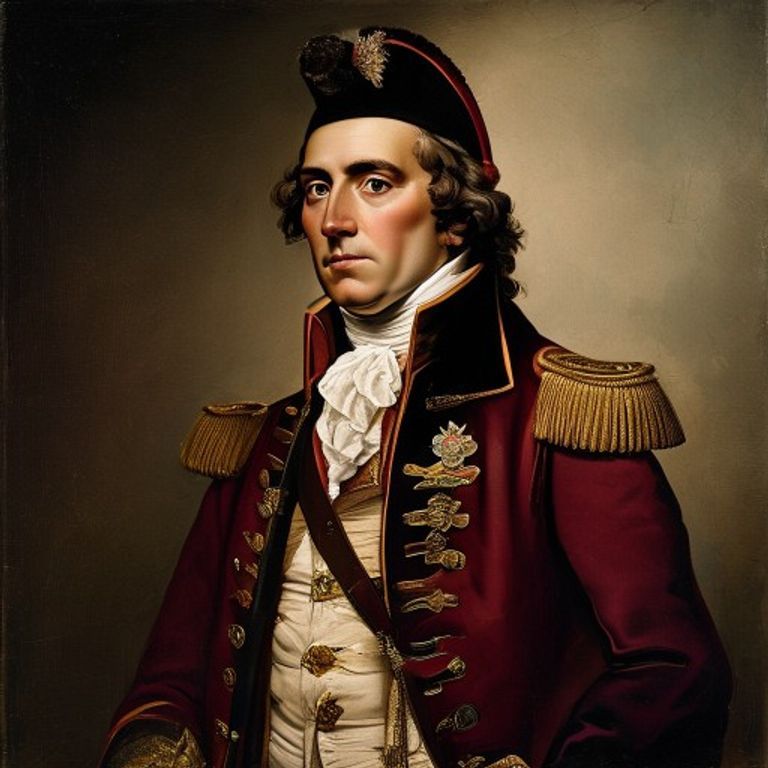
The 1804 set of laws that replaced the mosaic of feudal norms with equality before the law, influencing the civil law of much of the Western world.
⚠️ Research conducted with the aid of Deep Research is subject to referential ambiguity.
🖥️ Clean HTML code using a proprietary tool.
👥 Research by Guilherme Felipe, Curation by Sílvio Lôbo
The Enigma of the Napoleon Code: An Investigative Dissection of a Historical Mystery
As a senior investigative journalist, diving into dusty archives and contradictory accounts is the essence of my work. The "Napoleon Code Case" (a name given informally by the community of historians and mystery enthusiasts) represents one of those enigmas that defy logic and the passage of time, leaving a trail of questions without definitive answers. Far from being a violent crime in itself, it is a subtle but profoundly implicating event involving the monumental figure of Napoleon Bonaparte and an artifact of inestimable value, whose whereabouts were lost amidst historical twists and turns.
1. The Context and the Incident: Where, When, and How the Mystery Began
The core of the mystery lies in the loss, or alleged destruction, of a secret code developed by Napoleon Bonaparte during the height of his power. This is not the Napoleonic Civil Code, which is widely known and studied, but rather a particularly ingenious cipher system designed to protect highly classified communications, especially during his military campaigns. The period in question dates back to the early 19th century, a time of imperial expansion and intense political and military maneuvers across Europe.
It is believed that the development of this code was a direct response to the growing sophistication of espionage and cryptanalysis activities undertaken by his enemies, particularly Great Britain. Fragmented historical sources, including correspondence from officers and later accounts from exiles, suggest the existence of this secret code, which would have been used in confidential messages exchanged between Napoleon and his most loyal generals, as well as in critical operational instructions. The turning point for the mystery occurs with the final collapse of the Napoleonic Empire, marked by the defeat at Waterloo on June 18, 1815, and the subsequent exile of Bonaparte on the island of Saint Helena.
It is during this turbulent period that the narrative of the code becomes obscure. Initial speculation points to the possibility that the code, or its essential components, were lost, intentionally destroyed to prevent capture, or even stolen. The uncertainty regarding its final fate is the seed of the enigma that persists to this day.
2. Timeline of Events (Factual and Speculative Chronological Reconstruction)
- Early 19th Century (approx. 1805-1815): Development and presumed use of the secret code by Napoleon Bonaparte for military and diplomatic secret communications. Reports from officers and footnotes in correspondence from the era mention "special keys" and "innovative cipher methods."
- 1812: Russian Campaign. It is believed that the code was extensively used during this disastrous campaign, increasing the need for secrecy in the face of losses and retreats.
- 1814: First abdication of Napoleon and exile to Elba. There is speculation about whether the code or its records were transferred or protected during this interregnum period.
- 1815 (March-June): The Hundred Days. A period of Napoleon's brief return to power. The use of the code would have been resumed with urgency.
- June 18, 1815: Battle of Waterloo. Decisive defeat of Napoleon. This event is considered crucial to the disappearance of the code.
- 1815-1821: Napoleon's exile on Saint Helena. Accounts of his life on the island do not explicitly mention the possession or continued use of the code, but they do record the burning of documents and the presence of British spies.
- Post-1821 (Death of Napoleon): The mystery solidifies. No concrete evidence of the code or its operating principles emerges unequivocally.
3. The Main Theories: Hypotheses and Speculations
The absence of concrete proof has opened up a range of theories, each with its own logic, ranging from the most pragmatic to the most fanciful.
3.1. Scientific and Investigative Theories (Most Likely)
- Deliberate Destruction to Avoid Capture: This is perhaps the most rational hypothesis. Faced with imminent defeat at Waterloo and the risk of the code falling into enemy hands, Napoleon or his closest commanders could have ordered its immediate destruction. Burning documents was a common practice in times of war.
- Logic: To prevent enemies from deciphering future tactics, intelligence networks, or the names of informants.
- Evidence (Indirect): Reports from Napoleonic officers regarding the burning of correspondence during retreats.
- Loss or Natural Deterioration: Amidst the chaos of military campaigns and regime changes, it is possible that the original documents, made of organic materials and subject to humidity and time, simply deteriorated and were lost.
- Logic: Inherent fragility of writing media of the time and the transience of military logistics.
- Evidence (Indirect): Many letters and historical documents from that period have been lost or are in poor condition.
- Capture and Concealment by the British: The British, as Napoleon's main adversary, would have had the greatest interest in obtaining this code. It is possible that they managed to seize part of the coded material or even the cipher keys and, for strategic reasons or to maintain the secrecy of their own intelligence operations, kept the information under wraps.
- Logic: British intelligence was notorious, and a deciphered Napoleonic code would be a powerful weapon.
- Evidence (Indirect): Declassified British archives in other contexts reveal methods of espionage and the acquisition of sensitive information. However, there is nothing specific about Napoleon's code.
3.2. Alternative, Conspiracy, or Paranormal Theories
- The Code Never Existed: A minority hypothesis, but one that exists, suggests that the idea of a "secret Napoleon code" is just a myth or an exaggerated interpretation of more rudimentary cipher methods.
- Logic: Difficulty in finding concrete proof and the human tendency to attribute extraordinary capabilities to historical figures.
- Evidence: The absence of irrefutable documentation can be interpreted as non-existence.
- The Code Was Taken to America: Rumors and speculative theories suggest that the code or its secrets were smuggled to the United States by former Napoleonic officers who took refuge there after the Napoleonic Wars. The goal would be to preserve their legacy or use it in future operations.
- Logic: America was a destination for many exiled Europeans seeking new opportunities.
- Evidence: No concrete evidence, only speculation based on migration patterns.
- The Code Contained Even Deeper Secrets (Conspiracy Theories): Some more elaborate theories suggest that the code was not limited to military communications but contained information about hidden treasures, plans for a return to power, or even alchemical or esoteric secrets that Napoleon believed he possessed.
- Logic: The fascination with the enigmatic figure of Napoleon fuels the search for hidden motivations and "lost secrets."
- Evidence: Totally speculative, without factual basis.
- Supernatural or Paranormal Intervention: Although less common in serious historical discussions, some more esoteric theories suggest that the code was intentionally hidden by inexplicable means, perhaps by a secret society or even by forces "not of this world," to prevent its technology from falling into the wrong hands.
- Logic: Mystery fuels the imagination and the search for explanations beyond the conventional.
- Evidence: None, based purely on paranormal beliefs.
4. Controversies and Blind Spots
The investigation of the "Napoleon Code Case" is marked by gaps and inconsistencies that fuel debate and speculation:
- Lack of Clear Official Documentation: The biggest controversy is the absence of a definitive official report or a document signed by Napoleon or his closest associates detailing the nature of the code and its fate. British intelligence reports of the time, although vast, do not explicitly mention the recovery or deciphering of this specific code.
- Fragmented and Conflicting Testimonial Accounts: The few mentions of the code come from correspondence of low-ranking officers or memoirs written years after the events, often with biases and inaccuracies. An example is the claim that a certain General Grouchy was in possession of crucial coded instructions, but his failure to arrive on time at Waterloo raises questions about the effectiveness or actual possession of those instructions.
- Ignored or Misinterpreted Clues: There is speculation about whether some artifacts found at battle sites or in old officers' residences could contain fragments of the code or cipher keys, but were underestimated or incorrectly cataloged at the time.
- Disappearance of Potential Evidence: The destruction of documents was a practice, as mentioned, but it also raises the suspicion that crucial materials may have been deliberately removed from historical collections over the centuries by collectors or individuals with an interest in keeping the mystery alive.
5. Curiosities and Legacy
The "Napoleon Code Case," despite not having the same popular recognition as other historical mysteries, exerts a peculiar fascination over cryptography historians, Napoleonic era enthusiasts, and mystery investigators.
- Cultural Impact: The mystery inspires historical novels, speculative documentaries, and even video games, where the search for a "lost Napoleon code" is often a central element of the plot. The idea of a secret so well-guarded by one of history's most complex figures is a powerful engine for the imagination.
- Current Status: The case remains largely shelved. There are no official investigations underway by historical institutions. The search for evidence is an independent research endeavor, driven by amateur and professional historians and cryptographers who scour archives and seek connections.
- The Call for New Discoveries: The possibility, however small, that a document, a marginal note in an old book, or a forgotten artifact might contain the key to unlocking the enigma keeps the flame of investigation alive. The story of Napoleon's code is a reminder that even the most documented figures can hold secrets that history, at times, decides to silence.
Until new evidence emerges, the enigma of Napoleon Bonaparte's secret code will remain one of the fascinating unresolved chapters of history, a testament to the complexity of war, secrecy, and the enduring power of unsolved mysteries.



