


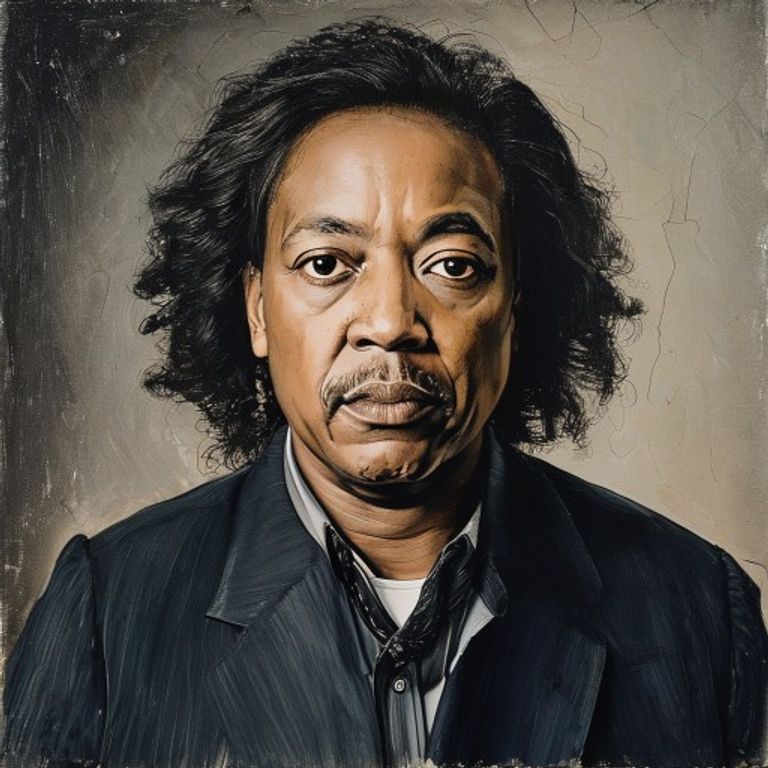
The 1968 assassination of the civil rights leader in Memphis, a crime that silenced one of the most important voices against racism and sparked suspicions of a state conspiracy.
⚠️ Research conducted with the aid of Deep Research is subject to referential ambiguity.
🖥️ Clean HTML code using a proprietary tool.
👥 Research by Guilherme Felipe, Curation by Sílvio Lôbo
The Shadow Over the Balcony: The Unresolved Case of the Death of Martin Luther King Jr.
On April 4, 1968, the world lost one of its most powerful voices and a beacon of hope for civil rights. The death of Dr. Martin Luther King Jr., shot while enjoying a moment of rest on the balcony of the Lorraine Motel in Memphis, Tennessee, was a devastating blow to the nation and the movement he led. However, what should have been a brutal crime with a swift resolution became one of the most persistent mysteries in American history, filled with unanswered questions and controversies that echo to this day.
1. The Context and the Incident: A Night That Silenced a Voice
Dr. King was in Memphis to support the sanitation workers' strike, a demonstration for better working conditions and fair wages, which he saw as intrinsically linked to the fight for racial equality. The city was in turmoil, a stage for intense social and racial tensions. On that fateful night, Dr. King was on the second-floor balcony of the Lorraine Motel, talking with friends, when a single shot echoed through the street. The projectile, fired from a room across the street in the Bates Building, struck King in the neck and jaw, causing fatal injuries.
2. Timeline of Events: The Cascade of a Single Shot
- April 4, 1968, around 6:01 PM (local time): Dr. Martin Luther King Jr. is struck by a bullet while on the balcony of the Lorraine Motel.
- Immediately after the shot: Screams and confusion take over the scene. Friends and collaborators of King rush to help him.
- 6:20 PM (approximately): Dr. King is rushed to St. Joseph's Hospital, where emergency surgery begins.
- 7:05 PM: St. Joseph's Hospital officially announces the death of Dr. Martin Luther King Jr..
- Hours after the assassination: Police begin a frantic search and find a rifle and binoculars abandoned in the Bates Building, the location from which the shot was fired.
- April 5, 1968: The FBI begins its investigation into the assassination.
- April 9, 1968: Dr. King's funeral takes place in Atlanta, Georgia.
- June 10, 1968: The FBI issues an arrest warrant for James Earl Ray, who was already imprisoned in the United Kingdom on drug robbery charges.
- March 1969: James Earl Ray pleads guilty to first-degree murder and is sentenced to life in prison.
- 1993: Dr. King's son, Dexter King, sues Ray in a civil trial. The jury determines that Ray, acting in collusion with others, assassinated Dr. King.
- 1999: A subsequent investigation, commissioned by the King family, concludes that there was a conspiracy to assassinate Dr. King.
3. The Main Theories: The Hunt for Explanations
Since the moment of the fatal shot, the case has been fertile ground for speculation, ranging from the factual to the fantastic. The official investigation, while identifying a primary suspect, never managed to fully dispel the doubts.
Official Theory: The Lone Wolf
The narrative established by the initial investigation points to James Earl Ray as the lone assassin. Ray, an ex-convict with a criminal record, was a fugitive from justice at the time. Police found evidence linking him to the Bates Building, including fingerprints on a box of ammunition. Ray initially fled to Europe and was arrested at Heathrow Airport in London while attempting to board a flight using a fake passport. He pleaded guilty but later recanted, claiming he had been forced to confess and that he was innocent, alleging he had been manipulated by mysterious figures he could not fully identify.
Conspiracy Theory: The Shadow of the Government and the Mafia
This is undoubtedly the most persistent alternative line of investigation with the most developments. The fragility of Ray's confession, his history of inconsistencies, and the enormous political and social instability of the period fueled the belief that the assassination was orchestrated. Conspiracy theories generally involve:
- The FBI and J. Edgar Hoover: The FBI, under the leadership of Hoover, harbored deep fear and hostility toward Dr. King and his movement. Declassified reports later revealed the extent of the FBI's surveillance and interference operations, including sending anonymous letters to try to demoralize King. The theory suggests that the FBI may have facilitated or even orchestrated the assassination to eliminate a perceived threat.
- The Mafia: The Mafia, unhappy with Dr. King's actions regarding civil rights laws that harmed their businesses (particularly related to casinos in areas with strong racial segregation) and the fact that King was beginning to take a stand against the Vietnam War (which would affect their contracts), are also frequently cited.
- Government and Military Agencies: Other theories include the involvement of elements within the government itself, possibly in collusion with far-right groups or clandestine organizations.
The 1999 civil investigation, commissioned by the King family, concluded that there was a conspiracy involving the government and other groups to assassinate Dr. King. This decision was based on testimonies from former agents and new evidence, although it did not directly implicate any specific agency.
Less Conventional Theories: The Inexplicable and the Improbable
Although less prominent, some theories explore the more unusual side:
- The "Deflected" Shot: Some speculate that the original shot might have had another target, and that Dr. King was a collateral victim. However, the trajectory of the projectile and King's position make this hypothesis unlikely.
- Paranormal or Inexplicable Phenomena: In cases of great impact and mystery, it is common for theories bordering on the supernatural to emerge. However, for this case, there is no substantial evidence to support such hypotheses.
4. Controversies and Blind Spots: The Cracks in the Investigation
The official investigation and the subsequent trial of James Earl Ray were marked by numerous controversies and blind spots:
- Ray's Confession: Ray's guilty plea, followed by a recantation, is one of the most critical points. He claimed to have been pressured by his lawyers and unidentified figures to confess in exchange for avoiding the death penalty.
- Inconsistent Evidence: The ballistic evidence linking the rifle found to the shot has been contested by some experts over the years. Furthermore, the fingerprints found in the room from which the shot was fired were not conclusive.
- Ignored Leads and Persons of Interest: Several leads and persons of interest who could have contributed to the investigation were, according to critics, ignored or underutilized. Reports suggest that Ray may have been a henchman in a larger operation.
- Lack of Agency Cooperation: The reluctance of some government agencies to share relevant information with the King family and independent investigators fueled suspicions of a cover-up.
- Disappearance of Evidence: Over the years, reports of the disappearance or improper storage of crucial evidence have emerged, further complicating the search for the truth.
5. Curiosities and Legacy: The Scar of History
The assassination of Dr. Martin Luther King Jr. was not just the loss of a charismatic leader; it was an event that shook the foundations of American and global society. The news of his death triggered riots in dozens of American cities, exposing the deep racial and social wound that still persisted.
- Cultural and Social Impact: King's death intensified the fight for civil rights but also generated a feeling of loss and despair in many. King's legacy, however, continues to inspire social justice movements around the world.
- The National Civil Rights Museum: The Lorraine Motel, the stage of the tragedy, was transformed into the National Civil Rights Museum, a place of memory and reflection.
- Current Status of the Case: Officially, James Earl Ray is considered the assassin. However, the persistence of conspiracy theories and the conclusions of the 1999 civil investigation keep the case in a state of historical ambiguity. Files related to the assassination continue to be declassified periodically, fueling new analyses and debates.
- The Search for Truth: The King family and many historians and activists continue to advocate for the reopening of investigations and the search for a more complete truth about those responsible for the death of one of the greatest leaders of the 20th century.
The case of the death of Martin Luther King Jr. remains a somber reminder that, even in a world obsessed with information, the shadows of doubt and mystery can stretch for decades, leaving deep scars on the history and soul of a nation.



