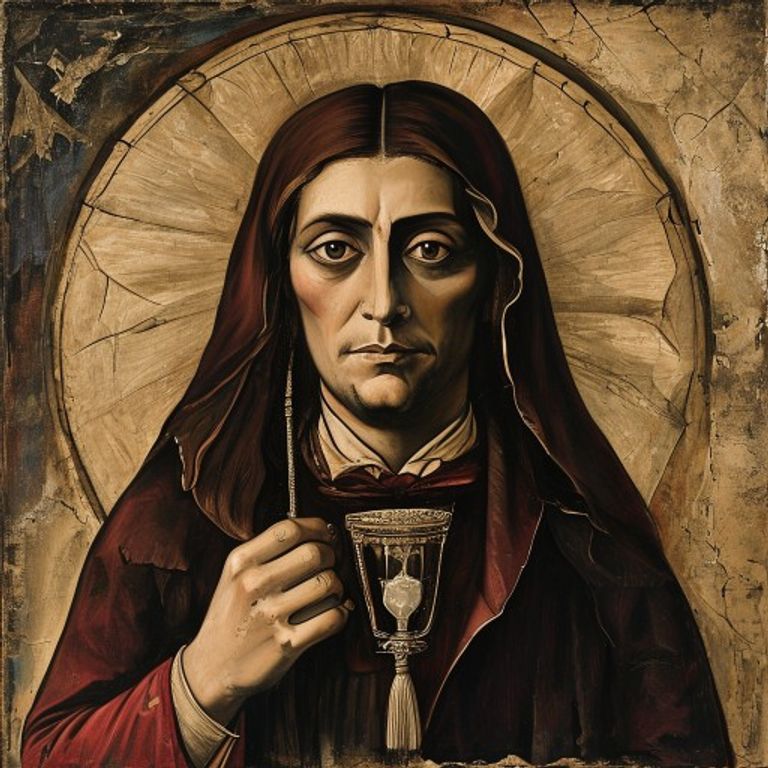
The execution of the Argentine guerrilla in Bolivia in 1967 following his capture; his image became a global symbol of rebellion, while his body remained hidden for thirty years.
⚠️ Research conducted with the aid of Deep Research is subject to referential ambiguity.
🖥️ Clean HTML code using a proprietary tool.
👥 Research by Guilherme Felipe, Curation by Sílvio Lôbo
The Silenced Enigma: Investigating the Death of Che Guevara
Ernesto "Che" Guevara. The name evokes revolution, idealism, and, for many, a persistent mystery. The iconic figure of the Argentine guerrilla who fought alongside Fidel Castro in the Cuban Revolution and later sought to expand his struggle worldwide, ended his life under circumstances that, decades later, still fuel debates and speculation. This article delves into the "Case of Che Guevara's Death," unraveling the context, timeline, theories, controversies, and the legacy of one of the most fascinating enigmas of the 20th century.
The Context and the Incident: The End of a Legend in the Bolivian Jungle
The setting for Che Guevara's final chapter was the remote and dense Bolivian jungle. After his failed attempt to start a revolution in Congo-Kinshasa, he landed secretly in Bolivia in November 1966, with the goal of turning the country into a new center of revolutionary irradiation for Latin America. Under the codename "Ramón," Guevara organized a small group of guerrillas, composed of Cubans and Bolivians, facing extreme difficulties due to the lack of local support, the inexperience of the fighters, and the relentless pursuit by the Bolivian Armed Forces, with CIA support.
The incident that would seal Guevara's fate occurred on October 8, 1967, in the Quebrada del Yuro, near the town of Vallegrande. After a long and arduous campaign against the guerrillas, a detachment of the Bolivian army, with the help of CIA agents, surrounded Guevara's group. He was wounded, captured, and taken to an improvised school in Vallegrande, where he would be executed the following day.
Timeline of Crucial Events
- November 1966: Ernesto "Che" Guevara arrives in Bolivia secretly.
- March 1967: Guevara's guerrilla group is spotted for the first time by Bolivian authorities.
- August 1967: The Bolivian army, with CIA support, intensifies the hunt for Guevara and his men.
- October 8, 1967: Guevara's group is surrounded and captured in the Quebrada del Yuro. Guevara is wounded and imprisoned.
- October 9, 1967: Ernesto "Che" Guevara is executed in the school of La Higuera, in Vallegrande.
- October 11, 1967: The Bolivian government officially announces Guevara's death.
- 1997: His remains are found and identified by Argentine experts, confirming the location of his clandestine grave in Vallegrande.
The Main Theories: Between Official Truth and the Veil of Mystery
The official version, perpetuated by the Bolivian government and the CIA at the time, is that Guevara was captured and summarily executed after an interrogation. However, over the years, various theories have emerged, fueled by gaps in the official narrative and the secrecy surrounding the case.
Official Theory: Summary Execution
This is the explanation accepted by most historians and subsequent revelations from declassified documents. Guevara, wounded and captured, was considered an unacceptable threat and, by order of then-Bolivian President René Barrientos (possibly under CIA pressure), was executed by Bolivian soldiers. CIA agent Felix Rodriguez, present in Bolivia, reportedly supervised the interrogation and execution, although his exact role is a subject of debate.
"Prolonged Imprisonment and Interrogation" Theory:
Some sources suggest that Guevara may have been kept alive for a period after his capture for interrogation purposes and so the CIA could extract information about his support networks and revolutionary plans. This theory is based on contradictory witness accounts regarding Guevara's whereabouts in the hours following his capture.
"Frustrated Escape" Theory:
A less widespread theory, but present in some narratives, suggests that Guevara might have attempted an escape after his capture, and that the execution occurred during this attempt. However, Guevara's physical condition after being wounded in the Quebrada del Yuro makes this hypothesis less likely.
Conspiracy and Paranormal Theories:
Although there is no concrete evidence, the figure of Che Guevara and the mystery of his death have inspired more fanciful speculation. Some conspiracy theories suggest that Guevara was not executed, but rather taken to another location, possibly by his allies, to continue his struggle under another identity. Paranormal theories, in turn, address alleged inexplicable phenomena linked to his death or the site of his execution, without any scientific basis.
Controversies and Blind Spots: The Shadows of the Investigation
The investigation and disclosure of information regarding Che Guevara's death were marked by several inconsistencies and blind spots:
- Confusion over the exact location of the execution: Initially, the location of the execution was kept secret, and later, the school where it occurred was demolished, making a faithful reconstruction of the facts difficult.
- Conflicting witness accounts: Testimonies from Bolivian soldiers and CIA agents present at the operation showed variations regarding the details of the capture and execution, generating distrust.
- The exact role of the CIA: Although declassified documents confirm the presence and actions of the CIA, the exact level of their participation in the decision to execute Guevara and in the logistical planning remains a point of debate.
- Disappearance of evidence: The rapid removal of Guevara's body and the subsequent demolition of the school raised suspicions that important evidence could have been hidden or destroyed.
- The authenticity of certain photos: Some iconic photographs of the dead Guevara have been the subject of debate regarding their authenticity and the moment they were taken.
Curiosities and Legacy: The Immortal Legend
The cultural impact of Che Guevara's death is immeasurable. The image of the guerrilla became a global symbol of rebellion, the fight against oppression, and revolutionary idealism, printed on t-shirts, posters, and protests all over the world.
- The Legacy of the Icon: Although his revolutionary tactics are questionable to many, the figure of Che Guevara transcends ideologies, representing the personification of courage and conviction.
- Recognition and Rediscovery: In 1997, the discovery and identification of his remains by Argentine experts in Vallegrande brought a new dimension to the story, allowing for physical closure, but not the dissipation of the mystery surrounding his death.
- Current Status of the Case: The case, in terms of formal criminal investigation, has been shelved for decades. However, the historical, sociological, and cultural interest remains alive. Declassified archives and new analyses continue to emerge, keeping the "Case of Che Guevara's Death" as a subject of constant reassessment and fascination.
The silenced enigma of Che Guevara's death, shrouded in the shadows of the Bolivian jungle, will continue to inspire research and debate, a perennial testament to the complexity of history and the persistence of figures who defy time.