


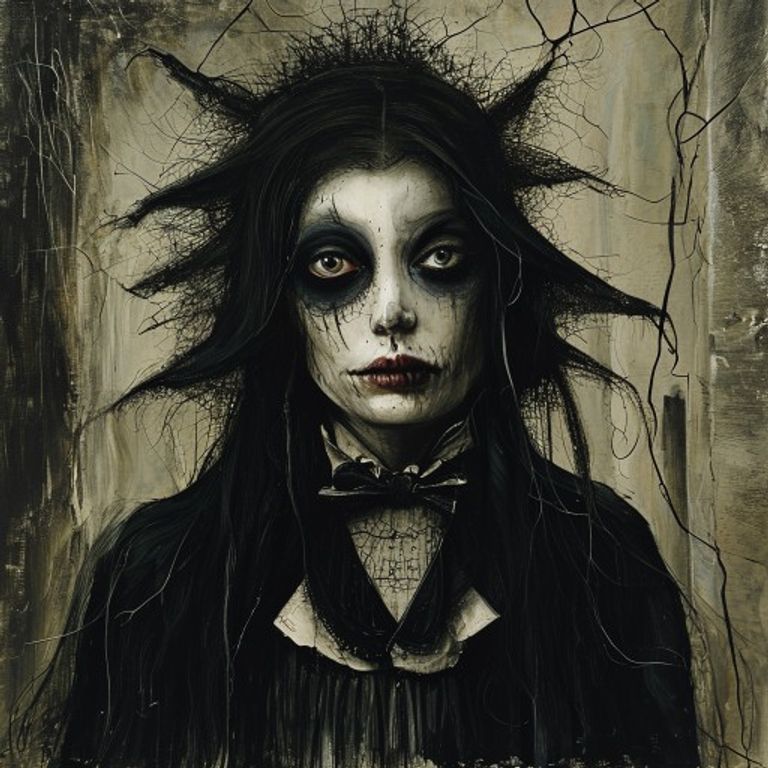
Secular reports of a man in grey who appears in one of London's oldest theaters, whose sightings are seen as a sign of success for the plays.
⚠️ Research conducted with the aid of Deep Research is subject to referential ambiguity.
🖥️ Clean HTML code using a proprietary tool.
👥 Research by Guilherme Felipe, Curation by Sílvio Lôbo
The Case of the Drury Lane Ghost: A Cold Enigma in London
By [Your Senior Investigative Journalist Name]
Published on [Date]
1. The Context and the Incident: A Shadow in Drury Lane
The Case of the Drury Lane Ghost does not refer to a single supernatural apparition, but rather to a series of inexplicable events and a mystery that hovered over a specific stretch of Drury Lane, in the heart of London, during the 1970s and 1980s. The epicenter of the unrest lay in the vicinity of the Theatre Royal Drury Lane and adjacent buildings, where reports of paranormal activity and suspicious disappearances began to accumulate, fueling local folklore and intriguing amateur investigators and, at times, official authorities.
What initially manifested as mere "hauntings" and strange noises gradually evolved into something more sinister. Reports of shadowy figures, inaudible whispers, and an oppressive sense of presence began to be documented, many of them coming from theater staff, passersby, and residents of the surrounding areas. The atmosphere of mystery was intensified by the discreet nature of the events, which rarely resulted in direct confrontations but created a climate of constant apprehension.
2. Timeline of Events: A Fragmented Mosaic
Reconstructing an accurate timeline for the Drury Lane Ghost Case is a challenge, given the nebulous nature of the reports and the absence of a single catalytic event. However, the peaks of activity and the most significant reports seem to concentrate on:
- Late 1970s: Beginning of the proliferation of reports of apparitions and anomalous phenomena, mainly related to the Theatre Royal Drury Lane. Theater staff (contrary to the rule of maintaining professional discretion) began sharing stories of shadows, objects moving on their own, and sensations of intense cold in specific areas.
- Early 1980s: Intensification of reports and the emergence of more elaborate theories. The local press, initially skeptical, began covering the stories more frequently, giving the name "Drury Lane Ghost" to these occurrences.
- Mid-1980s: Apparent decline of the most notorious reports. Public and media attention waned, and the phenomena seemed to have become less frequent or less striking.
- Subsequent Decades: The case entered a limbo, turning into an urban legend. Occasionally, new reports emerge, but without the same intensity or volume as in the 80s.
3. The Main Theories: Seeking Explanations in the Shadows
The Drury Lane enigma attracted a myriad of explanations, from the most terrestrial and rational to the most fantastic.
3.1. Scientific and Police Hypotheses (Terrestrial)
- Psychological Phenomena and Suggestion: In an environment conducive to suggestion, such as an old theater with a rich history, it is plausible that fear and expectation create anomalous perceptual experiences. The so-called "Hawthorne effect" or mass hysteria may have played a role.
- Structural Noises and Vibrations: Old theaters and adjacent buildings can be prone to unusual noises and vibrations generated by mechanical systems, external traffic, or the building's own structure. The particular acoustics of a theater can amplify or distort sounds, creating the illusion of a presence.
- Illusionism and Deception: It is possible that some reports were fabricated or exaggerated by individuals with hidden intentions, such as pranks, attention-seeking, or even to create an atmosphere of mystery to attract tourists.
- Hidden Criminal Activity: The possibility that the "phenomena" were masking criminal activities, such as break-ins, hideouts, or even more serious crimes, cannot be entirely ruled out, although the lack of concrete evidence makes this theory speculative.
3.2. Alternative and Paranormal Theories (Supernatural)
- Presence of Spirits: The most widespread theory is that the theater and its surroundings are haunted by spirits. The oldest legends associate the site with tragic historical figures, such as William Stanley, 6th Earl of Derby, and even the ghost of a former actor. The idea is that these spirits are trapped or trying to communicate.
- Residual Energy: Some paranormal theories suggest that intense events or strong emotions leave an "energetic imprint" on a location, which can be perceived by sensitive individuals. The emotions associated with historical events at the theater could have created this residual energy.
- Collective Consciousness: A more esoteric line of thought postulates that the collective psychic energy of thousands of people who have passed through the site over the centuries could manifest in anomalous ways.
3.3. Conspiracy Theories
- Secret Government Experiments: Although less popular for this specific case, in conspiracy theories, inexplicable activities in public places are often linked to secret government experiments, possibly involving mind control or paranormal technology. There is no evidence to support such a claim in Drury Lane.
- Cover-up of Discoveries: The possibility that authorities or the theater itself "hushed up" significant findings that would contradict official explanations, maintaining the mystery to protect reputations or other interests, also figures in conspiracy narratives.
4. Controversies and Blind Spots: Gaps in the Investigation
The biggest obstacle to resolving the Drury Lane Ghost Case lies in the scarcity of concrete and verifiable evidence, as well as inconsistencies in testimonies.
- Lack of Physical Evidence: Despite numerous reports, there has never been a seizure of "haunted" objects, definitive audio or video recordings, or any tangible proof that could be submitted to rigorous forensic analysis.
- Confidential (or Non-existent) Official Reports: Although the local police at some point received complaints and investigated the reports, the lack of detailed or declassified public reports makes it difficult to analyze the actions taken. It is common for cases classified as "inexplicable" to end up shelved without a formal conclusion.
- Conflicting Testimonies: The subjective nature of paranormal experiences leads to varied reports. What one person describes as a threatening apparition, another may report as a passing shadow. The lack of independent and corroborating witnesses is a recurring problem.
- "Missing" Evidence: In long-standing and nebulous cases, it is common for potential evidence to be lost over time, due to changes in personnel responsible for investigations or the lack of a rigorous documentation protocol.
- Institutional Skepticism: The tendency of authorities to dismiss paranormal reports as "imagination" or "simple" structural failures often prevents deeper investigations, focusing only on conventional explanations.
5. Curiosities and Legacy: The Ghost That Persists
The Case of the Drury Lane Ghost transcended local anecdotes to become an element of London popular culture, a cautionary tale, and a tourist attraction for those interested in the macabre and the inexplicable.
- Cultural Impact: The mystery inspired books, articles, and discussions on online forums dedicated to paranormal phenomena. The Theatre Royal Drury Lane itself, with its long history and reputation for being haunted, has become a reference point for occult enthusiasts.
- Current Status: The case has never been officially "solved" or "reopened" on a large scale by the police. It remains in a state of limbo, a persistent enigma that fuels speculation. New sporadic reports still emerge, but without the same strength to revive a formal investigation.
- The "Man in Grey" Ghost: One of the most recurring figures in the reports is the "Man in Grey," described as a tall man wearing a grey overcoat and a hat. This figure is often associated with bad luck events or an observant presence.
- The "Spirit" of the Theater: The Theatre Royal Drury Lane itself is notorious for its ghost stories, many of which intertwine with the Drury Lane reports. It is believed that the spirits of actors and historical figures linked to the theater reside on the premises.
The Case of the Drury Lane Ghost is a testament to the persistence of mystery in an increasingly rationalized world. While science seeks tangible explanations, the fascination with the inexplicable continues to echo through the alleys of London, keeping alive the flame of an enigma that, perhaps, will never be completely unraveled.



