


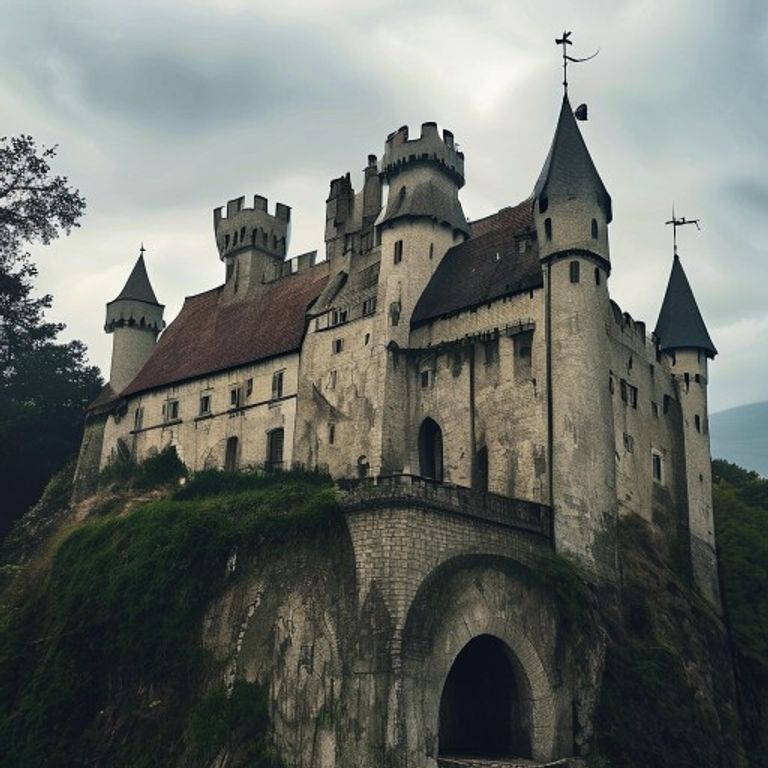
A fortress in England known as the most haunted in the country, with reports of voices and apparitions linked to its history of torture and executions.
⚠️ Research conducted with the aid of Deep Research is subject to referential ambiguity.
🖥️ Clean HTML code using a proprietary tool.
👥 Research by Guilherme Felipe, Curation by Sílvio Lôbo
The Mystery of Chillingham Castle: A Chilling Whisper in Northumberland
By [Your Senior Investigative Journalist Name]
The history of Chillingham Castle, nestled in the wild landscapes of Northumberland, England, is intrinsically linked to one of Great Britain's most persistent and dark mysteries. More than its ancient walls and the echoes of old battles, it is the persistent presence of a specter, a report of torture, and the difficulty in unraveling the truth that have captured the imagination and fueled speculation for centuries.
1. The Context and the Incident: The Shadows of Torture
Chillingham Castle, with origins dating back to the 12th century, has been the stage for countless historical events, including sieges and family conflicts. However, the mystery that predominantly surrounds it does not originate from a single, dramatic event, but rather from a continuous attribution of paranormal activity linked to a skeleton discovered in 1780.
According to reports, during restoration work in the Blue Chamber, a room within the castle, workers found a human skeleton. The discovery itself would not be extraordinary, but the state of the skeleton and the subsequent interpretation of the facts sparked the mystery.
2. Timeline of Events: From Discovery to Paranormal Legacy
- 12th Century: Initial construction of Chillingham Castle.
- 1780: Discovery of a human skeleton in the Blue Chamber during restoration work.
- Attribution of the Specter: Later reports began to associate the skeleton with a young boy who was tortured and murdered, whose paranormal activities would manifest in the castle. The exact identity and circumstances of the death remain nebulous.
- 19th and 20th Centuries: Chillingham Castle attracts the attention of paranormal investigators and occult enthusiasts. Reports of apparitions, inexplicable sounds, and feelings of dread become recurrent.
- Recent Decades: The castle becomes a popular location for tourism, highlighting its alleged hauntings. Stories about the "boy specter" or the "pale lady" solidify in local and national folklore.
3. Main Theories: Unraveling the Enigma
The mystery of Chillingham Castle is multifaceted, allowing for various interpretive approaches, from the most pragmatic to those that challenge conventional logic.
Scientific and Forensic Theories (Based on Possible Facts)
- Misinterpretation and Folklore: The most skeptical theory suggests that the discovery of the skeleton, in itself, did not imply torture or murder. The association with paranormal activity may have been a later invention, fueled by the castle's gloomy atmosphere and the search for interesting stories. The skeleton could have belonged to a common prisoner, a worker from the time, or even have been hidden there for other, less sinister reasons.
- Accidents or Poor Ancient Hygiene: In past eras, workplace accidents or undiagnosed diseases could lead to death and the concealment of bodies. The alleged "torture" may be an exaggerated dramatization of a tragic event.
- Superstition and Suggestion: The historical and isolated environment of the castle, added to the discovery of human remains, may have generated a state of suggestion in inhabitants or visitors, leading them to interpret normal noises and sensations as supernatural manifestations.
Alternative, Paranormal, and Conspiracy Theories
- The Specter of the Tortured Boy: This is the most popular theory, which posits that the skeleton belongs to a young boy who was tortured to death in the castle by a member of the Grey family, the historical owners. The pain and suffering would have left an energetic mark, manifesting as apparitions and sounds. The lack of concrete historical records regarding such torture fuels the speculative nature.
- The Pale Lady (Lady Mary): Another frequently reported haunting is that of a female figure, sometimes described as the "Pale Lady." Theories vary, but some associate her with a tragic love or a violent death within the castle. The connection between the skeleton and the Pale Lady, if any, is unclear and likely the result of different haunting narratives merging.
- Residual Energy and Psychic Phenomena: Some parapsychologists suggest that the site, due to past traumatic events (even if not fully documented), may retain "residual energy" that manifests as psychic phenomena. The discovery of the skeleton might have, perhaps, "activated" or intensified these energies.
- Conspiracy of Silence: A more conspiratorial theory could suggest that sinister events occurred at the castle and were intentionally covered up by influential families of the time to protect their reputation. The discovery of the skeleton would be just the tip of an iceberg of secrets.
4. Controversies and Blind Spots: Where the Light Fails
The main controversy surrounding the Mystery of Chillingham Castle lies in the scarcity of concrete evidence to corroborate the more dramatic narratives.
- Lack of Detailed Official Reports: There are no detailed police records or forensic reports from the time (1780) that describe the skeleton in depth or explicitly suggest torture. The interpretation as a "torture skeleton" seems to have been consolidated more by oral tradition and the castle's setting than by forensic evidence.
- Disappearance of Evidence: As in many historical cases, the possibility that crucial evidence was lost, destroyed, or never collected is high. What happened to the skeleton after its discovery? Information about its fate is scarce.
- Vague and Anecdotal Testimonies: The vast majority of reports regarding paranormal activity are anecdotal, based on personal experiences of visitors and residents over time. Although consistent in their nature, they lack objective validation.
- Motivation for Creating the Legend: There is a significant blind spot regarding who or why someone would be interested in propagating the legend of the tortured boy. Was it a way to scare, to create a captivating story for the location, or was there a grain of truth that was distorted?
5. Curiosities and Legacy: A Whisper That Never Dies
The Mystery of Chillingham Castle has transcended its geographical origins to become one of the most renowned haunted locations in Great Britain.
- Cultural Impact: The castle is frequently cited in books about ghosts, television programs, and documentaries about the paranormal. The story of the specter has added a layer of mysticism and significant tourist appeal.
- Paranormal Tourism: Currently, Chillingham Castle is a popular destination for paranormal enthusiasts. Night tours and themed events actively explore its alleged hauntings, perpetuating the legend.
- Current Status: The case remains essentially an unsolved mystery. Although a scientific or logical explanation for the reported phenomena is sought, the aura of mystery and the fascination with the supernatural ensure that the legacy of Chillingham Castle endures. There has been no official reopening of a police investigation, as there is no defined crime to be investigated based on proven facts. The story is a testament to the power of suggestion, folklore, and the eternal human search for answers to the inexplicable.
Chillingham Castle remains a silent guardian of its secrets, a place where the past whispers through cold walls, inviting an eternal reflection on the thin line between reality, legend, and the unknown.



