


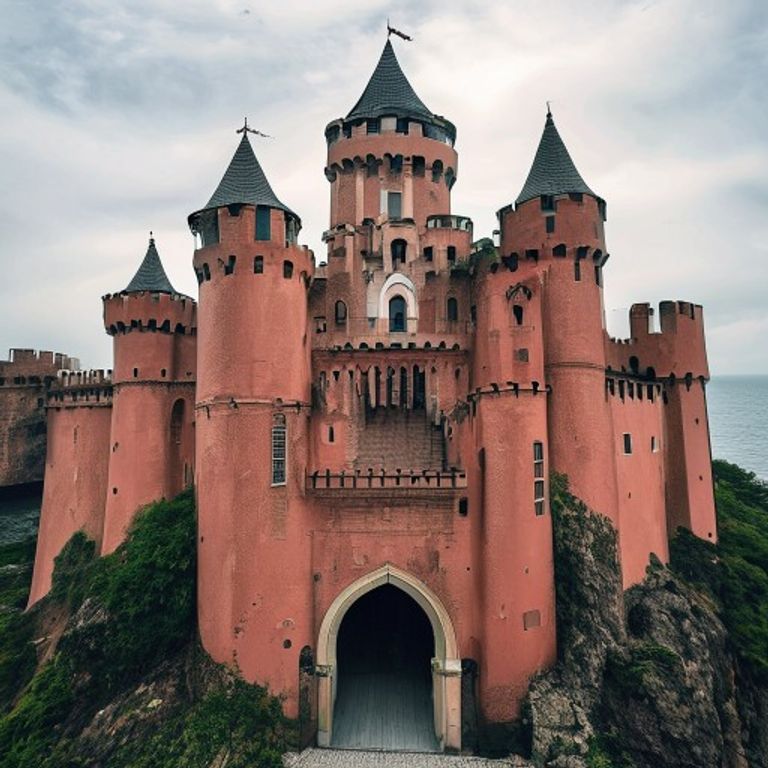
The structure in Florida built entirely by a single man using gigantic stone blocks, without the aid of modern machinery, under the claim of knowing the secrets of how the pyramids were constructed.
⚠️ Research prepared with the aid of Deep Research is subject to referential ambiguity.
🖥️ Clean HTML code using a proprietary tool.
👥 Research by Guilherme Felipe, Curation by Sílvio Lôbo
The Mystery of the Coral Castle: A Fortress of Endless Secrets
The history of architecture is punctuated by monuments that challenge not only human ingenuity but also logic and reason. In the heart of Florida stands one such structure: the Coral Castle. More than just a building, it is the epicenter of a mystery that has intrigued scientists, historians, and enthusiasts of the inexplicable for nearly a century. How did a single man, seemingly frail and using rudimentary tools, manage to erect a massive stone complex weighing hundreds of tons, in complete solitude? The answer, like the castle's own stones, remains overwhelmingly elusive.
The Context and the Incident: The Birth of an Enigma
The original name of Edward Leedskalnin, the enigmatic creator of the Coral Castle, was Edvard Liedskalniņš. Born in Latvia in 1882, Liedskalniņš emigrated to the United States in 1902, seeking a new life. After traveling the country and working in various occupations, he finally settled in Florida in 1918. It was here, in Florida City, that he began the construction of his monumental project. Liedskalniņš was a man of few words, defying social norms and living a reclusive life. He never fully revealed his construction techniques, limiting himself to riddles and cryptic hints. The incident that marks the "mystery" is not a single, catastrophic event, but rather the very existence and the manner in which the castle was erected, defying the known laws of physics and engineering of the time.
Timeline of Events: The Building Blocks of Truth
- 1882: Birth of Edvard Liedskalniņš in Latvia.
- 1902: Emigration to the United States.
- 1918: Liedskalniņš moves to Florida and begins the construction of his monumental project in Florida City. He acquired a plot of land and began transporting and carving coral blocks.
- 1923: Liedskalniņš moves his work to a more accessible location in Homestead, Florida, where most of the structure we know today was erected. This move allowed him to continue his work in relative isolation, yet still accessible enough for observers to see his progress.
- 1920s to 1940s: Years of intense construction. Liedskalniņš worked on his project for over 20 years. Reports from the time describe a dedicated and tireless man, working with coral stones that weighed up to tens of tons.
- 1951: Edward Leedskalnin dies in Miami, leaving the Coral Castle as his legacy. The official cause of his death was cancer.
- Post-1951: The Coral Castle is turned into a tourist attraction and an object of constant fascination.
The Main Theories: Unlocking Pandora's Box
The uniqueness of the Coral Castle has given rise to a myriad of theories, from prosaic explanations to audacious speculations. Let us analyze the most prominent ones:
1. Conventional and Practical Explanations (Proven Facts and Plausible Hypotheses)
- Ingenuity and Innovative Tools: This is the theory most accepted by the scientific and engineering community. It is believed that Liedskalniņš, despite his apparent simplicity, possessed a deep knowledge of physics, leverage, and machine design. He likely used an ingenious system of counterweights, pulleys, wedges, and the terrain itself to move and lift the coral blocks. The fact that he was seen working alone does not preclude the use of such methods. Reports from engineers who visited the site after his death suggest that leverage techniques and the use of rudimentary hand tools, while requiring immense effort and precision, would be sufficient to move the stones. The absence of heavy machinery marks is a point in favor, but not a definitive refutation.
- "Coral Quarrying" and Transport Techniques: It is believed that Liedskalniņš not only carved but also extracted coral blocks from a nearby location, possibly using methods that facilitated the separation of the stones. Transport, it is speculated, could have been done with simple carts and, again, the intelligent use of leverage and perhaps even the damp terrain to reduce friction.
2. Alternative and Speculative Theories (Without Concrete Evidence)
- Occult or Lost Knowledge: Some theorists suggest that Liedskalniņš had access to ancient or forgotten knowledge regarding the manipulation of materials and gravity. This theory, lacking empirical basis, fuels the mysticism surrounding the castle.
- Free Energy or Energetic Manipulation: Another speculative strand suggests that Liedskalniņš used some form of unconventional energy or manipulated energy fields to facilitate the lifting of the stones. There is no scientific evidence to support such claims.
- Leedskalniņš' "Gravity Mystery": Liedskalniņš, in his writings, referred to a "secret" he had discovered, capable of "bending gravity." This claim, widely considered metaphorical or a description of a physical principle he understood intuitively, fueled theories that he had unlocked unknown laws of physics.
3. Paranormal and Conspiracy Theories (Pure Speculation)
- Extraterrestrial Intervention: One of the most fantastic theories, suggesting that Liedskalniņš had the help of extraterrestrials to build the castle. This hypothesis lacks any factual foundation and is based purely on fanciful interpretations.
- Hidden Advanced Technology: Some conspiracy theories postulate that Liedskalniņš may have had access to very advanced technology, possibly of unknown or secret origin, which he hid and used in his project.
- Mysticism and Magic: The silence and reclusiveness of Liedskalniņš, combined with the monumentality of his work, led some to speculate that he used mystical means or even magic to accomplish his feat.
Controversies and Blind Spots: The Stones That Don't Fit
Despite decades of study and visits to the Coral Castle, there are inconsistencies and gaps that fuel the mystery:
- The Silence of Liedskalniņš: The main controversy lies in the lack of clear and detailed explanations from the creator himself. His writings are sparse and often enigmatic, focusing more on philosophy and theories about love and human nature than on technical construction details.
- Evidence of Solitary Work: Although he claimed to have done everything alone, the magnitude of the work makes this claim difficult for many to digest. The absence of concrete reports of help, but also the lack of evidence of heavy modern tools, creates a paradox.
- Ignored or Lost Clues: There is speculation about whether important clues about his techniques may have been lost or ignored in informal investigations. Liedskalniņš himself allegedly claimed to have destroyed drawings and notes about his methods, fearing they would fall into the wrong hands.
- Conflicting Testimonies: Although many neighbors witnessed Liedskalniņš' work, reports on the "way" he moved the stones vary, increasing the confusion. Some describe hard and methodical work, others suggest something almost "magical."
- The Absence of Comprehensive Expert Reports at the Time: At the time of construction, there was no formal and detailed investigation by engineers or archaeologists that could meticulously document the techniques used. Most technical analysis occurred after Liedskalniņš' death, when much contextual evidence could have been lost.
Curiosities and Legacy: The Echo of a Solitary Genius
The Coral Castle has transcended its original function and become a cultural icon and a symbol of mystery and human ingenuity:
- Cultural Impact: The castle has inspired books, documentaries, films, and countless theories. It is a popular tourist destination, attracting visitors from all over the world fascinated by the story of its creator.
- The Name and Fame: Edward Leedskalniņš became a legendary figure, a man who defied expectations and nature itself. The mystery surrounding him only increases his fascination.
- Current Status: The Coral Castle is today a museum and a privately owned tourist attraction, managed by the family of its last owner. The case itself, as an "incident" to be solved, remains open in a more philosophical and personal investigative sense than a legal or police one. There is no criminal case to be reopened, but rather a historical enigma to be unraveled.
- The Legacy of the Enigma: The true legacy of Edward Leedskalniņš is not just the stones he moved, but the questioning he instigates: what is the human mind capable of achieving when freed from conventions and guided by a singular vision? The Coral Castle remains a silent testament to a man who preferred to build his secrets in stone rather than share them with the world.



