


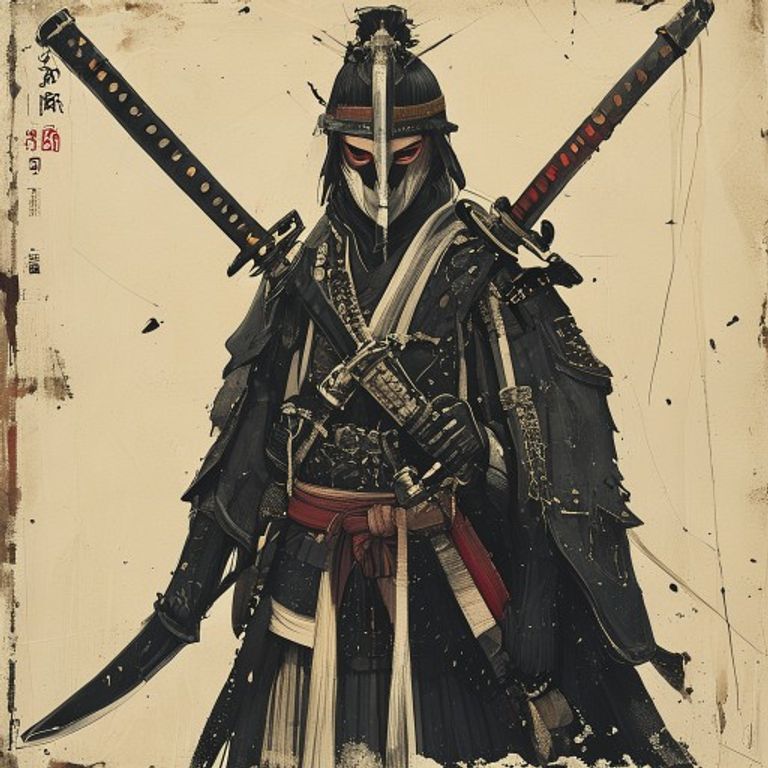
One of the most legendary and valuable swords in Japanese history, a symbol of the shogunate, disappeared during the handover of weapons after the end of World War II.
⚠️ Research elaborated with the aid of Deep Research is subject to referential ambiguity.
🖥️Clean HTML code using a proprietary tool.
👥 Research by Guilherme Felipe, Curation by Sílvio Lôbo
The Case of the Honjo Masamune Sword: The Shogunate's Missing Treasure
In 1945, as Japan reeled under the weight of its impending defeat in World War II, a mystery of epic proportions unfolded, involving one of the most revered and valuable artifacts in Japanese history: the Honjo Masamune. This sword, legendary for its beauty and power, was forged by the renowned master blacksmith Masamune and served as a symbol of power for the Tokugawa shogunate for centuries. Its disappearance, amidst the chaos of surrender, initiated an enigma that persists to this day, fueling speculation and frustrating investigators.
The Context and the Incident
The Honjo Masamune was not merely a weapon; it was a national icon. Belonging to the private collection of Tokugawa Ieyasu, the founder of the Tokugawa shogunate, the sword passed through generations of shoguns, considered a precious heirloom. Its historical and cultural value transcended any monetary amount.
The mystery of its disappearance begins in the turbulent days of August 1945, shortly before Japan's formal surrender on August 15. With the advance of Allied forces and the fear that Japan's national treasure might fall into the wrong hands, there was a concentrated effort to protect important artifacts. It is in this scenario of uncertainty and desperation that the Honjo Masamune, kept in the treasury of the Imperial Palace of Tokyo, was reportedly moved to a safer location.
Timeline of Events
- Edo Period (1603-1868): The Honjo Masamune serves as a symbol of power and legitimacy for the Tokugawa shogunate.
- World War II: The sword is kept in the treasury of the Imperial Palace of Tokyo, as an invaluable national asset.
- August 1945: Faced with Japan's imminent defeat, reports emerge that the sword was removed from the Imperial Palace to be hidden. It is believed that a high-ranking officer of the Imperial Japanese Army was tasked with its safekeeping.
- Late 1945 / Early 1946: American occupation officials begin a search for confiscated Japanese national treasures. The Honjo Masamune is not found.
- 1950s onwards: The mystery of the Honjo Masamune's disappearance gains notoriety, with numerous speculations and fruitless searches.
The Main Theories
The absence of concrete evidence opens a wide range of theories to explain the whereabouts of the Honjo Masamune:
Theories Based on Evidence (or Lack Thereof)
- Confiscation and Destruction by Allied Occupation: One of the most direct theories suggests that the sword was confiscated by American occupation forces and, for some reason (perhaps to prevent it from falling into the wrong hands or due to a demilitarization policy), was destroyed. However, there are no official records of such destruction.
- Hidden by Japanese Authorities: The most widespread hypothesis is that the sword was deliberately hidden by army or government officials to protect it from confiscation. The idea is that it would be buried in a secret location or handed over to a trusted family to be guarded until better times.
- Disappearance During the Chaos of War: It is possible that the sword fell victim to the general chaos that engulfed Japan in the final days of the war. Looting, theft, or even simple loss of records amidst widespread destruction may have led to its disappearance.
Alternative and Conspiracy Theories
- Sale on the Black Market: Some suggest that the sword was illegally sold to foreign collectors or to the black market, taking advantage of the disorganization and desperation of the post-war period.
- In Possession of a Specific Officer: Rumors point to a high-ranking officer of the Imperial Japanese Army who was allegedly the last to have contact with the sword and took it with him, possibly to keep it in his private possession. This officer, however, has never been formally identified as responsible for its disappearance.
- Symbolism and Cover-up: On a more speculative level, some conspiracy theorists raise the possibility that the sword's disappearance was intentionally obscured to avoid a national scandal or to maintain the aura of mystery surrounding it.
Paranormal and Mystical Theories (Less Credible from a Journalistic Standpoint)
Although there is no factual basis, in more esoteric circles, theories emerge involving the sword's own mystical nature, suggesting that it might have "disappeared" on its own or that its energy led it to a safe place, beyond human reach. These theories, however, lack any verifiable evidence.
Controversies and Blind Spots
The investigation into the whereabouts of the Honjo Masamune is marked by gaps and contradictions:
- Lack of Clear Official Documentation: Official reports from the time are scarce and, when they exist, are ambiguous regarding the sword's final destination. There is no conclusive record of who the last person to see it was or who took it out of the Imperial Palace.
- Conflicting Testimonies: Over the decades, various accounts and testimonies have emerged, many of them anecdotal, which contradict each other. The difficulty in corroborating this information makes the truth elusive.
- The Incomplete "War Artifacts List": The lists of artifacts confiscated and recovered by Allied forces, while extensive, do not appear to include the Honjo Masamune. This raises the question of whether it was never confiscated, was removed before confiscation, or if its record was lost.
- The Silence of Involved Officers: Many of the officers who might have had direct knowledge of the sword's whereabouts died without ever revealing what they knew, whether out of loyalty, fear, or to protect themselves or others.
Curiosities and Legacy
The case of the Honjo Masamune has transcended the historical sphere to become an element of Japanese and international popular culture:
- Inspiration for Fiction: The mystery has inspired countless books, films, manga, and games, which explore the most varied hypotheses for the sword's disappearance.
- Symbol of a Lost Treasure: The Honjo Masamune has become an archetype of historical treasures that disappear without a trace, fueling fascination with the unknown and untold history.
- Searches Continue: Despite the time elapsed, enthusiasts, historians, and even adventurers continue to search for clues that might lead to the sword's location. The hope of rediscovering this piece of Japanese history persists.
- Current Status: The case is officially considered unresolved. The Honjo Masamune is listed as a missing artifact, and its whereabouts remain one of the greatest enigmas of modern Japanese history.
The Honjo Masamune is more than a sword; it is a fragment of history lost in the mists of war. Its absence is a constant reminder that, even in the most documented moments, history still holds secrets capable of intriguing and challenging generations.



