


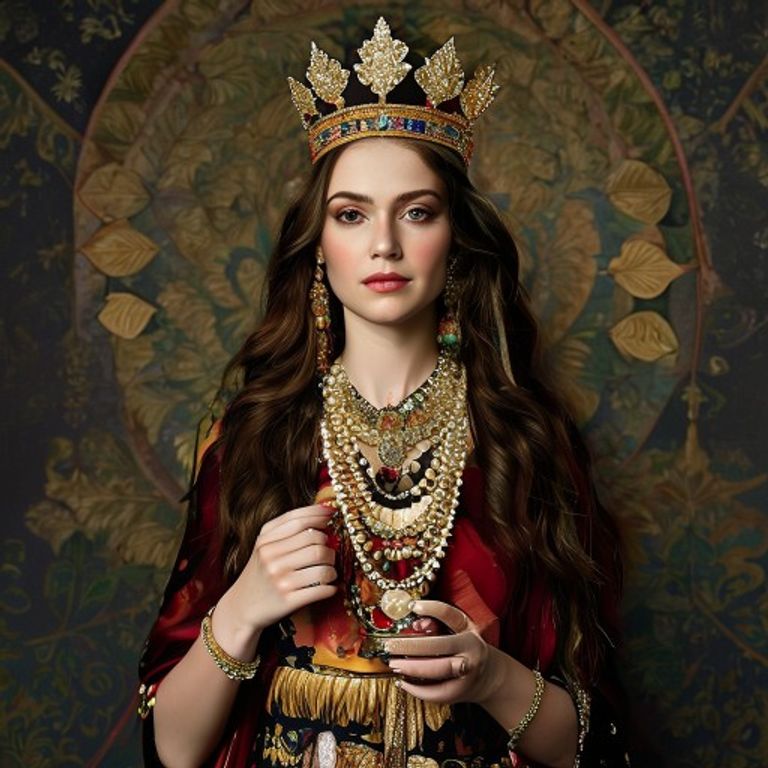
Invaluable royal regalia were stolen from a maximum-security vault at Dublin Castle in 1907, and the perpetrator has never been identified.
⚠️ Research conducted with the assistance of Deep Research may be subject to referential ambiguity.
🖥️ Clean HTML code using a proprietary tool.
👥 Research by Guilherme Felipe, Curation by Sílvio Lôbo
The Enigma of the Irish Crown Jewels: A Theft That Defied Logic
In 1907, one of Ireland's most iconic treasures, the Irish Crown Jewels – a set of priceless regalia, crowns, and jewels – mysteriously vanished from Dublin Castle. The theft, which occurred under circumstances still shrouded in mist, not only deprived the nation of a powerful historical symbol but also triggered one of the most frustrating and debated investigations in Irish criminal history. To this day, the whereabouts of the jewels remain a secret guarded by time, fueling a legacy of speculation and theories.
The Context and the Incident: Where, When, and How the Mystery Began
The Irish Crown Jewels, comprising a crown, an orb, and a scepter, date back to before 1480. They had been used in the coronations of Irish monarchs and later became a symbol of the British monarchy in Ireland. In 1907, the jewels were on display in a fortified room at Dublin Castle, the official residence of the Lord Lieutenant of Ireland, the British monarch's representative on the island. The security, though considered robust for the time, was not enough to deter the unknown thieves.
The theft was discovered on the morning of July 11, 1907. The door to the room housing the jewels was found ajar, and the safe that was supposed to protect the treasure was empty. The audacity of the act, the apparent lack of forced entry signs, and the secretive nature of the operation raised questions from the outset, unfolding into a labyrinth of hypotheses.
Timeline of Events
- Before 1907: The Irish Crown Jewels are kept securely at Dublin Castle, serving as historical and authority symbols.
- July 1907: A period of political and social unrest in Ireland, marked by growing nationalism.
- Night of July 10-11, 1907: The theft of the Irish Crown Jewels occurs within the precincts of Dublin Castle.
- Morning of July 11, 1907: The disappearance of the jewels is discovered. The police investigation is immediately launched.
- July 1907 - Early 1908: Intense investigations are conducted, interrogations are carried out, and leads are followed, without success in recovering the jewels.
- 1910: The official investigation is formally closed, with no identification of those responsible or recovery of the treasure.
- Following Decades: The case remains an unsolved mystery, with the continuous emergence of theories and speculations.
- 21st Century: The case continues to fascinate historians, amateur investigators, and the general public, with sporadic calls for the reopening of investigations or the release of new archives.
The Main Theories
The absence of concrete clues and the perplexity surrounding the case have led to the development of a myriad of theories, some more plausible than others, and some bordering on the fantastic. A rigorous analysis of proven facts and speculations is crucial for understanding the complexity of this enigma.
Criminal and Police Theories (Based on Evidence and Logic)
- The Inside Job: One of the most persistent theories suggests that the theft was facilitated by someone with privileged access to Dublin Castle. Individuals with knowledge of the security, schedules, and routines could have aided the thieves' entry and exit, or even been the thieves themselves. Several castle employees and former employees were interrogated, but no conclusive evidence emerged. The possibility of collusion with security personnel cannot be ruled out.
- The Professional Thieves' Heist: Another line of investigation points to the action of a specialized gang of thieves who meticulously planned the robbery. The sophistication of the act, leaving no clear traces, could indicate the expertise of experienced criminals. However, the lack of information about criminal groups of that era with such capabilities and the secrecy surrounding the theft make this theory difficult to prove.
- The Politically Motivated Theft: Given Ireland's political instability at the time, many suspected that the theft might have had a nationalist motive. The removal of the jewels could have been seen as a symbolic act against British occupation, or as a way to finance rebel groups. However, no nationalist organization ever claimed responsibility for the theft or offered information about the jewels' whereabouts, which weakens this hypothesis as the primary motive.
Alternative and Conspiracy Theories
- The "Scheme" to Cover Previous Losses: A darker theory suggests that the jewels might have been lost or sold long before 1907, and the theft was a staged event to conceal a pre-existing disappearance. This hypothesis, though shocking, is difficult to verify due to the lack of detailed records on the jewels' condition and handling in the years prior to the theft. The absence of any internal "leak" pointing to such a fraud also weighs against it.
- The Theft Planned and Removed by British Authorities: This theory, often associated with speculation about the British government, suggests that the jewels may have been secretly removed and secured by the British authorities themselves, perhaps as an extreme security measure during a period of turmoil, or even with the aim of using them in future political negotiations. The lack of significant effort to recover the treasure in some phases of the investigation fuels this speculation. However, there are no official documents to support this claim.
- Involvement of Secret Agents or Spies: In a scenario of international espionage, it is plausible that the jewels could have been the target of intelligence agencies with unknown objectives, perhaps to finance clandestine operations or to obtain something of intrinsic or symbolic value. The discreet nature of the theft and the lack of traces would reinforce this possibility, but without concrete evidence, it remains in the realm of speculation.
Paranormal or Supernatural Theories (Generally Without Factual Basis)
While there is no concrete evidence to support these ideas, the aura of mystery surrounding the case has led to some more esoteric theories. These generally involve the idea that the jewels were "transported" to another dimension, or that they were taken by unknown forces, such as a curse associated with their former owners. Such theories lack scientific or historical basis and are generally dismissed in serious investigations.
Controversies and Blind Spots
The official investigation into the theft of the Irish Crown Jewels was marked by a series of controversies and blind spots that contributed to its inconclusiveness:
- Lack of Direct Witnesses: The absence of witnesses who could describe the perpetrators or the exact moment of the theft is one of the biggest obstacles. The few individuals who had access to the jewel room were rigorously interrogated, but none revealed crucial information.
- Ignored or Lost Clues: There are reports of potential clues that may have been overlooked or lost during the initial investigation. Public pressure and the need for quick results may have led to an excessive focus on certain lines of inquiry at the expense of others.
- Suspicious Interrogations: Reports indicate that some interrogations, particularly of castle staff, were conducted in a questionable manner. The pressure exerted on the interrogated individuals and the possibility of leading questions may have influenced the testimonies.
- Missing Evidence: As in many unsolved cases, the possibility that some crucial evidence has disappeared over time, whether due to carelessness, mismanagement of files, or even deliberate action, cannot be entirely ruled out.
- Political Interference?: The suggestion that the investigation may have been intentionally hindered by political interests, both from the British and Irish sides, is a constant in discussions about the case. The declassification of some files in the past did not provide the expected clarity.
Curiosities and Legacy
The case of the Irish Crown Jewels has transcended the criminal realm to become a cultural icon and a lasting symbol of Irish mystery.
- Cultural Impact: The theft has inspired countless books, articles, documentaries, and fictional works, perpetuating the aura of enigma surrounding the event. Dublin Castle, although redecorated and the space where the jewels were kept having changed, still evokes the mystery.
- The Jewels' "Curse": Some popular legends suggest that the jewels were cursed, and that the theft was an inevitable supernatural event. This narrative adds a folkloric touch to the already complex case.
- Recovery Efforts: Over the years, there have been several attempts and speculations about the location of the jewels, including alleged sightings and reward offers. However, none of these claims have led to their recovery.
- Current Status: The case of the Irish Crown Jewels remains officially unsolved. The Royal Irish Constabulary (RIC) closed the investigation in 1910 without finding those responsible. Recently, some files related to the case were declassified, but they did not provide the "smoking gun" so eagerly awaited by investigators and the public. The possibility of an official reopening of investigations is remote, but the case continues to be a subject of study and fascination.
The mystery of the Irish Crown Jewels is a testament to the human capacity to create enigmas that defy time and logic. While the treasure remains missing, the story of its theft continues to echo, a somber reminder of one of the most unresolved chapters in Ireland's history.



