


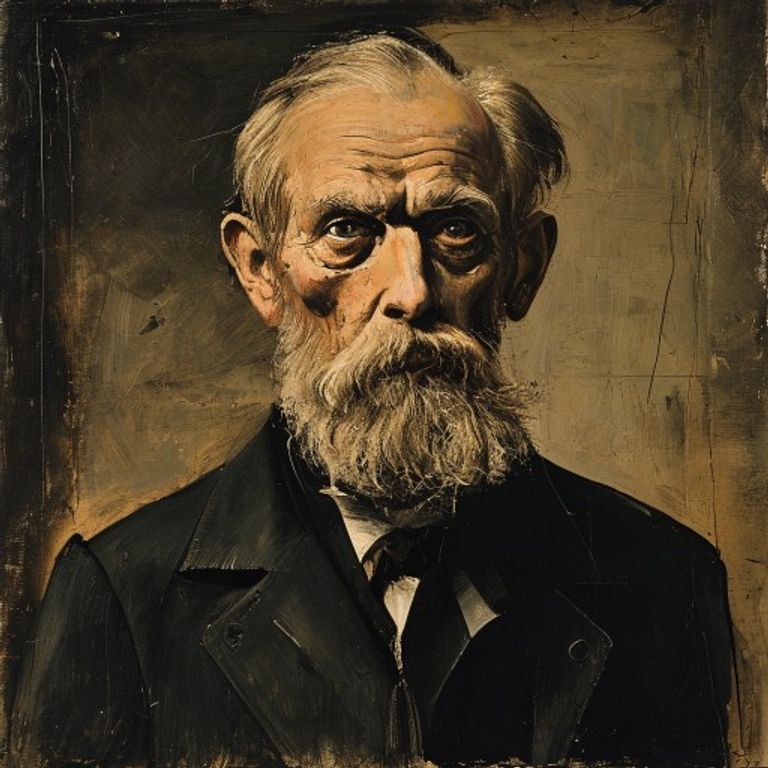
The Taured Enigma: The Man Who Vanished, The Country That Didn't Exist
In an increasingly interconnected world with information available at the touch of a button, the idea of an unknown country emerging out of nowhere might sound like a science fiction script. However, in 1954, at Haneda Airport in Tokyo, a man with a passport from a non-existent country – Taured – triggered one of the most intriguing mysteries in aviation and recent history. This article aims to unravel the threads of this case, separating concrete facts from the speculations surrounding it, with the analytical rigor that time and the absence of answers demand.
The Context and the Incident: The Impossible Disembarkation
The day was July 22, 1954. A commercial airplane landed at Haneda Airport in Tokyo. Among the passengers, a man of ordinary appearance, around 30 years old, wearing a well-tailored suit, proceeded to immigration control. Upon presenting his documents, border agents were faced with something inexplicable: a passport bearing the seal of the country of Taured. The name printed was John G. Sa… (the full surname varies in accounts, but the initial "S" is constant), and the passport appeared legitimate, with stamps and visas from various European countries, including France and Germany.
The man, who spoke fluent Japanese and French but understood not a word of English, stated that he was from Taured, an ancient country located between France and Italy, with a long history and a population of about one million inhabitants. Faced with perplexity, he was taken to an interrogation room, where authorities attempted to verify the existence of his country of origin. No record, map, or mention of Taured was found in any international archive or available atlas. It was as if the country simply did not exist on the world map.
Timeline of Events: A Night Suspended in Time
- July 22, 1954, morning: The man arrives in Tokyo on a DC-4 airline flight, coming from Paris, with a stopover in London and possibly other cities.
- July 22, 1954, during the day: The man is taken to immigration control at Haneda and presents his Taured passport.
- July 22, 1954, afternoon/evening: Japanese authorities attempt to verify the authenticity of Taured and the passport. The man is interrogated and kept in a hotel near the airport under surveillance.
- July 23, 1954, morning: The man mysteriously disappears from the hotel.
The description of the events after the disappearance is where the narratives begin to diverge and the mystery deepens. Reports suggest he was detained in a guarded hotel room, and the next day, he simply vanished. The door was locked from the outside, as were the windows, and there were no signs of forced entry or escape.
The Main Theories: Between Reason and Fantasy
The Case of the Taured Man, due to its anomalous nature, has generated a myriad of theories, ranging from the plausible to the purely speculative:
1. Police and Intelligence Theories (Most Probable):
- National Security Threat / Espionage: The most pragmatic theory suggests that the man was a spy from an unknown nation (perhaps in a Cold War context) who used a fake passport and a forged identity to infiltrate Japan. The country "Taured" would be an invention to mask his real origin. The disappearance would be a planned action, possibly with the help of accomplices, to avoid capture and interrogation. The fact that he didn't understand English could have been a tactic to hinder communication with Western intelligence agents.
- Human Trafficking or Criminal Organization: Another possibility is that the man was a victim or part of a human trafficking ring, using the passport for travel. The disappearance could have been an escape orchestrated by the organization itself or an attempt to escape his captors.
- Escape from Confinement/Insanity: While less likely, the possibility that the man was interned in a psychiatric hospital and escaped, inventing the story of Taured to justify his presence, cannot be entirely ruled out. However, his linguistic fluency and possession of an apparently legitimate passport make this hypothesis difficult.
2. Alternative and Paranormal Theories:
- Temporal Displacement (Time Travel): This is one of the most popular theories, fueled by the lack of rational explanations. The idea is that the man was a time traveler from a future or past era, and his country, Taured, existed in another timeline. His disappearance would be a return to his original time. The logic here lies in the impossibility of proving the non-existence of something in an alternative existential plane.
- Multiverse and Parallel Earths: Similar to time travel, this theory posits that the man was from a parallel universe where Taured is a real country. By crossing into our universe, he became a "foreigner" in a world where his country does not exist. His disappearance would be a return to his home universe. The "fake" passports would actually be legitimate in his dimension.
- Dimensional Portals: Some branches suggest the existence of dimensional portals that allow passage between different realities. The man would have used one of these portals, which took him from Tokyo airport to an unknown location.
- Intrinsic / Existential Mystery: On a more philosophical level, some argue that the case may be a manifestation of a deep existential mystery, where reality folds in on itself, defying our understanding.
Controversies and Blind Spots: The Gaps in the Investigation
The main difficulty in solving the Case of the Taured Man lies in the scarcity and ambiguous nature of the evidence. Several blind spots and inconsistencies emerge from the limited information available:
- Absence of Declassified Official Reports: Despite the intriguing nature of the case, there are no widely publicized and declassified police or intelligence reports detailing the investigation. This raises suspicions about what might have been concealed.
- Contradictory and Vague Testimonies: The few accounts of the incident often contradict each other on crucial details, such as the man's full name, the exact airline, or even whether he was detained in a hotel or an interrogation room at the airport itself.
- Lost or Non-Existent Physical Evidence: The passport itself, the central piece of the mystery, has disappeared or was never officially cataloged as evidence. The same applies to any other documents the man might have carried. Without these items, verification becomes impossible.
- The "Anachronistic" Nature of Taured Itself: The lack of any mention of Taured in any historical or geographical record is the biggest blind spot. If the country were merely an invention, why couldn't authorities debunk it with concrete evidence of the passport's falsity? Or, if it existed in some context, why are there no traces of it?
- Official Silence: The lack of a robust official statement from the Japanese authorities of the time regarding the incident fuels speculation.
Curiosities and Legacy: A Mystery That Persists
The Case of the Taured Man has transcended the police sphere and become an icon of popular culture regarding inexplicable mysteries. His story is frequently told on television programs, in books about the paranormal, and in online articles, inspiring debates and theories about the nature of reality and the limits of human knowledge.
Curiosities:
- The name "Taured" sounds similar to "Tauride," a historical region in Crimea. However, there is no clear connection.
- The similarity to Ivan Efremov's short story "The Man in the Gray Hat," published in 1947, which features a traveler from an alternate world, is notable and may have influenced the popularity of some theories.
- The story of the Taured Man is often cited as an example of "liminality" – a state between worlds or realities.
Current Status:
The case remains officially unsolved. There are no records of it being reopened with new evidence. However, public fascination and the intrinsic mystery ensure that the Taured Man continues to inhabit the collective imagination, a reminder that, even in our seemingly mapped world, there are still inexplicable frontiers and enigmas that defy logic.



