


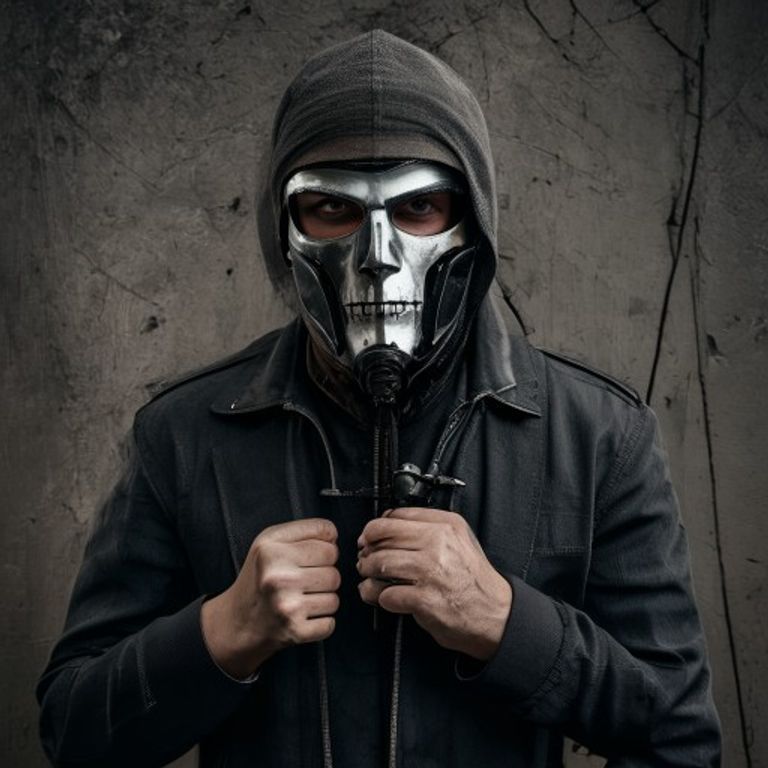
An unidentified prisoner was kept hidden with his face covered during the reign of Louis XIV in France, leading to centuries of speculation about his lineage.
⚠️ Research elaborated with the aid of Deep Research is subject to referential ambiguity.
🖥️Clean HTML code with the use of a proprietary tool.
👥 Research by Guilherme Felipe, Curation by Sílvio Lôbo
The Man in the Iron Mask: An Enigma Through the Centuries
Few mysteries in history resonate with the same intensity and persistence as that of the Man in the Iron Mask. Imprisoned for decades in various French prisons, this anonymous prisoner, forced to wear a mask that concealed his identity, became a symbol of oppression, mystery, and state secrets. The case, whose roots run deep into the reign of Louis XIV, the Sun King, defies investigation and fuels theories from the 17th century to the present day. This article seeks to unravel the layers of this enigma, separating fact from fiction with the rigor such an elusive case deserves.
1. The Context and the Incident: Where, When, and How the Mystery Began
The mystery of the Man in the Iron Mask emerges during the height of French absolutist power, under the reign of Louis XIV (1643-1715). The detention of the individual who would become legendary is first documented in 1669, when an informant of Louis de Rouvroy, Duke of Saint-Simon, reports the arrival of a mysterious prisoner at a fortress in the Pignerol region (modern Pinerolo, Italy), then under French control.
The veil of secrecy that enveloped the prisoner from the outset was absolute. The orders were clear and severe: no contact with the outside world, constant maintenance of the mask, and exemplary punishment for any attempt at communication or revelation of his identity. The jailer in charge, Bénigne Dauvergne de Saint-Mars, an officer known for his loyalty and discretion, was the primary guardian of this secret. The method of concealment, initially described as a black velvet mask, later evolved into the legendary "iron mask" popularized by Voltaire, although concrete evidence about the specific material is scarce.
2. Timeline of Events: A Chronological Reconstruction
Reconstructing the timeline is crucial to understanding the evolution of the mystery. The main events, based on historical records and testimonies, are:
- 1669: Arrival of the unknown prisoner in Pignerol, under the custody of Saint-Mars. The first secrecy orders are issued.
- 1681: The prisoner is transferred to Exilles, another fortress in Piedmont, still under the guard of Saint-Mars.
- 1687: A new transfer to the island of Sainte-Marguerite, off the coast of Provence. The prisoner is kept in a special cell, now known as "the iron mask cell."
- 1698: The final transfer occurs to the Bastille in Paris. The prisoner is housed in a modest cell, where official records indicate his death on November 19, 1703. His body is buried under the name "Marchioly", a name that, as we shall see, raises more questions than answers.
3. The Main Theories: Hypotheses and Speculations
Over the centuries, countless theories have emerged to unravel the identity of the man behind the mask. These are divided into more plausible hypotheses, conspiracy theories, and bizarre speculations.
Theories of Royal Identity (Probable Scientific and Police Hypotheses):
- The Twin Brother of Louis XIV: This is perhaps the most popularized theory, especially by Voltaire. The idea is that the prisoner was a twin brother of Louis XIV, whose existence was a secret to avoid disputes over the throne. The main evidence lies in the physical resemblance necessary for such deception and the supposed need to maintain a pure royal lineage. However, the absence of historical records about a twin brother and the logistical complexity of keeping such a secret for so long are significant weaknesses.
- A Bastard Son of Anne of Austria: Another theory suggests that the prisoner was an illegitimate son of Anne of Austria (mother of Louis XIV) with a lover, possibly Cardinal Mazarin. Such a son could represent a threat to the legitimacy of Louis XIV. The veracity of this theory is hampered by the lack of documentary evidence and the almost absolute silence of the court.
- A Disgraced Military Officer or Diplomat: Several less prominent figures, such as a Venetian ambassador named Antonio Matthioli (whose name was used at the burial), or a disgraced general, have been proposed. The logic here is that such individuals might have committed crimes or been involved in intrigues that threatened state security, justifying imprisonment and concealment to avoid diplomatic or military scandals. Documentation about Matthioli, a secretary of state in Mantua, points to his involvement in secret negotiations with France that went wrong, leading to his arrest for treason. This is considered one of the most robust theories from a historical standpoint.
- A Man Who Saw Too Much: A more generic hypothesis suggests that the prisoner was someone who accidentally witnessed a dangerous state secret or a conspiracy against the crown, making him a risk that needed to be discreetly eliminated.
Alternative, Conspiracy, or Paranormal Theories:
- A Relative of the English Royal Family: Some less substantial speculations suggest a connection to English royalty, possibly an exiled or deposed member, imprisoned for political reasons.
- A Common Man with an Unknown Connection: There is a possibility, though less exciting, that the man was simply an ordinary individual who, for obscure and perhaps personal reasons, became the focus of a state security obsession.
- Paranormal Theories: Although marginalized in serious investigation, some more fantastical strands have suggested that the man could be a mystical figure, a time traveler, or even a non-human entity, kept secret for supernatural reasons.
4. Controversies and Blind Spots: Inconsistencies in the Investigation
The case of the Man in the Iron Mask is a case study in a lack of transparency and historical manipulation.
- Lack of Detailed Official Records: The main weakness of the official investigation is the scarcity of documents detailing the identity, crime, or reasons for the individual's imprisonment. The few existing records are vague and focus on security orders and the prisoner's movements, but not on his history.
- Use of False Names: The name "Marchioly", used in the death record, is a clear indication of concealment. The similarity to the name Matthioli, however, raises the question of whether it was an attempt at disguise or a deliberately planted clue.
- Conflicting and Missing Testimonies: Contemporary accounts, such as those of Saint-Simon, are valuable but often fragmented or based on rumors. The absence of direct testimonies from individuals who had intimate contact with the prisoner, such as the closest jailers, is a significant blind spot.
- Disappearance of Evidence: Reports suggest that after the prisoner's death, the cell where he was held was meticulously cleaned, and any personal belongings that could reveal his identity were removed or destroyed.
- Voltaire's Influence: Voltaire's narrative, while popularizing the mystery, also introduced elements of fiction and speculation, such as the iron mask itself, which may have obscured the facts. His writings, full of criticism of absolutism, may have shaped public perception in a way that favored theories exposing the regime's cruelty.
5. Curiosities and Legacy: Cultural Impact and Current Status
The Man in the Iron Mask has transcended the historical sphere to become a cultural icon, inspiring countless books, films, plays, and works of art. The strength of the mystery lies in its ability to evoke universal themes such as injustice, oppression, freedom, and the search for truth.
The case, in terms of official investigation, has effectively been shelved for centuries. There has been no formal reopening, as the absence of new evidence or concrete developments prevents any progress. However, the mystery continues to be a subject of study by historians, academics, and enthusiasts, fueling ongoing debates and research.
The legacy of the Man in the Iron Mask is that of an unsolved enigma, a lasting testament to the complexity of power relations and the secrets that can be buried beneath the facade of a kingdom. His identity remains a veil, a reminder that even in the most documented eras, history can hold its deepest secrets, challenging generations to try and unravel them.



