


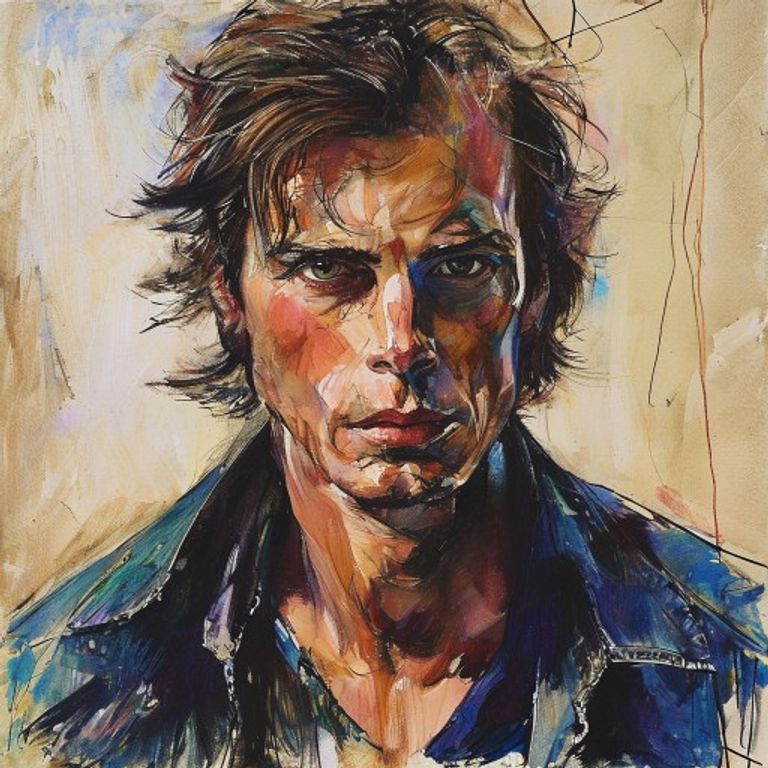
The 'Son of Sam' who terrorized New York in 1976, claiming he received orders to kill through his neighbor's dog, which he alleged was possessed by a demon.
⚠️ Research conducted with the aid of Deep Research is subject to referential ambiguity.
🖥️ Clean HTML code using a proprietary tool.
👥 Research by Guilherme Felipe, Curation by Sílvio Lôbo
The Devil of New York: A Deep Dive into the Shadows of the David Berkowitz Case
During the scorching summer of 1976, the streets of New York were plunged into palpable terror. A sinister figure, self-proclaimed "Son of Sam," orchestrated a series of brutal murders that would leave the city paralyzed by fear and the police in a frantic hunt for a killer who seemed to move through the shadows, undetectable. The David Berkowitz Case, the "Son of Sam Killer," is one of the darkest and most complex chapters in modern criminology, an enigma that, even decades later, still casts long and unsettling shadows. This article investigates the facts, theories, and loose ends surrounding this tragic and disturbing chapter of American criminal history.
The Context and the Incident: Where, When, and How the Mystery Began
The mystery began on July 29, 1976, on the quiet Arbor Heights street, in the Bronx borough of New York. Under the cover of night, a series of shots rang out, leaving behind two fatal victims and two seriously wounded. The method was brutal: a lone gunman, using a .44 Magnum caliber pistol, attacked couples or groups of young people, usually in their cars or in public places. What distinguished this case from the beginning was the calculated nature and the apparent randomness of the victims, generating widespread panic and a race against time to identify and capture the perpetrator.
Timeline of Events: A Chronological Reconstruction of Key Facts
- July 29, 1976: The first attack in Arbor Heights, Bronx. Michelle Gilden and Robert Lukin are killed. Carl Denaro and Rosemary Keenan are wounded.
- October 23, 1976: The second attack in Dyker Heights, Brooklyn. Donna Lauria is killed and her boyfriend, Steve Pesce, is wounded.
- November 26, 1976: The third attack in Sheepshead Bay, Brooklyn. Christine Perotta is killed.
- January 29, 1977: The fourth attack in Gretna Street, Flushing, Queens. Virginia Voskerichian is killed.
- March 30, 1977: The fifth attack in Astoria, Queens. Alexander Esau and Valentina Selles are killed.
- July 4, 1977: The sixth attack in Garrison Street, Bronx. Stacy Brooks and Robert Norsil are wounded.
- July 31, 1977: The last attack on Manhattan Avenue, Brooklyn. Deirdre O'Connell is wounded, and John D'Amato (her boyfriend) dies. The police investigation is intensified with the discovery of a letter left by the killer.
- August 10, 1977: David Berkowitz is arrested at his home in the Bronx, following a police operation based on crucial clues, including a traffic violation.
- May 10, 1978: David Berkowitz pleads guilty to six murders and is sentenced to six consecutive 25-years-to-life prison terms.
The Main Theories: Possible Explanations for Evil
The capture of David Berkowitz ended the active pursuit, but not the mystery. The justifications for his murderous rampage and the circumstances that led him to commit such acts remain a fertile field for debate.
1. The Official Confession: The Devil and the Possessed Dog
The main theory, and the basis for Berkowitz's conviction, is his own confession. He claimed to have been instructed by a demon, manifested through his neighbor Sam Carr's dog, to commit the murders. This narrative, although shocking, was accepted by the justice system, leading to his conviction. Berkowitz declared that the demon "ordered him to kill." This hypothesis, as fantastic as it may seem, was the official outcome.
2. The Theory of Psychopathy and Antisocial Personality Disorder
Psychiatrists and criminologists often interpret Berkowitz's acts as manifestations of severe psychopathy and antisocial personality disorder. According to this view, the killer acted out of a deep sense of devaluation, anger, and a desire for control and power, seeking attention through the terror he inflicted. The belief in supernatural forces would be a way to rationalize and externalize his destructive impulses.
3. The Multiple Killers Hypothesis (The Conspiracy Theory)
One of the most persistent and disturbing theories suggests that David Berkowitz did not act alone. The police investigated the possibility of a network of killers, often referred to as a "cult" or "group," who were involved in the crimes. This hypothesis gains strength due to some inconsistencies, such as Berkowitz's ability to cover significant distances in short periods and the number of victims. Reports suggested that other individuals could have participated, with Berkowitz acting as the public "face" or primary executor. Declassified New York police documents occasionally mention leads that indicated more than one shooter, although these lines of investigation were never fully explored or confirmed.
4. Paranormal and Occult Theories
Beyond Berkowitz's confession, more esoteric theories emerged. Some alternative investigations suggest the involvement of satanic sects or occult rituals, with the murders serving dark and unknown purposes. The methodical nature of the attacks and the choice of victims, in some cases, fueled these speculations, although no concrete evidence has ever emerged to corroborate them.
Controversies and Blind Spots: The Shadows of the Investigation
The "Son of Sam" investigation was marked by moments of police brilliance, but also by failures and areas of doubt that fuel the debate to this day.
- The Nature of the Confession: The acceptance of Berkowitz's confession about the demon and the dog has always been a point of contention. Critics argue that, under intense police pressure, Berkowitz could have invented this story to deflect from more disturbing explanations about his own mind.
- Ignored Leads: Reports suggest that the police received thousands of leads, and it is inevitable that some were misinterpreted or discarded prematurely. The complexity of the city and the volume of information could have led to the loss of crucial connections.
- Conflicting Testimonies: There were reports from witnesses who described the shooter as having different physical appearances, raising the possibility of multiple perpetrators. A key witness, Carolyn Heiss, described a man different from Berkowitz's appearance in one of the attacks, fueling the theory of multiple people involved.
- Missing or Uncorroborated Evidence: Although Berkowitz was convicted based on circumstantial evidence and his confession, speculation about the complete elucidation of the case persists. The lack of indisputable forensic evidence at all crime scenes, beyond the weapon found in Berkowitz's possession, leaves room for questioning.
- The Role of Others Involved: The police, at different times, investigated other suspects or the possibility of accomplices. The lack of a definitive explanation for all the details of the crimes allowed these lines of investigation to remain open for conspiracy theorists.
Curiosities and Legacy: The Lasting Echo of Evil
The David Berkowitz Case transcended police headlines to become a cultural phenomenon, reverberating in films, books, and the popular imagination. The fear he instilled in New York was so profound that it led to the adoption of stricter gun control laws and an increase in police patrolling.
- The Name "Son of Sam": The origin of the name is attributed to a letter left by Berkowitz for the New York Daily News newspaper, where he signed as "Son of Sam." It is believed he was referring to Sam Carr, the neighbor and owner of the dog he claimed was the channel for the demon.
- The Call to Steal Cars: Berkowitz confessed that the "demon" also ordered him to steal cars, which he did repeatedly, contributing to his eventual capture.
- The Cinematic Legacy: The case inspired the film Summer of Sam (1999), by Spike Lee, which explored the climate of fear and the conspiracy theories that surrounded the murders.
- Current Status: David Berkowitz is currently serving his life sentence in a maximum-security prison in New York State. The case, officially, has not been reopened, as Berkowitz's conviction was considered solid by the justice system. However, public fascination and doubts about the completeness of the truth behind the murders persist, keeping the "Son of Sam" as a lasting enigma in the true crime canon.
The David Berkowitz Case remains a dark reminder of human capacity for evil and the fragility of social order when confronted by a terror that moves in the shadows. Although justice found its culprit, the questions about what really motivated and allowed these horrors continue to echo, fueling the relentless search for answers in one of the darkest mysteries of criminal history.



