


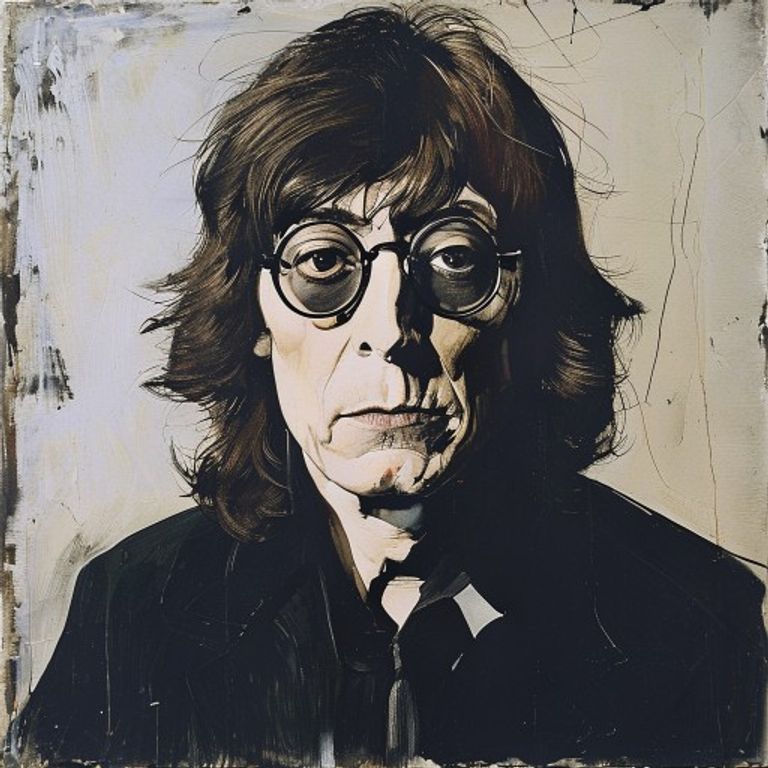
The murder of the musician in front of his New York apartment in 1980, committed by an individual seeking instant fame through the death of an idol.
⚠️ Research prepared with the aid of Deep Research is subject to referential ambiguity.
🖥️ Clean HTML code using a proprietary tool.
👥 Research by Guilherme Felipe, Curation by Sílvio Lôbo
The John Lennon Murder Case: The Shot That Silenced the World
On a cold December night, one of the greatest music icons of the 20th century was tragically silenced. The murder of John Lennon, which occurred on December 8, 1980, in front of the Dakota Building in New York, transcended personal tragedy to become a historical landmark, leaving a trail of questions that persists to this day. What could have led to the death of such a beloved artist who preached peace? The official investigation, although it identified and convicted the perpetrator of the shots, left a vacuum of answers for many, fueling theories and a persistent mystery.
1. The Context and the Incident: Where, When, and How the Mystery Began
The life of John Lennon, from his rise with the Beatles to his solo career and peace activism, was marked by constant media attention. On the night of December 8, 1980, Lennon and his wife, Yoko Ono, were returning to their home at the iconic Dakota Building, located on West 72nd Street in Manhattan. As they stepped out of a limousine, they were approached by Mark David Chapman, a fan who, hours earlier, had asked for an autograph on his Double Fantasy album.
The fateful moment unfolded quickly. Chapman, after the initial encounter, hid in the shadows of the building's archway. As Lennon and Ono approached, Chapman emerged and fired five shots at the musician. Four of the bullets struck him, one of which was fatal. The scene, which should have been the end of another day for the couple, became the prelude to a legend and an enigma.
2. Timeline of Events
- 1960s-1970s: The meteoric rise of John Lennon with the Beatles and his solo career, marked by protest lyrics and peace activism.
- Late Afternoon of December 8, 1980: John Lennon and Yoko Ono give an interview to WNEW-FM radio.
- Approximately 10:45 PM on December 8, 1980: The couple returns to the Dakota Building. Mark David Chapman, who had already interacted with Lennon earlier, hides nearby.
- Minutes after arrival: Chapman emerges from the shadows and fires at John Lennon.
- Shortly after: Lennon is taken to St. Luke's Roosevelt Hospital, where he is pronounced dead.
- Immediately after the shooting: Mark David Chapman is detained by police, sitting on the sidewalk reading the book "The Catcher in the Rye," and surrenders without resistance.
- December 9, 1980: The world is notified of John Lennon's death, generating shockwaves and global grief.
- 1981: Mark David Chapman pleads guilty and is sentenced to 20 years to life in prison.
3. The Main Theories
The official explanation for John Lennon's murder points to Mark David Chapman as the lone, disturbed perpetrator. However, the motivation behind his actions and the way everything unfolded gave rise to several other lines of investigation and theories:
Official Theory (and most likely): The Unbalanced Fan
This is the thesis supported by the police and the judicial system. Mark David Chapman, described as an obsessed and mentally unstable fan, had allegedly developed a deep resentment toward John Lennon. He believed Lennon was a hypocrite for preaching peace while living in opulence. The repeated reading of "The Catcher in the Rye" by J.D. Salinger, a book that portrays an alienated and rebellious teenager, is often cited as an influence on his disordered psyche. Chapman confessed to the crime and never provided justifications that deviated from this main narrative.
Conspiracy Theories: The Government and the CIA
This theoretical line suggests that Lennon's murder was orchestrated or facilitated by government agencies, such as the FBI and the CIA. The logic behind this lies in Lennon's political activism and his criticisms of the American government. Especially during the Richard Nixon presidency, Lennon was considered an unwanted figure and a target of intense surveillance. The theory posits that the government saw Lennon as a threat to stability and acted to silence him, using Chapman as a pawn. Declassified FBI reports, which detail the surveillance of Lennon, fuel this speculation, although they do not provide direct evidence of involvement in the murder.
Paranormal/Mystical Theories: Supernatural Influence
Some speculations explore the possibility of unconventional influences. A less popular theory, but still present in discussion forums, suggests that Mark David Chapman could have been hypnotized or influenced by some external force to commit the act. Other strands explore the idea of "negative energies" or omens associated with Lennon and the crime scene. These theories lack any empirical or scientific basis.
4. Controversies and Blind Spots
Despite the conviction of Mark David Chapman, some aspects of the case raise questions:
- The Speed of the Confession and Conviction: Chapman's immediate confession and his acceptance of the maximum sentence created for some a feeling that the process was too fast, masking possible hidden involvements.
- FBI Surveillance: Although proven, the level of FBI surveillance on John Lennon and his activism raises the question of whether they could have intervened or, in more radical theories, orchestrated the crime. Reports indicate that the FBI monitored Lennon and even tried to deport him from the US, but there is no evidence that they planned his assassination.
- Chapman's Psychology: The complexity of Mark David Chapman's mind and his motivations remain a point of fascination and uncertainty. His statements and writings, although often incoherent, indicate a deep internal conflict.
- The Book "The Catcher in the Rye": Chapman's choice to carry and be found reading Salinger's book has been the subject of much analysis. If for some it is a mere reflection of his alienation, for others it is a symbol of a hidden message or a catalyst for action.
5. Trivia and Legacy
The murder of John Lennon left an immeasurable cultural void. His music and his message of peace continue to echo, but the tragic nature of his departure added a dark layer to his history.
- The Paper Bird: Shortly before being murdered, Lennon autographed a copy of the "Double Fantasy" album for Mark David Chapman. The image of Lennon's hand writing on the album became iconic and somber.
- The Strawberry Fields Memorial: In Central Park, across from the Dakota Building, the Strawberry Fields memorial was created, an oasis of peace dedicated to the memory of John Lennon.
- Chapman's Status: Mark David Chapman has had his parole requests denied repeatedly. He remains in prison, being the central and solitary figure in the closing of this tragic chapter.
- Cultural Impact: The case influenced how the media covers celebrity murders and raised debates about security, mental health, and the role of the media in the cycle of violence.
The John Lennon Murder Case, despite having an identified and convicted perpetrator, remains an enigma in its depths. The search for the truth, in this case, is often lost between indisputable facts and the shadows of speculation, fueling a mystery that, like Lennon's music, transcends time.



