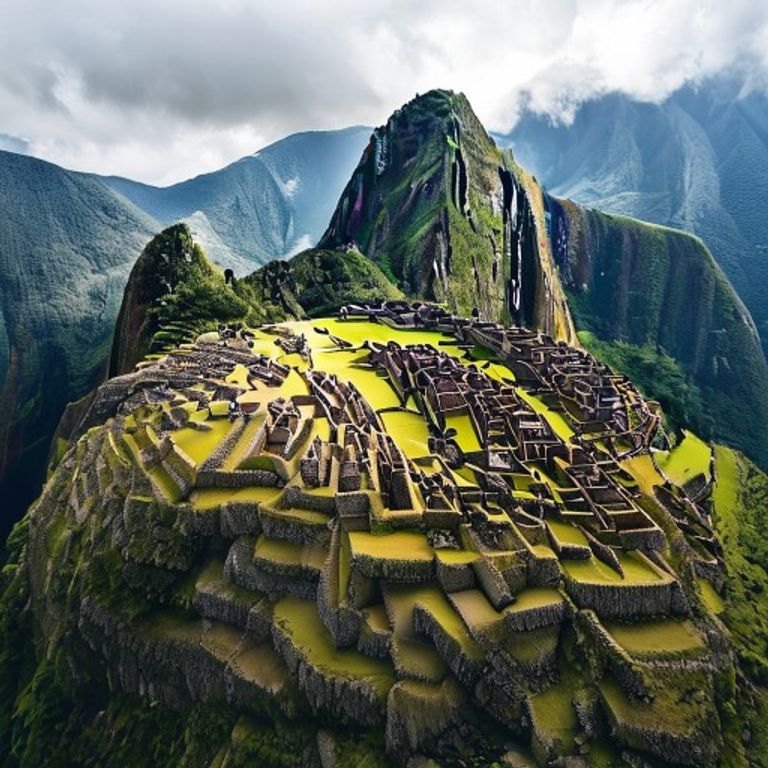
The Inca archaeological site in Peru that remained unknown to the Western world until 1911, revealing advanced engineering and astronomy atop the mountains.
⚠️ Research prepared with the aid of Deep Research is subject to referential ambiguity.
🖥️ Clean HTML code using a proprietary tool.
👥 Research by Guilherme Felipe, Curation by Sílvio Lôbo
The Enigma of Machu Picchu: A Mystery Among the Clouds
Machu Picchu, the lost city of the Incas, built majestically in the heights of the Peruvian Andes, evokes a perennial fascination. However, beyond its architectural grandeur and the beauty of its location, a veil of mystery hangs over a peculiar event, often overlooked in popular narratives, but which fuels the imagination of investigators and conspiracy theorists: the Machu Picchu Case. It is not a heinous crime in the conventional sense, but an event that, due to the nature of its occurrence and the lack of definitive explanations, has crystallized as a historical enigma.
1. The Context and the Incident: Where, When, and How the Mystery Began
The Machu Picchu Case does not have a specific "start" like a kidnapping or a murder. Its origin lies in the very rediscovery of the citadel in 1911 by Hiram Bingham, an American explorer from Yale University. Bingham, guided by local reports, arrived at Machu Picchu, which was covered by vegetation and partially forgotten by the outside world. What followed was a period of excavation and exploration that, while bringing the magnificence of the archaeological site to light, also left unanswered questions about its occupation and abandonment.
The "incident" that gave rise to the mystery, in this context, can be interpreted as the absence of concrete and conclusive evidence regarding the life and disappearance of its inhabitants. The lack of written records from the Inca civilization, along with the nature of the structure of Machu Picchu itself, which appears to have been abandoned relatively suddenly, laid the groundwork for various speculations.
2. Timeline of Events
The chronological reconstruction of the main facts that make up the mystery of Machu Picchu is more of a timeline of discoveries and debates than of singular events:
- 15th Century/Early 16th Century: Estimated period of the construction and occupation of Machu Picchu.
- Mid-16th Century: Most likely date of the citadel's abandonment. The reasons for this abandonment are the core of the mystery.
- 1911: The rediscovery of Machu Picchu by Hiram Bingham, who began intense excavation and documentation work.
- Subsequent Decades: Various expeditions and archaeological studies were conducted, but without reaching an absolute consensus on the exact function and reason for the inhabitants' disappearance.
- Present: Machu Picchu is one of the most visited archaeological sites in the world, but the enigma of its occupation and abandonment continues to be a subject of debate and speculation.
3. The Main Theories
The explanations for what happened at Machu Picchu range from solid scientific and archaeological hypotheses to alternative and more speculative theories:
Scientific and Archaeological Theories:
- Royal Residence and Spiritual Retreat: The theory most accepted by archaeologists such as John Hemming and Hiram Bingham himself suggests that Machu Picchu served as a retreat for the Inca Pachacuti and his court, or as an important religious center. The abandonment would have occurred due to the arrival of the Spanish in the region, even if they did not reach the citadel directly.
- Diseases and Climate Change: Another hypothesis points to the introduction of European diseases, such as smallpox, which decimated indigenous populations, and climate changes that affected agricultural production and the sustainability of the site.
- Inca Civil Wars: Some researchers suggest that the chaos generated by the Inca civil wars for succession to the throne, which occurred during the period of the Spanish arrival, may have led to the abandonment of Machu Picchu as a strategic measure or due to a lack of logistical support.
Alternative, Conspiracy, or Paranormal Theories:
- Alien Abduction: A theory without scientific basis, but popular in ufology circles, suggests that the inhabitants of Machu Picchu were abducted by extraterrestrial beings. The absence of signs of struggle and the architectural perfection are considered "evidence" by proponents of this idea.
- Extinction by Unknown Causes: Some speculations mention catastrophic events or unknown diseases that would have led to the sudden disappearance of the entire population.
- Secret Hideout: The possibility that Machu Picchu was a secret refuge for the Incas to escape the Spanish conquest, with a plan of return that never materialized.
- Atlantis/Advanced Ancient Civilizations Theories: Pseudoscientific theories that connect Machu Picchu to extremely advanced pre-Inca civilizations or even extraterrestrial origins, attributing the construction to lost knowledge.
4. Controversies and Blind Spots
The investigation surrounding Machu Picchu, despite the efforts of renowned archaeologists, carries its controversies and blind spots:
- Lack of Inca Written Records: The absence of formal writing in Inca culture is the main obstacle to a definitive understanding of its history and the reasons for the abandonment of its settlements. Everything we know is interpreted from oral sources, archaeological records, and accounts by Spanish chroniclers.
- Divergent Interpretations of Evidence: The meaning of certain structures, such as the Intihuatana (sundial) or the Temple of the Three Windows, is still a subject of debate among archaeologists, which can lead to different interpretations of life and religion in Machu Picchu.
- The Role of Hiram Bingham: Although fundamental to the rediscovery, Bingham's work, carried out in an era with less scientific rigor, generated some controversies. The removal of artifacts to the United States, for example, led to subsequent disputes with Peru.
- Undocumented or Lost Evidence: It is likely that, over the centuries, and especially during the period of rediscovery, some important evidence or traces were lost due to the nature of the site, the climate, or human action.
5. Curiosities and Legacy
The Machu Picchu Case, more than a crime or a disaster, has become a symbol of human capacity to build wonders and the ephemerality of civilizations.
- World Heritage and New Wonder: Machu Picchu is a UNESCO World Heritage site and was elected one of the New Seven Wonders of the World, attracting millions of visitors annually.
- Lasting Cultural Impact: The mystery surrounding its creation and abandonment continues to inspire books, documentaries, films, and conspiracy theories, keeping the fascination with the Inca civilization alive.
- Current Status: The "case" itself is not an ongoing police or judicial matter. Investigation is continuous in the field of archaeology and anthropology. New discoveries and data analyses continue to shed light on the mysteries, but a definitive answer for the abandonment remains elusive. The legacy of Machu Picchu lies not only in its grandeur but also in the questions that still urge us to seek answers about humanity's past.