


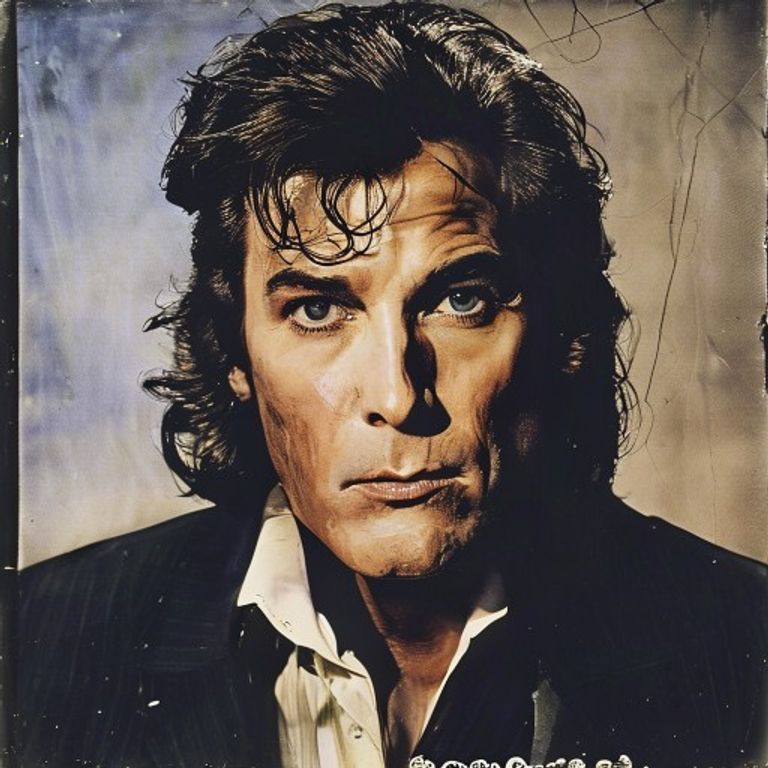
The singer's death at his Graceland mansion in 1977; the controversies surrounding the official cause and the reports that he might still be alive have become a fundamental part of pop culture.
⚠️ Research conducted with the aid of Deep Research is subject to referential ambiguity.
🖥️ Clean HTML code using a proprietary tool.
👥 Research by Guilherme Felipe, Curation by Sílvio Lôbo
The Mystery That Still Echoes: The Death of Elvis Presley
Although Elvis Presley was officially declared dead on August 16, 1977, the aura of mystery surrounding his passing transcends decades, fueling an incessant public debate. The "King of Rock and Roll," an iconic and transcendental figure, left behind not only an unparalleled musical legacy but also an enigma that resists the cold analysis of facts.
1. The Context and the Incident: Where, When, and How the Mystery Began
It all started at the opulent Graceland mansion in Memphis, Tennessee. On the morning of August 16, 1977, the body of Elvis Presley was discovered on the bathroom floor of his bedroom. He was visibly pale and appeared to have fallen from an armchair. The news shocked the world, but the details that quickly emerged raised more questions than answers.
The Macabre Discovery
It was Elvis's girlfriend at the time, Ginger Alden, who found him. Reports indicate that she called out to him repeatedly without receiving a response, until she decided to look for him in the bathroom. The scene found was described as heartbreaking, with Elvis lying in front of the toilet.
The Official Version: A Drug Overdose
The official cause of death, determined by the autopsy, was congestive heart failure, exacerbated by an overdose of prescription drugs. The death certificate lists the cause as "cardiac arrhythmia," but the presence of a large quantity of controlled substances in Elvis's body was an undeniable fact.
2. Timeline of Events: Chronological Reconstruction
The official investigation focused on a short period of time, but every instant was crucial for understanding what happened and, subsequently, for the speculations.
- August 15, 1977, night: Elvis Presley is last seen awake, interacting with family and friends at Graceland. There are reports that he was feeling unwell and took several medications before going to his room.
- August 16, 1977, morning: Around 9:30 AM, Ginger Alden discovers Elvis's body.
- August 16, 1977, morning/afternoon: Medical staff are called, and Elvis is declared dead. The autopsy is performed later.
- August 17, 1977: Elvis Presley's funeral takes place in Memphis, attracting an estimated crowd of 75,000 people.
3. The Main Theories: A Mosaic of Possibilities
The Elvis Presley case is a goldmine for theories, ranging from the scientific to the conspiratorial, and even the paranormal.
The Medical and Police Hypothesis (The Expanded Official Cause)
This theory maintains that Elvis, struggling with addiction to prescription drugs and chronic health problems, succumbed to an accidental overdose. The fragility of his heart, combined with the interaction of multiple sedatives and painkillers, would have led to cardiac arrest. Elvis's personal physician, Dr. George Nichopoulos (nicknamed "Dr. Nick"), was later convicted of improperly prescribing large quantities of drugs to Elvis and other patients. Although he was not formally charged in Elvis's death, his responsibility in the context of the singer's addiction is widely discussed.
The "Escape" and Faked Death Theory
This is, without a doubt, the most persistent and popular theory. The central idea is that Elvis, tired of the overwhelming fame, constant pressure, and threats to his life, orchestrated his own death to live an anonymous life.
- Arguments in favor:
- Elvis's request for his name to be misspelled on his tombstone ("Aaron" instead of "Aron").
- Reports of sightings of Elvis in various places after his death.
- The alleged desire of Elvis to escape debts and the mafia (the theory that he had testified against the mafia and needed to disappear is common).
- The stiffness of Elvis's body during the funeral, raising suspicions that it was not him in the coffin (although rigor mortis is a natural phenomenon).
Conspiracy and Paranormal Theories
Although less grounded, these theories add layers of mystery:
- Mafia Involvement: A variation of the escape theory, suggesting that the mafia, with whom Elvis allegedly had ties or debts, eliminated him to silence him or for some kind of revenge.
- Extraterrestrial or Paranormal Interference: Less common, but present in discussion forums, it suggests that Elvis was taken by beings from another world or that his death was the result of a supernatural force. These theories lack any concrete evidence.
4. Controversies and Blind Spots: The Gaps in the Investigation
Despite the official statement, several inconsistencies and blind spots fuel the debate.
- The Autopsy and Medical Report: Critics point out that the autopsy was not as thorough as it could have been, and that some results were released in a confusing manner. The amount of medication found in the body was a shock, but the direct causal link to heart failure was not explicitly stated in an unequivocal way to the general public.
- The Role of Dr. Nichopoulos: Although the doctor was widely criticized for his conduct, his direct responsibility in Elvis's death was never criminally proven. His testimonies and his freedom after the event generate distrust in some circles.
- Preservation of Evidence: Rumors about the destruction or loss of parts of the autopsy report or other important documents arise periodically.
- Conflicting Testimonies: As in many high-profile cases, the testimonies of people close to Elvis present some variations, fueling the idea that not everything has been revealed.
5. Curiosities and Legacy: An Immortal Icon
The Elvis Presley case has become a case study on the nature of fame, human fragility, and the difficulty of accepting the loss of an icon.
- The "Sightings" Phenomenon: The belief that Elvis is alive is so strong that countless "sightings" have been reported over the years. From a man seen buying a burger at a diner to an elderly man identical to Elvis at a pharmacy, these stories have become part of modern folklore.
- The Official Investigation: The police investigation into Elvis's death concluded that it was not criminal. There has been no formal reopening of the case by the police.
- The Legacy in Time: The mystery surrounding Elvis's death, paradoxically, has kept him even more alive in popular culture. His image, his music, and the theories about his whereabouts continue to fascinate millions around the world. Graceland remains a sanctuary, attracting pilgrims who seek to connect with the myth.
The Elvis Presley case remains one of the most enduring enigmas of the 20th century. While science and logic point to a personal and medical tragedy, the popular imagination refuses to accept the end, preferring to believe in an alternative ending for the man who revolutionized music and culture.



