


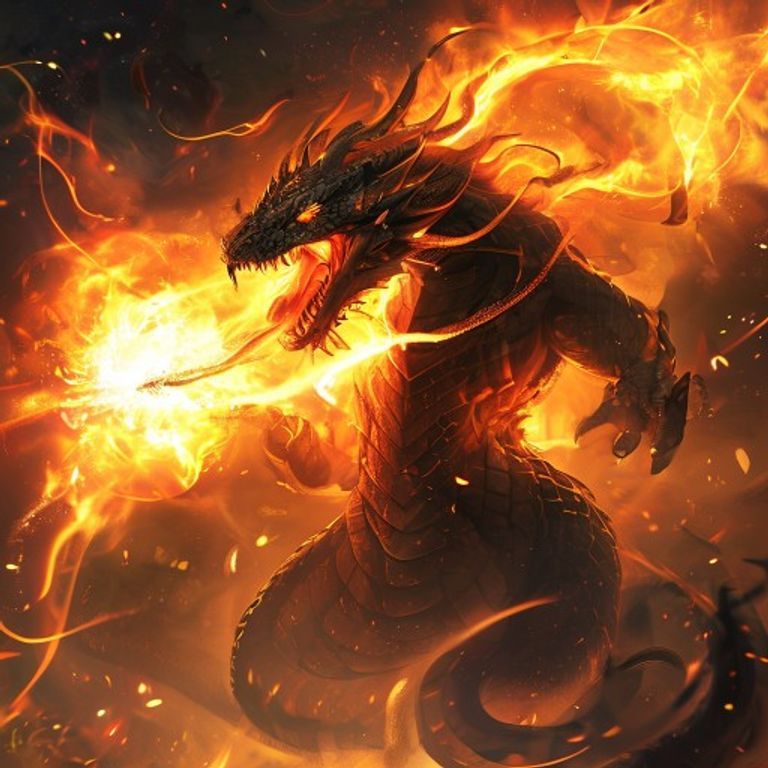
The Fiery Enigma of the Mekong River: The Naga Fireballs Case
On the banks of the majestic Mekong River, in a region spanning Laos, Thailand, and Cambodia, a breathtaking and simultaneously disturbing annual phenomenon has haunted popular imagination and defied concrete scientific explanations for decades. Known as the "Naga Fireballs Case" or "Mekong Fireballs," this bioluminescent spectacle, which emerges from the depths of the river during the autumn months, has been the subject of fascination, superstition, and rigorous investigation, with results oscillating between the scientific and the mystical.
The mystery is not recent. Reports of strange lights emanating from the Mekong have circulated in local legends for centuries. However, it was from the 1960s onwards that the phenomenon began to gain international notoriety, driven by Western testimonies and the intensification of scientific interest in anomalous phenomena.
Timeline of Events: From Ancient Whispers to Global Visibility
The chronological reconstruction of the Naga Fireballs Case is complex, as the phenomenon, by its ephemeral nature, has become a focus of intermittent attention. However, some milestones are crucial:
- Pre-1960s Period: Local tales and legends, associating the lights with mythical entities such as Nagas (divine aquatic serpents), circulated among riverside populations.
- 1960s: The phenomenon began to be more widely documented by non-local witnesses, including American soldiers and Red Cross personnel during the Vietnam War.
- 1970s and 1980s: International media and independent researchers' interest increased. Several documentaries and articles explored the mystery.
- 1990s: Thai scientists initiated more systematic investigations, aiming to demystify the phenomenon.
- 2000s Onward: Despite attempts at scientific explanation, the case remains shrouded in mystery, with new generations of curious individuals and researchers continuing to observe and debate the phenomenon. Official reports and archives remain scarce and fragmented.
Main Theories: Between Reason and Myth
The beauty and enigma of the Naga Fireballs have given rise to a myriad of explanations, each with its own logical basis and proponents:
1. Scientific and Police Hypotheses
- Flammable Natural Gases (Phosphorus): This is perhaps the most widespread and accepted scientific theory among skeptics. The idea is that phosphorus compounds, released by organic decomposition in the riverbed, accumulate in bubbles and, upon being released to the surface, spontaneously combust upon contact with the air's oxygen. This theory is supported by some scientists, who point to the possible existence of pockets of methane gas and other organic compounds in the Mekong's sediments. However, the consistency of the balls' color and size, as well as the apparent absence of a sulfur smell, are points of contention.
- Bioluminescent Phenomenon: Another scientific hypothesis suggests the existence of bioluminescent organisms in the water or at the bottom of the river that, under certain conditions, would emit light. However, there is no concrete evidence of such organisms on a scale sufficient to produce the observed spectacle.
- Electrical Discharge (Water Lightning): Some researchers have considered the possibility of electrical discharges on the water's surface, perhaps induced by unusual atmospheric conditions. However, the shape and trajectory of the fireballs do not seem to align with the nature of lightning.
- Geological Phenomena: Volcanic activity or the release of underground gases have also been considered, but the specific location and periodicity of the phenomenon do not fit well with these explanations.
2. Alternative, Conspiracy, or Paranormal Theories
- Supernatural Creatures (Nagas): The most popular and traditional explanation among local populations attributes the fireballs to the Nagas, benevolent or malevolent aquatic deities from Buddhist mythology. According to legend, the Nagas exhale these fireballs to celebrate the arrival of autumn, or as a warning sign. This theory, although lacking a scientific basis, is deeply rooted in the region's culture and lends the phenomenon an aura of mystery and reverence.
- Secret Weapons or Military Experiments: During the Vietnam War period, it was speculated that the fireballs could be the result of secret military experiments, such as missile launches or the use of new lighting technologies. However, there is no concrete evidence to support such claims.
- Extraterrestrial Phenomena: As with many unexplained mysteries, the extraterrestrial hypothesis has also been raised. Some suggest that the fireballs could be alien spacecraft or signs of an extraterrestrial presence on the planet. This theory, like the paranormal one, lacks any empirical evidence.
Controversies and Blind Spots: Where Investigation Fails
Despite the fascination generated by the Naga Fireballs, official investigation into the phenomenon is marked by several controversies and blind spots that fuel the mystery:
- Scarcity of Concrete Evidence: The fleeting nature of the phenomenon makes it difficult to collect samples or conduct scientific analyses at the exact moment of its occurrence. Many reports rely on visual testimonies, which can be subjective and influenced by cultural and psychological factors.
- Lack of Comprehensive Official Reports: Unlike other phenomena of scientific interest, there are no detailed, declassified official reports that exhaustively document all observations and attempted explanations. Most information comes from media reports and independent academic research.
- Cultural Pressure and Superstition: The strong connection with Naga mythology may have influenced or inhibited more skeptical investigations in some regions, leading to the uncritical acceptance of supernatural explanations.
- Ignored Clues? Some independent researchers suggest that certain clues, such as a possible correlation with seismic activity or specific weather patterns, may have been underestimated by official investigations.
- Intermittent Interest: Interest in investigating the phenomenon tends to rise and fall, depending on media attention and available funding for research, which hinders the continuity of investigations.
Curiosities and Legacy: A Mystery That Persists
The Naga Fireballs Case has transcended the scientific realm to become a cultural icon, with a lasting legacy:
- Annual Festival: The celebration of the phenomenon is so significant that, in some areas of Thailand, an annual festival, the "Naga Fireballs Festival," has been created, attracting tourists from all over the world. This festival, while celebrating the mystery, may also contribute to its perpetuation, mixing genuine observations with reenactments and folkloric elements.
- Impact on Popular Culture: The fireballs have inspired countless books, documentaries, works of art, and legends. They are a symbol of nature's mysterious and unexplored beauty.
- Ongoing Study: Despite decades of observation, the mystery persists. New videos and reports continue to emerge, fueling the debate among scientists, skeptics, and paranormal enthusiasts. Currently, the case has not been "reopened" or "closed" in a formal sense, as it was never officially closed. It remains an enigma to be unraveled, a testament that, even in our increasingly technological world, there is still room for the inexplicable.
- The search for a definitive explanation continues, and the hope is that, with advances in observation and analysis technology, we may one day fully unravel the truth behind these mysterious flames that dance over the mighty Mekong River.



