


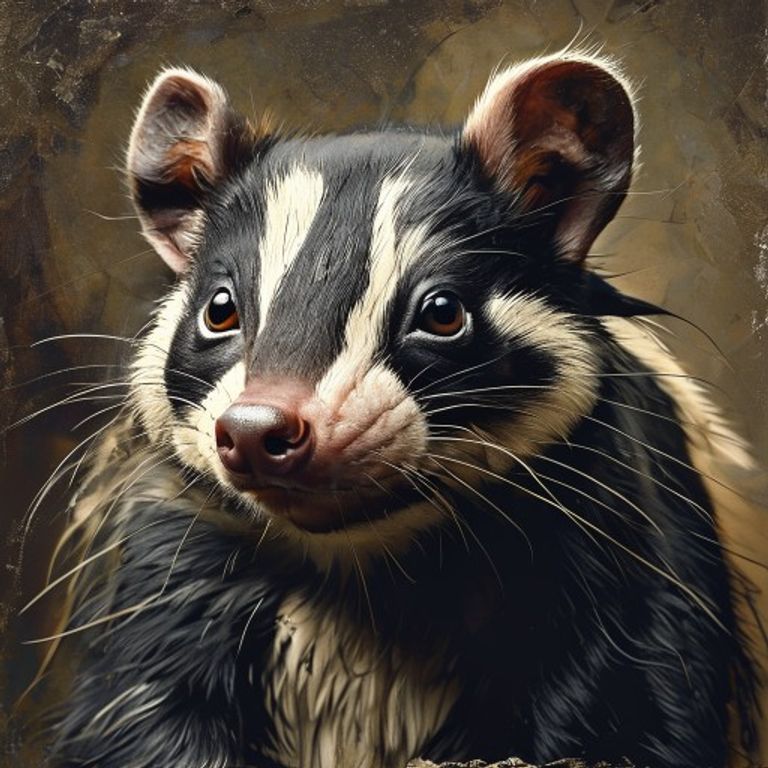
A bipedal, hairy creature with a foul odor, similar to Bigfoot, is frequently sighted in the Florida swamps, fueling local legends and cryptozoological investigations.
⚠️ Research elaborated with the aid of Deep Research is subject to referential ambiguity.
🖥️Clean HTML code using a proprietary tool.
👥 Research by Guilherme Felipe, Curation by Sílvio Lôbo
The Echo of the Forest: Unraveling the Skunk Ape Mystery
Amidst the dense and humid vegetation of the Florida swamps, a mystery hides, an echo that resonates through the decades, whispering about a creature that defies logic and science: the Skunk Ape. This is not just any folktale, but an enigma involving consistent sightings, disturbing accounts, and an investigation that, in many aspects, remains incomplete.
1. The Context and the Incident: Where, When, and How the Mystery Began
The folklore of Florida, especially in the southern swamp regions, has always harbored stories of humanoid creatures, often associated with foul odors. However, the term "Skunk Ape" gained prominence from the 1960s onwards, coinciding with a series of sightings that transitioned from local rumor to a phenomenon of public and, in some cases, police interest.
The initial, or at least the most widely publicized, landmark dates back to 1966, in the outskirts of Ochopee, Florida. Early reports described a tall creature, covered in dark fur, with a pungent and unpleasant odor, similar to that of decomposing skunk. The term "Skunk Ape" emerged from these descriptions, consolidating the entity's identity.
The nature of the sightings varied: some individuals claimed to have seen the creature fleeing into the vegetation, while others described closer and more terrifying encounters. The region, known for its extensive Everglades and for harboring a rich and sometimes dangerous fauna, offered a fertile ground for legends to emerge, but the details of the accounts suggested something beyond popular imagination.
2. Timeline of Events
- 1950s/Early 1960s: Initial and isolated reports of creatures similar to the one described as the Skunk Ape begin to circulate in local communities in South Florida.
- 1966: Significant increase in reported sightings, especially in the Ochopee area. The term "Skunk Ape" begins to be widely used. A notable event involves a man named Frank Smith, who reported a frightening encounter.
- 1970s: The case's popularity grows, attracting the attention of cryptozoologists and paranormal enthusiasts. More sightings are recorded, some with detailed descriptions of footprints and other traces.
- 1980s: Public interest wanes, but the Skunk Ape myth persists, fueled by local stories and the remote, unexplored nature of the Everglades.
- 1990s - Present: New sightings and reports continue to emerge sporadically, keeping the case alive in popular culture. Search initiatives and expeditions by independent researchers are occasionally conducted.
3. Main Theories
The Skunk Ape case, given its enigmatic nature, has generated a myriad of theories, ranging from pragmatic explanations to more fantastic conjectures.
3.1. Probable Scientific and Police Hypotheses
- The Florida Snowman (Unidentified Primate): The most popular hypothesis among cryptozoologists is the existence of a primate unknown to science. The logic lies in the possibility of large primate species having evolved or adapted to specific environments, such as the Everglades. Florida, with its rich biodiversity and hard-to-access areas, could theoretically harbor such a creature. Evidence like large footprints and a strong odor would be consistent with a large primate.
- Misidentified Terrestrial Mammals: The local fauna, including black bears, wild boars, and even large cats (though less likely in relation to the sightings), could be misinterpreted under low visibility conditions or under stress. A black bear, for example, can stand on its hind legs, mimicking a humanoid form. The odor, however, remains a point of difficulty for this theory.
- Confusion with Escaped Orangutans: At various times, there have been cases of orangutans escaping from circuses or zoos in other parts of the US. The plausibility of a specific orangutan in the Everglades is low, but the hypothesis is not entirely dismissed in preliminary investigations, considering the odor and general appearance in some reports.
- Collective Psychological Phenomenon/Urban Legend: In isolated areas with strong folklore, stories can spread and take on a life of their own. Fear of the unknown, suggestion, and the repetition of stories can lead individuals to "see" or misinterpret environmental stimuli as the presence of a creature.
3.2. Alternative, Conspiracy, or Paranormal Theories
- Secret Genetic Experiments: A conspiracy theory suggests that the Skunk Ape is the result of government or private genetic experiments, accidentally or deliberately released into the wild. This line of thought points to the lack of concrete evidence as proof of a cover-up.
- Alien or Interdimensional Being: Some paranormal circles speculate that the Skunk Ape could be an extraterrestrial entity or from another dimension, capable of manifesting in our plane of existence. The strong odor would be an intrinsic characteristic of this entity.
- Abominable Snowman (Tropical Version): A direct analogy to the Yeti of the Himalayas or the Bigfoot of North America, suggesting a hominid creature not yet cataloged by science, adapted to the tropical climate.
4. Controversies and Blind Spots
Despite the persistence of reports, the Skunk Ape case is marked by gaps and inconsistencies that hinder a definitive resolution.
- Lack of Concrete Physical Evidence: The main difficulty lies in the almost complete absence of irrefutable physical evidence. Footprints have been reported and, in some cases, photographed, but many have been described as inconclusive or subject to interpretation. No DNA traces, fur, or remains have been collected and authenticated as belonging to an unknown creature.
- Conflicting Testimonies: Although many reports share similar characteristics (height, fur, odor), descriptions of facial features, size, and behavior can vary considerably among witnesses, which may indicate different perceptions or sources of error.
- Limited Official Investigations: Most official investigations into the Skunk Ape have been superficial and motivated by public outcry rather than proactive action by security or scientific agencies. Police reports often classify sightings as "animal sightings" or "inconclusive explanations," without significant investigative depth.
- Discrediting and Stigma: Witnesses who report sightings often face skepticism and ridicule, which can discourage others from sharing their experiences. This dynamic contributes to the stigma surrounding the case and the difficulty in collecting reliable testimonies.
- Lost or Devalued Evidence: There are reports of evidence, such as photographs or audio recordings, that were allegedly lost or not properly analyzed due to a lack of resources or official interest.
5. Curiosities and Legacy
The Skunk Ape has transcended the status of a mere local legend to become an icon of cryptozoology and a cultural element of Florida.
- Cultural Impact: The Skunk Ape has inspired books, documentaries, television shows, and even an annual festival ("Skunk Ape Days") in some Florida communities. The creature's figure is a popular symbol of the mysterious and wild nature of the Everglades.
- Characteristic Odor: The most distinctive aspect of the Skunk Ape, its pungent and unpleasant odor, is a constant in almost all reports. This sensory detail is what intrigues the most and differentiates it from other global "bigfoots."
- Current Status: The Skunk Ape case has not been reopened in terms of large-scale official investigation. It remains largely shelved under the umbrella of "folklore" or "animal sightings." However, the community of independent researchers and enthusiasts remains active, seeking new clues and documenting new sightings. The mystery, much like the forest that shelters it, remains shrouded in shadows, awaiting a revelation that may never come but continues to fascinate and ignite the human imagination.



