


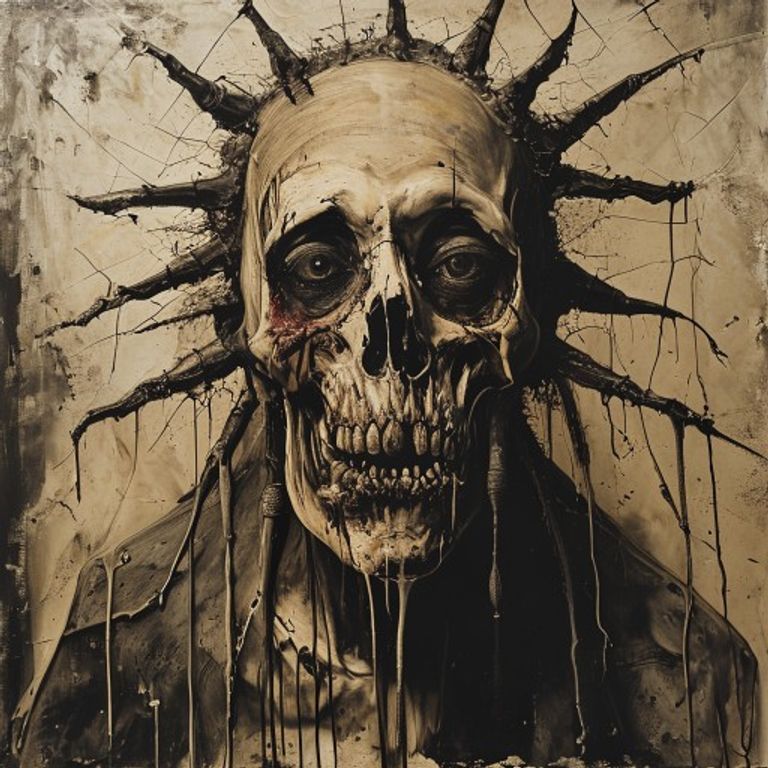
The final 1890 confrontation between the U.S. Army and Lakota natives that resulted in the death of hundreds of indigenous people and marked the end of the Plains resistance.
⚠️ Research prepared with the aid of Deep Research is subject to referential ambiguity.
🖥️ Clean HTML code using a proprietary tool.
👥 Research by Guilherme Felipe, Curation by Sílvio Lôbo
The Wounded Knee Massacre: A Silenced Cry in the Heart of America
The name Wounded Knee echoes through American history as a dark symbol of violence, injustice, and a mystery that, despite the decades, still hangs over the plains of South Dakota. What unfolded on December 29, 1890, near a small creek named Wounded Knee, was much more than a confrontation between the United States Army and a group of Lakota Native Americans. It was an event that exposed the brutality of colonization, questioned the official narrative of American expansion, and left behind a trail of unanswered questions that defy logic and interpretation.
1. The Context and the Incident: The Seed of Tragedy
The stage for disaster was set in an environment of growing despair and utopian hope among the Lakota. The year 1890 marked the end of an era. Tribes had been confined to reservations, their traditional lands diminished, and their culture repressed. Hunger and disease were constant companions. Amidst this discontent, a new religious movement emerged: the Ghost Dance. Inspired by the visions of the prophet Wovoka, a Paiute man, the Ghost Dance promised the return of the bison, the disappearance of the white man, and the restoration of the land to the Native Americans. The belief was that by practicing the dance with faith, the indigenous nation would rise again, immune to the soldiers' bullets.
The Natives believed that "ghost shirts" (a type of sacred garment) would protect them. The belief in the Ghost Dance spread rapidly among the Lakota, including the group led by Chief Big Foot (or Zintkala Nuni), who was seeking refuge at the Pine Ridge and Rosebud reservations. Fearing the expansion of the Ghost Dance and the possibility of an uprising, American authorities mobilized the Seventh Cavalry Regiment, under the command of Major General Nelson Miles and Colonel James Forsyth. The goal was to disarm the Natives and take them back to the reservations.
On the morning of December 29, 1890, the Seventh Cavalry Regiment found Big Foot's group camped near Wounded Knee Creek. What followed is the epicenter of the mystery: an indiscriminate shooting that resulted in the death of hundreds of Lakota men, women, and children, and dozens of American soldiers.
2. Timeline of Events: The Cascade of Violence
- December 1889 to October 1890: The Ghost Dance gains strength among Native American tribes, especially the Lakota, causing apprehension among U.S. authorities.
- November 1890: American authorities intensify surveillance on the tribes, and Ghost Dance leaders are arrested.
- December 1890: Chief Big Foot, ill with pneumonia, leads his group of about 350 people in search of safety at the Pine Ridge reservation.
- December 28, 1890: The Seventh Cavalry Regiment intercepts Big Foot's group and takes them to an improvised camp near Wounded Knee Creek.
- December 29, 1890, Morning: Colonel James Forsyth and his troops surround the camp. The stated goal is to disarm the Lakota.
- December 29, 1890, Late Morning: Troops begin searching the camp for weapons. There are conflicting reports about the start of the shooting.
- December 29, 1890, Afternoon: The massacre intensifies. The Seventh Cavalry Regiment opens fire with rifles and Hotchkiss machine guns against the unarmed Natives.
- December 29, 1890, Late Afternoon: The massacre ends. Hundreds of Lakota lie dead on the field, including Big Foot, who was shot while lying in his tent. American soldiers also suffer casualties, many as victims of friendly fire.
- December 1890 onwards: The event is quickly classified by the U.S. Army as a "battle" against hostile rebels, a narrative that would be contested over the years.
3. Main Theories: Unraveling the Enigma
The brutal and chaotic nature of the massacre at Wounded Knee opened a range of interpretations, from the official explanation to theories bordering on the paranormal.
3.1. Theory of Provocation and Fear (Most Likely Scientific/Police Hypothesis)
This is the explanation most supported by subsequent investigations and historians. The theory suggests that the incident began with a misunderstanding or a hasty action by American troops. Tension was at its peak, and the Army feared a mass uprising. During the search for weapons, a deaf Lakota man, Black Coyote, allegedly refused to hand over his rifle or accidentally fired it, triggering panic and an immediate, excessive military response. The presence of Hotchkiss machine guns, armed and pointed at the camp, suggests a plan of action that could have been activated by any spark. Colonel Forsyth, under pressure and with troop morale shaken by the long campaign, may have acted with excessive zeal.
3.2. Theory of the Planned Massacre (Conspiracy Hypothesis/Alternative Theory)
This theory argues that the massacre was not accidental, but a deliberate action to punish the Lakota and dissuade other groups from joining the Ghost Dance. Proponents of this theory point to the overwhelming military superiority of the American troops and the disproportionately high number of civilian deaths. Reports and testimonies from soldiers describing the cruelty of the troops, including shooting at people trying to surrender or hide, fuel this view. The attempt to cover up the extent of the carnage and the official classification as a "battle" are seen as evidence of a plan to justify the violence.
3.3. Theory of Friendly Fire (Police Hypothesis/Partially Proven Fact)
Although not a complete theory regarding the start of the massacre, friendly fire was a significant factor in the American death toll and a point of confusion. Soldiers, positioned on high ground and firing amidst the chaos, ended up hitting each other. Official reports later confirmed that several soldiers were wounded or killed by bullets from their own comrades, evidencing the disorganization and lack of control during the shooting.
3.4. Theory of Paranormal or Spiritual Interference (Extreme Theory/Fiction)
This is a more speculative line of thought, based on Lakota beliefs about the Ghost Dance. Some interpret the fury and insanity of the shooting as a reflection of the Natives' spiritual despair, or even as a supernatural manifestation triggered by the end of a sacred ritual interrupted by violence. This theory has no basis in concrete evidence but reflects the deep mystical and tragic weight associated with the event from the perspective of some observers and descendants.
4. Controversies and Blind Spots: The Shadows of Truth
The official investigation into the massacre, conducted by the United States Army itself, was marked by inconsistencies and omissions, leaving many questions unanswered and fueling the mystery.
- Manipulated Official Reports: The initial official version painted the Lakota as aggressive rebels and the soldiers as brave defenders. However, reports from soldiers and civilian witnesses presented a very different picture, describing a massacre against defenseless populations.
- Ignored Clues and Missing Evidence: Reports suggest that many Lakota weapons found at the scene were taken as trophies or simply disappeared, hindering forensic analysis of who fired first. Accurately identifying victims and perpetrators became an arduous task.
- Conflicting Testimonies: Eyewitnesses, both Lakota and soldiers, presented divergent accounts of the exact moments preceding the shooting and the sequence of events. The lack of a clear and impartial record contributed to the confusion.
- The Role of Colonel Forsyth: Forsyth's decision to surround the camp and disarm the Natives in such volatile conditions is a central point of controversy. Some internal Army investigations questioned his actions, but he was eventually acquitted of any misconduct.
- The Death Toll: The exact number of Lakota dead varies in different reports, but it is estimated that between 150 and 300 people were killed, including many women and children. The count of American soldiers is also a subject of debate, with some deaths attributed to friendly fire.
5. Curiosities and Legacy: An Echo That Does Not Cease
The Wounded Knee Massacre left a deep and painful legacy in American history, transcending the event itself to become a symbol of the ongoing struggle of Native Americans for justice and recognition.
- The Medal of Honor: Twenty American soldiers received the Medal of Honor for their actions at Wounded Knee. However, in 2020, a group of Lakota descendants called for the revocation of these medals, arguing that they were awarded for an act of massacre, not heroism.
- The Symbol of Indigenous Struggle: Wounded Knee became a landmark in the fight for Native American civil rights. In 1973, the site was occupied by activists from the American Indian Movement (AIM), who protested against the violation of treaties and the precarious conditions on reservations.
- Forensic Archaeology: More recently, the site has been the subject of archaeological investigations seeking to reconcile historical accounts with physical evidence. The discovery of mass graves and the analysis of artifacts have helped bring more details about the brutality of the event.
- The Mystery Persists: Despite official reports and investigations, the "mystery" of Wounded Knee lies in the complete lack of consensus regarding primary responsibility and the chain of events that led to the massacre. The complete truth, with all its details, seems to have been buried with the victims in the cold soil of South Dakota.
- Current Status: The case has not been officially reopened in a criminal sense, but it continues to be a point of intensive study for historians, anthropologists, and activists. The memory of Wounded Knee remains alive, a constant reminder of the scars that history has left.
Wounded Knee is not just a dark chapter of the American past; it is an open wound that continues to bleed, questioning the narrative of progress and redemption. The echo of the silence of the dead still resonates, a call for the truth, however painful it may be, to finally be unveiled.



