


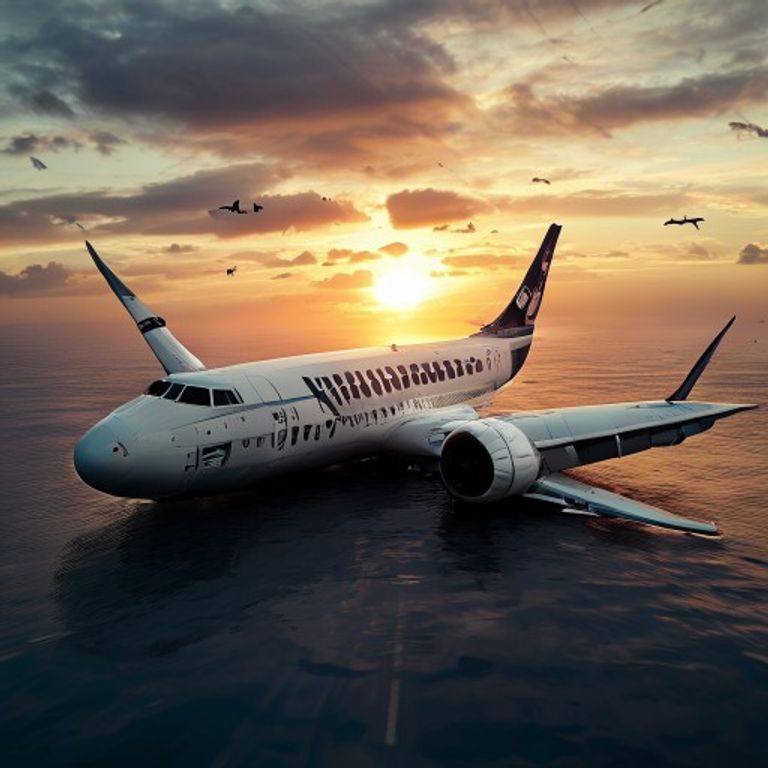
According to information from the [[British Broadcasting Corporation (BBC)]], (Today, April 3, 2011, Sunday), France's Bureau of Investigations and Analysis (BEA) announced this Sunday that wreckage from the Air France plane that crashed on June 1, 2009, killing 228 people in the Atlantic Ocean, has been found.
Investigators have "hopes" of finding the plane's black boxes, as the wreckage is "relatively concentrated," Jean-Paul Troadec, director of the BEA, told AFP. "The good news is that the wreckage is relatively concentrated. Because of this, we have hopes of finding the black boxes," he stated. When asked what had already been located, Troadec said that "the engines and some parts of the wing" had been found.
The new search phase was initiated in a 10,000 km2 area, meaning a 75-kilometer radius around the last known position of flight AF 447. According to the BBC, the searches, funded by Air France and Airbus, involved special robots that dove to depths of up to 4,000 meters (13,120 feet) to examine the ocean floor between Brazil and West Africa. The equipment has also been used in the mission that discovered the Titanic wreckage. Each robot is four meters long and weighs about 800 kilograms, and can work up to 22 hours a day, covering one hundred square kilometers per day. "The elements were identified by BEA investigators as sunken parts of the A 330-203 aircraft, flight AF447," stated the Bureau responsible for the technical investigation, in a press release.
The BEA also announced that more detailed information will be released soon. The Airbus A330 was operating flight AF447, between Rio de Janeiro and Paris, with 228 people on board, when the aircraft disappeared. The accident was partially attributed to faulty speed sensors, but authorities believe other factors also contributed.



