


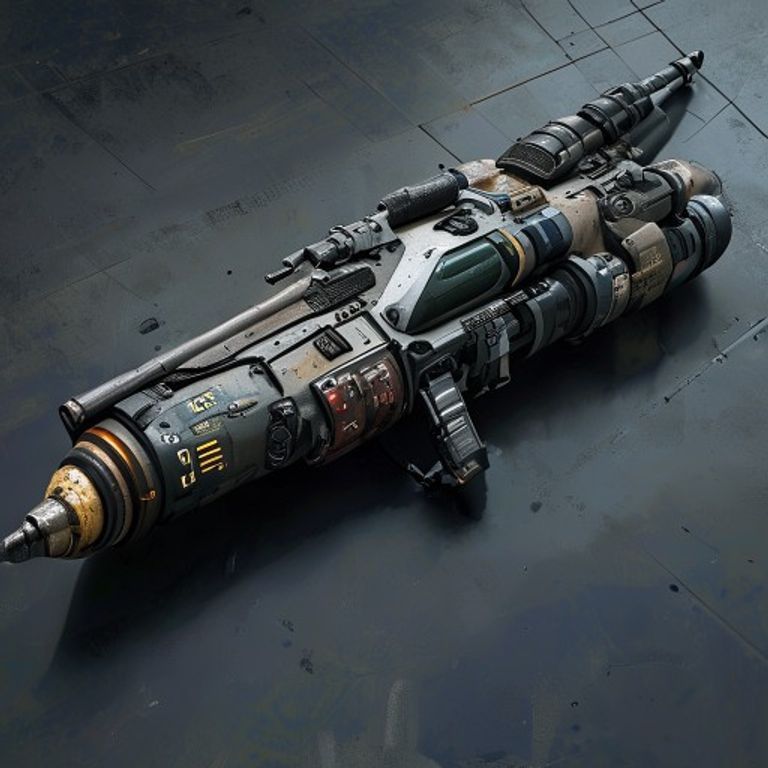
A tactical nuclear weapon, or TAN, refers to nuclear devices designed for battlefield use or in relatively limited areas, as opposed to strategic nuclear weapons, which target cities, military bases, or nominal states. In military terms, the distinction lies in the scale of destruction, range, and operational purpose.
Historically, the first TANs emerged at the end of World War II, when scientists from the Manhattan Project began to think about smaller devices that could be launched by short-range missiles or air-dropped bombs. The concept came to full life with the Cold War, when the US and the USSR experimented with lower-yield bombs that could be used in conflicts up to a few thousand kilometers.
Technical components of a TAN include: a fissile core of enriched uranium or plutonium, a compact casing that allows for rapid detonation, and command and control systems that allow the operator to choose the yield. Typical yields range from 0.1 to 10 kilotons of TNT, which even at a low scale can heavily devastate an underground base or a group of military vehicles.
Notable research and designs include the "Little Bomb" (U.S. 0.25-kt), the "W54" (U.S. 0.1-kt) used in short-range missiles, and the "NATO" (unclassified) which supposedly had an application in 1970, where the objective was to equalize ammunition production against opponents with large anti-aircraft defense infrastructure.
The strategy behind TANs usually revolves around three pillars: demonstration of response capability, proximal deterrence, and force attrition. In conflict scenarios, the use of a TAN can quickly change the mindset, as the mere threat of immediate nuclear destruction discourages offensives in critical areas.
Legal and ethical determinants come into play when addressing weapons of this magnitude. While the Cold War intensified the debate, the introduction of treaties such as the Nuclear Non-Proliferation Treaty (NPT) of 1968 places a limitation on their storage and military use, although it does not strictly prohibit the existence of TANs. Different countries maintain their status in global armament databases (e.g., 'Nuclear Weapon Archive').
As of the last update in 2023, only five countries confirm possessing or testing TAN samples: the US, Russia, China, the United Kingdom, and France. However, there are unofficial reports that North Korea, for example, may have developed smaller variants for tactical armament purposes (see Arms Control Association).
From a military security perspective, tactical weapons present a dilemma: on one hand, they offer a highly flexible level of field reconnaissance; on the other, they amplify the unforeseen consequences of nuclear escalation. Any use, even at the lowest yield, can push aside the rules of civilian cognition and generate catastrophic disasters.
In summary, the tactical nuclear weapon is an extension of traditional conventional weapon realms, but with much greater dilation of danger and diplomacy. When considered, it presents itself as a hunting and protection instrument with controlled escalation consequences, given the knowledge of residual radiation effects and short-term environmental risks. Nowadays, the discussion about tactical weapons remains in the interstice between nuclear de-escalation and power rebalancing policies in high-tension scenarios.



