


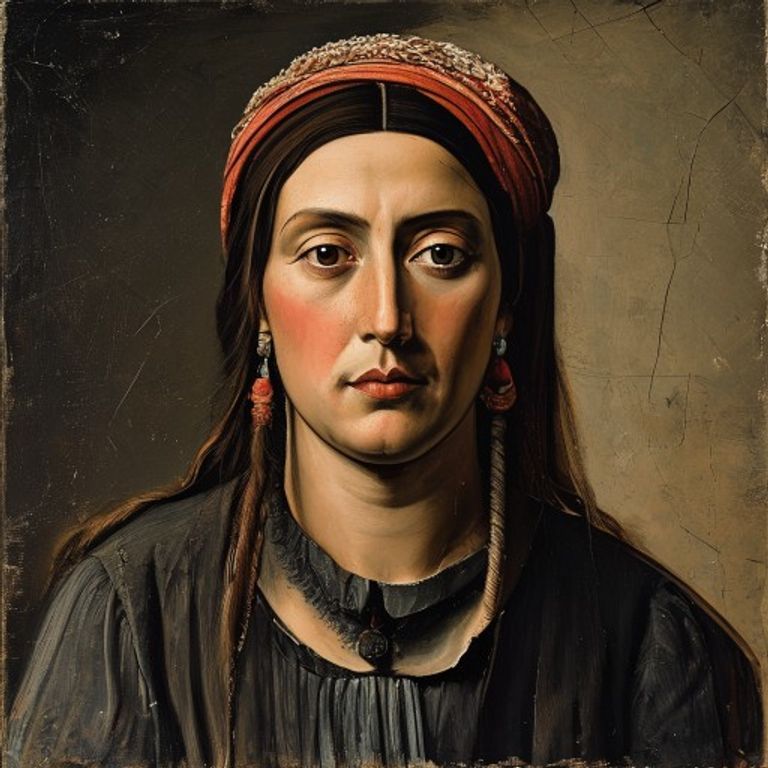
Machado de Assis [1839 - 1908] was one of the most brilliant writers. Prolific, he produced chronicles, poetry, short stories, novels, criticism, and plays. His style is marked by irony, digression, language, and deep psychological analysis, delving into the human soul and revealing its darkest and most hidden corners.
He stood out mainly as a short story writer and novelist. Among his most famous novels, we highlight The Posthumous Memoirs of Brás Cubas, Quincas Borba, and D. Casmurro. Among his short story collections, it is worth mentioning Loose Papers, Dateless Stories, Various Stories, and Relics of the Old House.
Highlighting the magnificent work of Professor Ubirajara Araújo Moreira from the Milênio do Paraná course, here is the summary:
1. INTRODUCTION
Published in 1904, Esau and Jacob was generally considered a less important novel, especially when compared to Machado de Assis's three realist-phase novels: The Posthumous Memoirs of Brás Cubas [1881], Quincas Borba [1891], and Dom Casmurro [1899].
It was thought that in relation to these, Machado de Assis had softened his realism, making it less explicit and blunt, toning down his acid humor and his biting criticism of the society of his time and of the bourgeois man. It was even classified as a simple 'novel of manners'...
Today, however, this simplistic view is increasingly discarded, and it is now acknowledged that Esau and Jacob is one of Machado de Assis's most aesthetically elaborate novels and possibly the most difficult to understand and interpret.
Let us, therefore, highlight some crucial points of this work, seeking to understand its complexity a little better.
2. NARRATOR
The first big question is precisely this: who is the narrator in Esau and Jacob?
Before the first chapter, Machado de Assis wrote a warning, in which he clarifies that 'When Counselor Aires passed away, seven handwritten notebooks were found in his desk [...].'
The first six formed a volume, which would become the novel Memorial de Aires [to be published in 1908], and the seventh, titled Último (Last), constituted a separate narrative, which he, Machado de Assis, was now publishing under another title also proposed by Aires himself, namely: Esau and Jacob.
Therefore, Machado de Assis considered himself merely an editor of the novel, whose true author/narrator would be Counselor Aires. We must, however, remember that this is nothing more than a narrative strategy by Machado de Assis, as this retired diplomat is obviously a fictional creation, that is, an imaginary being invented by the writer.
Counselor Aires is also a character in the story told in Esau and Jacob, whose involvement begins from chapter XI onwards.
However, although Aires is both narrator and character, it is observed that the narrative is not told in the first person, as would be expected in this case.
In this regard, chapter XII, titled 'Esse Aires' (This Aires), which begins as follows, is very important: 'This Aires who appears here [reference to chapter XI] still retains some of the virtues of that time, and almost no vices. [...] I will not linger in describing him.' And then the narrator draws a precise physical and psychomoral profile of the retired diplomat.
Now, who is this author? We then notice that the narrative is being told [and will be told entirely] by an external narrator, meaning one who does not act as a character, and who, although sometimes using the first-person form, is characterized as a typical omniscient third-person narrator – that is, one who knows everything about the external and internal lives of the characters and who, from above, has a global view of the society and geography in which they move.
Who is this narrator? Is it Counselor Aires, who disguises himself and duplicates himself, speaking of himself in the third person, in a process of distancing and supposed objectivity? Or is it Machado de Assis himself who, as a fictional editor, appropriates the narrative and becomes the narrator, also transforming himself into a fictional being – that is, an invention of himself?
Many scholars consider Counselor Aires an alter-ego of Machado de Assis, meaning a double, a spokesperson for his opinions, if not always, then at least in many situations.
In this case, would the narrator of Esau and Jacob not be a third element, a hybrid, a narrator-synthesis that integrates Machado de Assis [real, implicit author] and Counselor Aires [fictional author and character]?
We can see from this how much Machado de Assis problematized one of the most important elements of narrative: the narrator. This procedure constitutes a novelty for his time and is characterized as a trait of his modernity.
At this point, it is also important to observe: 'The narrative of the novel Esau and Jacob is subject to Counselor Aires' worldview. The facts speak through his point of view. [...] Aires represents someone who ironically possesses the truth, or reflects upon it. It is his ideological position that grounds the narrative [...]; he is the one who opines on the significance of the narrated material, even if he cannot clarify all the enigmas.'
[Dirce Cortes Riedel - A 'historical' novel?]
3. REALISM?
Although Machado de Assis, after the novel The Posthumous Memoirs of Brás Cubas, is classified within Realism, the truth is that it becomes difficult and inadequate to confine his work within the strict limits of literary schools and movements.
The plot of Esau and Jacob, for example, revolves around the permanent rivalry between the twins Pedro and Paulo. They started fighting in their mother's womb and continue to disagree throughout their lives. Pedro, more cunning; Paulo, more aggressive. Pedro, conservative; Paulo, restless.
Pedro, a monarchist; Paulo, a republican [various situations will be created around this polarization]; Pedro, a doctor, in Rio de Janeiro; Paulo, a lawyer, in São Paulo; both elected deputies, but for opposing parties...
This systematic opposition is interrupted only twice by a momentary truce motivated by the death of the two female figures who capture the affection of the twins: Flora [the indecisive beloved of both] and Natividade [the mother].
Now, the reader immediately notices how implausible, artificial, and even forced this systematic opposition between the twins is. The unrealism of this situation is only comparable to the unrealism of Flora, an ethereal, vague character, with no substance other than experiencing, in her indecision, the conflict of the double love she receives from the twins. A conflict and indecision that, in a way, will lead to death.
It is true that the narrator himself, sometimes ambiguously, sometimes ironically, acknowledges the implausibility and unrealism of these situations... Therefore, it is not a realism of the 'faithful and exact mirror' type of real life.
Despite this, however, we identify in the novel a realistic dimension in the sense that there are moments and scenes that are plausible and verisimilar, representing [imitating] real-life situations, thus appearing as a typical 'novel of manners'.
A convincing example of this can be found right in the first chapter, where the narration, description, and dialogue present us with scenes characterized by vivid realism.
The novel, therefore, oscillates between realistic, verisimilar, plausible situations and artificial, implausible situations – and thus cannot be categorized within written Realism.
4. POLITICAL NOVEL?
It is from the perspective of political history, however, that the novel seems to anchor itself more firmly in Realism. Historically, the narrative takes place in the period of transition from the Empire to the Republic, and this event is referred to several times and from various aspects.
There are even scholars who consider Esau and Jacob a historical or political novel, centered precisely on this conflict: Republic X Empire; a conflict of which the twins would be the symbolic personification.
In a good-humored and acidly ironic perspective, the conflict is highlighted in the famous episode of Custódio's sign [chapters XLIX, LXII, and LXIII]. Owner of the Confeitaria do Império (Empire Confectionery), Custódio had to replace the sign, which was already quite old, and ordered a new one to be painted. In the meantime, however, the regime change occurred, with the proclamation of the Republic.
Custódio became afraid of the name of his confectionery and thought it prudent to change it. In doubt, he went to consult Counselor Aires, hoping to find a new name for his establishment that would not be politically compromising and at the same time guarantee him customer loyalty.
The episode has several aspects. The ironic reference to the Republic, however, is mainly in two similar comments by Custódio when faced with Aires' suggestions. The first is when the Counselor suggests changing the name to Confeitaria da República (Republic Confectionery), and he ponders: '- I thought of that on the way, but I also remember that if in a month or two there's another
turnaround, I'll be back where I am today, and I'll lose money again.' And the second comment, at the end of chapter LXIII, is when Aires suggests Confeitaria do Custódio (Custódio's Confectionery), and the merchant considers: '- Yes, I'll think about it, Your Excellency. Perhaps it would be advisable to wait a day or two, to see how things develop [...].'
From this, one perceives the insinuation that the recently proclaimed Republic would be of little seriousness and duration. This depreciative point of view, by the way, appears in other moments of the novel, reaffirming the known preference of citizen Machado de Assis for the Empire. Several times the
writer expressed himself on this matter, opining that, for historical and cultural reasons, the imperial regime was the most adequate for the Brazilian reality. On the other hand, Machado de Assis was also aware that the Empire had cracks and was crumbling.
Flora symbolically personifies this perplexity: she cannot stay only with Pedro [Monarchy] nor only with Paulo [Republic]. Her desire is for fusion, the synthesis of the best in both: an unachievable ideal!
The non-reconciliation of the twins would then represent the impossibility of reaching an ideal political regime, which, in this work, explains the already much-discussed Machadian pessimism and skepticism.
5. INTERTEXTUALITY AND POLYPHONY
The literary text is realized as a space where diverse languages, varied voices, and different discourses intersect. The procedure by which this multiple dialogue is established is intertextuality. Now, the voices that intersect in this intertextual space are different and sometimes opposing voices – thus characterizing the phenomenon of polyphony.
The novel Esau and Jacob is rich in these two procedures. Chapter I serves as an example. Natividade and her sister Perpétua climb Morro do Castelo to consult Bárbara, the clairvoyant cabocla. This motivation and the scene of the interview with the fortune-teller characterize mythical discourse, the sphere of religiosity and superstition. In this case, related to a popular context. But the narrator refers to Aeschylus, considered the creator of Greek tragedy, to his play The Eumenides, and to the character Pythia, a priestess of the temple of Apollo who pronounced oracles.
Here we have mythical discourse again, but this time in the context of classical antiquity, set in sophisticated Greece.
The reference to theater, in turn, leads to another language, and we then have the narrative voice of the novel dialoguing with the voice of the theatrical character.
It should also be noted that during the consultation, outside, the fortune-teller's father played the viola and hummed 'a song from the Northern sertão' – therefore, another voice/another discourse intersecting with the others: music and sertanejo poetry.
And so, throughout the novel, we find numerous references, allusions, quotations [including in French and Latin], situations... – related to the Bible, to famous figures from the world of politics, literature, theater, philosophy, mythology.
It is worth noting that one of the most curious intertextual procedures is the fact that, quite frequently, the narrator transcribes excerpts from the novel Memorial de Aires – a kind of diary of the retired diplomat, which had not yet been published!
6. LANGUAGE AND PLAYFULNESS
Language is a procedure by which the narrator, at certain moments, interrupts the narrative flow to make reflections and comments on the narrative itself, on the act of narrating, on technique, style, the construction of the plot, characters, etc. In other words, the act of writing becomes the object of analysis of the writing itself.
The Warning that Machado de Assis placed even before the first chapter has this linguistic character, as it is a 'clarification' about one of the key elements of the narrative: the [fictional] author of the story.
There are several strategies through which this procedure is carried out throughout the work. The most evident, known to all who read Machado de Assis, is chapter XXVII – An Untimely Reflection, in which the narrator pretends to get angry at the possible comment of a reader who would be trying to anticipate events. The narrator is explicit: 'Frankly, I don't
like people who go around guessing and composing a book that is being written methodically.'
Chapter XII – The Epigraph is one of the most enlightening in this regard. The process of elaboration and development of the novel is compared to the unfolding of a chess game, during which, 'by a law of solidarity', the reader and the characters themselves collaborate with the author/narrator [the chess player].
Towards the end of the novel, the linguistic metaphor used is that of a journey – the course of writing and reading is compared to the passage of a trip.
It should be noted that in both cases, the playful nature of writing and reading is also evident: it is as if it were a game, a play, a diversion, a leisure activity.
7. CONCLUSION
As can be seen, the novel Esau and Jacob, despite its apparent simplicity, is actually a complex work that can be viewed from different angles.
Here we have highlighted some fundamental aspects of this narrative, but there would be others of interest, such as: Machadian language, the issue of his style; the mythical and symbolic level, involving characters and situations [e.g., the symbolism of certain names:
Natividade, Flora...]; the relationships of this novel with the novel Memorial de Aires; the thematization of dualism and ambiguity.
The important thing is to overcome the simplistic view that Esau and Jacob would be a minor work by Machado de Assis, and to reclaim its artistic-literary value.
1. INTRODUCTION
Published in 1904, Esau and Jacob was generally considered a less important novel, especially when compared to Machado de Assis's three realist-phase novels: The Posthumous Memoirs of Brás Cubas [1881], Quincas Borba [1891], and Dom Casmurro [1899].
It was thought that in relation to these, Machado de Assis had softened his realism, making it less explicit and blunt, toning down his acid humor and his biting criticism of the society of his time and of the bourgeois man. It was even classified as a simple 'novel of manners'...
Today, however, this simplistic view is increasingly discarded, and it is now acknowledged that Esau and Jacob is one of Machado de Assis's most aesthetically elaborate novels and possibly the most difficult to understand and interpret.
Let us, therefore, highlight some crucial points of this work, seeking to understand its complexity a little better.
2. NARRATOR
The first big question is precisely this: who is the narrator in Esau and Jacob?
Before the first chapter, Machado de Assis wrote a warning, in which he clarifies that 'When Counselor Aires passed away, seven handwritten notebooks were found in his desk [...].'
The first six formed a volume, which would become the novel Memorial de Aires [to be published in 1908], and the seventh, titled Último (Last), constituted a separate narrative, which he, Machado de Assis, was now publishing under another title also proposed by Aires himself, namely: Esau and Jacob.
Therefore, Machado de Assis considered himself merely an editor of the novel, whose true author/narrator would be Counselor Aires. We must, however, remember that this is nothing more than a narrative strategy by Machado de Assis, as this retired diplomat is obviously a fictional creation, that is, an imaginary being invented by the writer.
Counselor Aires is also a character in the story told in Esau and Jacob, whose involvement begins from chapter XI onwards.
However, although Aires is both narrator and character, it is observed that the narrative is not told in the first person, as would be expected in this case.
In this regard, chapter XII, titled 'Esse Aires' (This Aires), which begins as follows, is very important: 'This Aires who appears here [reference to chapter XI] still retains some of the virtues of that time, and almost no vices. [...] I will not linger in describing him.' And then the narrator draws a precise physical and psychomoral profile of the retired diplomat.
Now, who is this author? We then notice that the narrative is being told [and will be told entirely] by an external narrator, meaning one who does not act as a character, and who, although sometimes using the first-person form, is characterized as a typical omniscient third-person narrator – that is, one who knows everything about the external and internal lives of the characters and who, from above, has a global view of the society and geography in which they move.
Who is this narrator? Is it Counselor Aires, who disguises himself and duplicates himself, speaking of himself in the third person, in a process of distancing and supposed objectivity? Or is it Machado de Assis himself who, as a fictional editor, appropriates the narrative and becomes the narrator, also transforming himself into a fictional being – that is, an invention of himself?
Many scholars consider Counselor Aires an alter-ego of Machado de Assis, meaning a double, a spokesperson for his opinions, if not always, then at least in many situations.
In this case, would the narrator of Esau and Jacob not be a third element, a hybrid, a narrator-synthesis that integrates Machado de Assis [real, implicit author] and Counselor Aires [fictional author and character]?
We can see from this how much Machado de Assis problematized one of the most important elements of narrative: the narrator. This procedure constitutes a novelty for his time and is characterized as a trait of his modernity.
At this point, it is also important to observe: 'The narrative of the novel Esau and Jacob is subject to Counselor Aires' worldview. The facts speak through his point of view. [...] Aires represents someone who ironically possesses the truth, or reflects upon it. It is his ideological position that grounds the narrative [...]; he is the one who opines on the significance of the narrated material, even if he cannot clarify all the enigmas.'
[Dirce Cortes Riedel - A 'historical' novel?]
3. REALISM?
Although Machado de Assis, after the novel The Posthumous Memoirs of Brás Cubas, is classified within Realism, the truth is that it becomes difficult and inadequate to confine his work within the strict limits of literary schools and movements.
The plot of Esau and Jacob, for example, revolves around the permanent rivalry between the twins Pedro and Paulo. They started fighting in their mother's womb and continue to disagree throughout their lives. Pedro, more cunning; Paulo, more aggressive. Pedro, conservative; Paulo, restless.
Pedro, a monarchist; Paulo, a republican [various situations will be created around this polarization]; Pedro, a doctor, in Rio de Janeiro; Paulo, a lawyer, in São Paulo; both elected deputies, but for opposing parties...
This systematic opposition is interrupted only twice by a momentary truce motivated by the death of the two female figures who capture the affection of the twins: Flora [the indecisive beloved of both] and Natividade [the mother].
Now, the reader immediately notices how implausible, artificial, and even forced this systematic opposition between the twins is. The unrealism of this situation is only comparable to the unrealism of Flora, an ethereal, vague character, with no substance other than experiencing, in her indecision, the conflict of the double love she receives from the twins. A conflict and indecision that, in a way, will lead to death.
It is true that the narrator himself, sometimes ambiguously, sometimes ironically, acknowledges the implausibility and unrealism of these situations... Therefore, it is not a realism of the 'faithful and exact mirror' type of real life.
Despite this, however, we identify in the novel a realistic dimension in the sense that there are moments and scenes that are plausible and verisimilar, representing [imitating] real-life situations, thus appearing as a typical 'novel of manners'.
A convincing example of this can be found right in the first chapter, where the narration, description, and dialogue present us with scenes characterized by vivid realism.
The novel, therefore, oscillates between realistic, verisimilar, plausible situations and artificial, implausible situations – and thus cannot be categorized within written Realism.
4. POLITICAL NOVEL?
It is from the perspective of political history, however, that the novel seems to anchor itself more firmly in Realism. Historically, the narrative takes place in the period of transition from the Empire to the Republic, and this event is referred to several times and from various aspects.
There are even scholars who consider Esau and Jacob a historical or political novel, centered precisely on this conflict: Republic X Empire; a conflict of which the twins would be the symbolic personification.
In a good-humored and acidly ironic perspective, the conflict is highlighted in the famous episode of Custódio's sign [chapters XLIX, LXII, and LXIII]. Owner of the Confeitaria do Império (Empire Confectionery), Custódio had to replace the sign, which was already quite old, and ordered a new one to be painted. In the meantime, however, the regime change occurred, with the proclamation of the Republic.
Custódio became afraid of the name of his confectionery and thought it prudent to change it. In doubt, he went to consult Counselor Aires, hoping to find a new name for his establishment that would not be politically compromising and at the same time guarantee him customer loyalty.
The episode has several aspects. The ironic reference to the Republic, however, is mainly in two similar comments by Custódio when faced with Aires' suggestions. The first is when the Counselor suggests changing the name to Confeitaria da República (Republic Confectionery), and he ponders: '- I thought of that on the way, but I also remember that if in a month or two there's another
turnaround, I'll be back where I am today, and I'll lose money again.' And the second comment, at the end of chapter LXIII, is when Aires suggests Confeitaria do Custódio (Custódio's Confectionery), and the merchant considers: '- Yes, I'll think about it, Your Excellency. Perhaps it would be advisable to wait a day or two, to see how things develop [...].'
From this, one perceives the insinuation that the recently proclaimed Republic would be of little seriousness and duration. This depreciative point of view, by the way, appears in other moments of the novel, reaffirming the known preference of citizen Machado de Assis for the Empire. Several times the
writer expressed himself on this matter, opining that, for historical and cultural reasons, the imperial regime was the most adequate for the Brazilian reality. On the other hand, Machado de Assis was also aware that the Empire had cracks and was crumbling.
Flora symbolically personifies this perplexity: she cannot stay only with Pedro [Monarchy] nor only with Paulo [Republic]. Her desire is for fusion, the synthesis of the best in both: an unachievable ideal!
The non-reconciliation of the twins would then represent the impossibility of reaching an ideal political regime, which, in this work, explains the already much-discussed Machadian pessimism and skepticism.
5. INTERTEXTUALITY AND POLYPHONY
The literary text is realized as a space where diverse languages, varied voices, and different discourses intersect. The procedure by which this multiple dialogue is established is intertextuality. Now, the voices that intersect in this intertextual space are different and sometimes opposing voices – thus characterizing the phenomenon of polyphony.
The novel Esau and Jacob is rich in these two procedures. Chapter I serves as an example. Natividade and her sister Perpétua climb Morro do Castelo to consult Bárbara, the clairvoyant cabocla. This motivation and the scene of the interview with the fortune-teller characterize mythical discourse, the sphere of religiosity and superstition. In this case, related to a popular context. But the narrator refers to Aeschylus, considered the creator of Greek tragedy, to his play The Eumenides, and to the character Pythia, a priestess of the temple of Apollo who pronounced oracles.
Here we have mythical discourse again, but this time in the context of classical antiquity, set in sophisticated Greece.
The reference to theater, in turn, leads to another language, and we then have the narrative voice of the novel dialoguing with the voice of the theatrical character.
It should also be noted that during the consultation, outside, the fortune-teller's father played the viola and hummed 'a song from the Northern sertão' – therefore, another voice/another discourse intersecting with the others: music and sertanejo poetry.
And so, throughout the novel, we find numerous references, allusions, quotations [including in French and Latin], situations... – related to the Bible, to famous figures from the world of politics, literature, theater, philosophy, mythology.
It is worth noting that one of the most curious intertextual procedures is the fact that, quite frequently, the narrator transcribes excerpts from the novel Memorial de Aires – a kind of diary of the retired diplomat, which had not yet been published!
6. LANGUAGE AND PLAYFULNESS
Language is a procedure by which the narrator, at certain moments, interrupts the narrative flow to make reflections and comments on the narrative itself, on the act of narrating, on technique, style, the construction of the plot, characters, etc. In other words, the act of writing becomes the object of analysis of the writing itself.
The Warning that Machado de Assis placed even before the first chapter has this linguistic character, as it is a 'clarification' about one of the key elements of the narrative: the [fictional] author of the story.
There are several strategies through which this procedure is carried out throughout the work. The most evident, known to all who read Machado de Assis, is chapter XXVII – An Untimely Reflection, in which the narrator pretends to get angry at the possible comment of a reader who would be trying to anticipate events. The narrator is explicit: 'Frankly, I don't
like people who go around guessing and composing a book that is being written methodically.'
Chapter XII – The Epigraph is one of the most enlightening in this regard. The process of elaboration and development of the novel is compared to the unfolding of a chess game, during which, 'by a law of solidarity', the reader and the characters themselves collaborate with the author/narrator [the chess player].
Towards the end of the novel, the linguistic metaphor used is that of a journey – the course of writing and reading is compared to the passage of a trip.
It should be noted that in both cases, the playful nature of writing and reading is also evident: it is as if it were a game, a play, a diversion, a leisure activity.
7. CONCLUSION
As can be seen, the novel Esau and Jacob, despite its apparent simplicity, is actually a complex work that can be viewed from different angles.
Here we have highlighted some fundamental aspects of this narrative, but there would be others of interest, such as: Machadian language, the issue of his style; the mythical and symbolic level, involving characters and situations [e.g., the symbolism of certain names:
Natividade, Flora...]; the relationships of this novel with the novel Memorial de Aires; the thematization of dualism and ambiguity.
The important thing is to overcome the simplistic view that Esau and Jacob would be a minor work by Machado de Assis, and to reclaim its artistic-literary value.



