


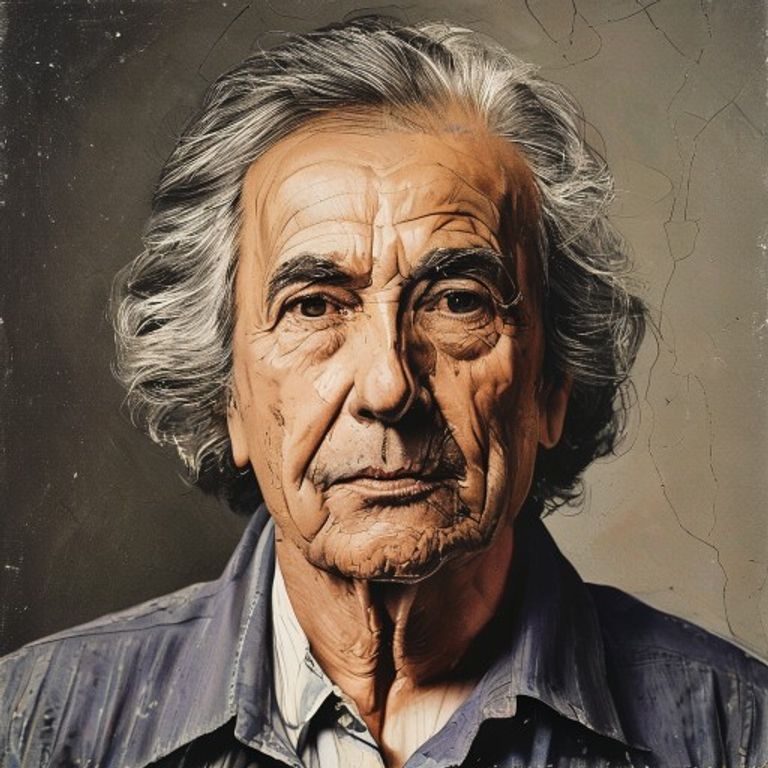
1. Graciliano Ramos merges the narration of events with the psychological analysis of his characters, exposing their inner world.
2. The novel's structure, employing the technique of distinct 'scenes,' allows for independent reading of chapters. Several episodes from the novel were initially published as short stories and later compiled into a single work.
3. The characters' exposure to solitude, rendering them incapable of communication. 4. The pessimism evident in the author's worldview.
5. The economical style, characterized by short sentences, precise punctuation, absence of dialogue, parsimony in adjective use, and brief periods, defines the author's adopted linguistic austerity.
6. The process of humanization that the sertanejo undergoes, becoming identified with animals, is contrasted by the process of humanization of the bitch Baleia, who is empathetic and shares her hunt with the family.
There are 13 chapters, as follows:
1ST MOVE
On a long journey through the drought-stricken sertão, Fabiano, Sinhá Vitória, the bitch Baleia, and their two sons, the younger and the elder, endure various privations. At one point, the elder son lies down, exhausted, and refuses to continue the trek: 'the idea of abandoning his son passes through Fabiano's troubled spirit,' but he decides to carry him.
'Just the day before, there were six living beings,' but as hunger set in, Sinhá Vitória decided to sacrifice the parrot to feed the family.
Upon reaching the courtyard of an abandoned farm, Fabiano searches for signs of life without success and decides to shelter his family there, while Baleia hunts a capybara, which she brings to Sinhá Vitória, who prepares and shares it among her family.
2ND FABIANO
Chasing a heifer, the sertanejo, accompanied by his sons and Baleia, reflects on how he has managed. He had arrived at the farm in a wretched state and now saw things improving, the boys gaining weight, and they would receive an education. 'You are a man, Fabiano,' exclaims the cowboy, speaking to himself.
But after a moment, he reflects further and concludes that he is merely a 'fellow busy guarding other people's things.' Although expelled from the farm by his boss, he feigned ignorance and managed to stay. 'You are an animal, Fabiano.'
He had grown accustomed to life among animals. Mounted, he and the horse seemed like a single being.
His language, full of guttural interjections, was understood by animals but distanced him from men. Very different from Seu Tomás da Bolandeira, a cultured, gentle man. But what good had all that culture done him? He had suffered more than all the hardships of the drought. It was necessary for the boys to harden too, to become brutal to face wicked men like the white boss, who treated him so poorly.
3RD CHAIN
At the town market, where he had gone to buy provisions, Fabiano drinks a few doses of cachaça and, 'resolved to talk,' is approached by a fair-skinned soldier who invites him to a game table. As the soldier represented authority, Fabiano follows him and loses, leaving the table indignant. The soldier follows him and provokes him, until the sertanejo loses his patience and curses the soldier's mother.
Arrested, he spends the night in the jail cell, where he is beaten.
4TH SINHÁ VITÓRIA
While preparing the fire inside the dark little room of the farm, Fabiano's wife kicks Baleia, who moves away. She woke up in a bad mood. She complained again about the stick bed they slept on. They needed a leather bed, like Seu Tomás da Bolandeira's, then they would sleep like people. But no matter how much they tried to cut expenses, the bed seemed a distant dream.
5TH THE YOUNGER BOY
Seeing his father putting the saddle on the mare, the younger boy thinks of doing something remarkable. Noticing the old goat in the pen, he tries to ride it but is thrown off. Humiliated, he thinks he will grow up, carry a machete at his side, and smoke straw cigarettes like his father.
6TH THE ELDER BOY
Not knowing the meaning of the word hell, the elder boy asks his mother, who gives evasive answers until, annoyed, she hits the boy.
Going outside, he finds Baleia and tries to tell her a story, but he lacks the words. The bitch tries to cheer him up, but the boy thinks all the places he knows are good. How could he know what hell is?
But it hadn't always been like this. During the move, the world had been bad.
7TH WINTER
Gathered around the fire, the parents try to talk, but the dialogue is disjointed, with loose, spaced sentences, repetitions, and incongruities.
The boys try to discern their father's figure to understand him through his gestures, but the light is insufficient.
Winter brought the rains, and for now, Fabiano was not worried about the drought. However, he could not forget the humiliating episode with the fair-skinned soldier. Baleia, fed up with the noise Fabiano made trying to express himself, could not sleep.
8TH PARTY
On a very hot afternoon, Fabiano and his family, accompanied by Baleia, go to town for the Christmas mass. The clothes bother the sertanejos, and upon arrival, the city startles the children.
In church, Fabiano remembers the jail and has the same sensation, besides feeling inferior to other men.
9TH BALEIA
Thin, with hydrophobia, her fur falling out, Baleia was dying, and Fabiano decided to kill her. The boys, suspicious, are taken by Sinhá Vitória to the farm house, screaming and kicking. Baleia still tries to hide behind a log, but Fabiano manages to hit her. Shot, running on three legs, the bitch flees, and as she dies, she walks on two legs like
a person. She could not bite Fabiano. She had spent her entire existence in submission. In her agony, Baleia dreams of a world full of capybaras.
10TH ACCOUNTS
When settling accounts with his boss, Fabiano finds himself in debt. He 'loses his stirrups' and is sent away. But after apologizing, the boss changes his mind. He no longer had the right to complain. He was consumed by hatred. Hatred for the dry plain, for the boss, for the fair-skinned soldier, for the government. It was his fate. He couldn't change his fate. His family's destiny was this. It was in his blood. He was like a dog: he only received bones. Why did rich men insist on stealing their bones?
11TH THE FAIR-SKINNED SOLDIER
While looking for a mare in the caatinga, Fabiano encounters the fair-skinned soldier who had humiliated him a year earlier. He raises his machete and sees the soldier tremble at the blow, but he is incapable of avenging himself. The soldier's cowardice humiliates him further, as it brings back memories. So this was the government? A dismounted fair-skinned soldier?
He puts away his machete, removes his leather hat, and submissively shows the soldier the way.
12TH THE WORLD COVERED IN FEATHERS
The arribação [bird migration] is a sign of an approaching drought. Fabiano kills all the birds he can, trying to ward off the drought and store provisions, but there are too many birds.
He remembers Baleia. Had he done well to kill the bitch? But he couldn't expose the boys to
hydrophobia.
Anxious, he sighs, thinking about the upcoming journey. He will have to flee. From debts, from the farm, from the memories of Baleia and the fair-skinned soldier. Could he react? He could not. He was a 'cabra.' He had slept in jail, endured zinc on his back. He would never sleep in a bed, like a person.
13TH ESCAPE
Like a runaway slave, Fabiano leads the new march of the migrant family. Still disbelieving, he looks at the farm, which, abandoned, resembles a cemetery.
Despite the drought, the sertanejo has hope. Sinhá Vitória is strong, she can walk a long way. In the future, the children will learn to be cowboys, live in another world, go to school, be different. 'They walked south, lost in that dream.
1. Graciliano Ramos merges the narration of events with the psychological analysis of his characters, exposing their inner world.
2. The novel's structure, employing the technique of distinct 'scenes,' allows for independent reading of chapters. Several episodes from the novel were initially published as short stories and later compiled into a single work.
3. The characters' exposure to solitude, rendering them incapable of communication. 4. The pessimism evident in the author's worldview.
5. The economical style, characterized by short sentences, precise punctuation, absence of dialogue, parsimony in adjective use, and brief periods, defines the author's adopted linguistic austerity.
6. The process of humanization that the sertanejo undergoes, becoming identified with animals, is contrasted by the process of humanization of the bitch Baleia, who is empathetic and shares her hunt with the family.
There are 13 chapters, as follows:
1ST MOVE
On a long journey through the drought-stricken sertão, Fabiano, Sinhá Vitória, the bitch Baleia, and their two sons, the younger and the elder, endure various privations. At one point, the elder son lies down, exhausted, and refuses to continue the trek: 'the idea of abandoning his son passes through Fabiano's troubled spirit,' but he decides to carry him.
'Just the day before, there were six living beings,' but as hunger set in, Sinhá Vitória decided to sacrifice the parrot to feed the family.
Upon reaching the courtyard of an abandoned farm, Fabiano searches for signs of life without success and decides to shelter his family there, while Baleia hunts a capybara, which she brings to Sinhá Vitória, who prepares and shares it among her family.
2ND FABIANO
Chasing a heifer, the sertanejo, accompanied by his sons and Baleia, reflects on how he has managed. He had arrived at the farm in a wretched state and now saw things improving, the boys gaining weight, and they would receive an education. 'You are a man, Fabiano,' exclaims the cowboy, speaking to himself.
But after a moment, he reflects further and concludes that he is merely a 'fellow busy guarding other people's things.' Although expelled from the farm by his boss, he feigned ignorance and managed to stay. 'You are an animal, Fabiano.'
He had grown accustomed to life among animals. Mounted, he and the horse seemed like a single being.
His language, full of guttural interjections, was understood by animals but distanced him from men. Very different from Seu Tomás da Bolandeira, a cultured, gentle man. But what good had all that culture done him? He had suffered more than all the hardships of the drought. It was necessary for the boys to harden too, to become brutal to face wicked men like the white boss, who treated him so poorly.
3RD CHAIN
At the town market, where he had gone to buy provisions, Fabiano drinks a few doses of cachaça and, 'resolved to talk,' is approached by a fair-skinned soldier who invites him to a game table. As the soldier represented authority, Fabiano follows him and loses, leaving the table indignant. The soldier follows him and provokes him, until the sertanejo loses his patience and curses the soldier's mother.
Arrested, he spends the night in the jail cell, where he is beaten.
4TH SINHÁ VITÓRIA
While preparing the fire inside the dark little room of the farm, Fabiano's wife kicks Baleia, who moves away. She woke up in a bad mood. She complained again about the stick bed they slept on. They needed a leather bed, like Seu Tomás da Bolandeira's, then they would sleep like people. But no matter how much they tried to cut expenses, the bed seemed a distant dream.
5TH THE YOUNGER BOY
Seeing his father putting the saddle on the mare, the younger boy thinks of doing something remarkable. Noticing the old goat in the pen, he tries to ride it but is thrown off. Humiliated, he thinks he will grow up, carry a machete at his side, and smoke straw cigarettes like his father.
6TH THE ELDER BOY
Not knowing the meaning of the word hell, the elder boy asks his mother, who gives evasive answers until, annoyed, she hits the boy.
Going outside, he finds Baleia and tries to tell her a story, but he lacks the words. The bitch tries to cheer him up, but the boy thinks all the places he knows are good. How could he know what hell is?
But it hadn't always been like this. During the move, the world had been bad.
7TH WINTER
Gathered around the fire, the parents try to talk, but the dialogue is disjointed, with loose, spaced sentences, repetitions, and incongruities.
The boys try to discern their father's figure to understand him through his gestures, but the light is insufficient.
Winter brought the rains, and for now, Fabiano was not worried about the drought. However, he could not forget the humiliating episode with the fair-skinned soldier. Baleia, fed up with the noise Fabiano made trying to express himself, could not sleep.
8TH PARTY
On a very hot afternoon, Fabiano and his family, accompanied by Baleia, go to town for the Christmas mass. The clothes bother the sertanejos, and upon arrival, the city startles the children.
In church, Fabiano remembers the jail and has the same sensation, besides feeling inferior to other men.
9TH BALEIA
Thin, with hydrophobia, her fur falling out, Baleia was dying, and Fabiano decided to kill her. The boys, suspicious, are taken by Sinhá Vitória to the farm house, screaming and kicking. Baleia still tries to hide behind a log, but Fabiano manages to hit her. Shot, running on three legs, the bitch flees, and as she dies, she walks on two legs like
a person. She could not bite Fabiano. She had spent her entire existence in submission. In her agony, Baleia dreams of a world full of capybaras.
10TH ACCOUNTS
When settling accounts with his boss, Fabiano finds himself in debt. He 'loses his stirrups' and is sent away. But after apologizing, the boss changes his mind. He no longer had the right to complain. He was consumed by hatred. Hatred for the dry plain, for the boss, for the fair-skinned soldier, for the government. It was his fate. He couldn't change his fate. His family's destiny was this. It was in his blood. He was like a dog: he only received bones. Why did rich men insist on stealing their bones?
11TH THE FAIR-SKINNED SOLDIER
While looking for a mare in the caatinga, Fabiano encounters the fair-skinned soldier who had humiliated him a year earlier. He raises his machete and sees the soldier tremble at the blow, but he is incapable of avenging himself. The soldier's cowardice humiliates him further, as it brings back memories. So this was the government? A dismounted fair-skinned soldier?
He puts away his machete, removes his leather hat, and submissively shows the soldier the way.
12TH THE WORLD COVERED IN FEATHERS
The arribação [bird migration] is a sign of an approaching drought. Fabiano kills all the birds he can, trying to ward off the drought and store provisions, but there are too many birds.
He remembers Baleia. Had he done well to kill the bitch? But he couldn't expose the boys to
hydrophobia.
Anxious, he sighs, thinking about the upcoming journey. He will have to flee. From debts, from the farm, from the memories of Baleia and the fair-skinned soldier. Could he react? He could not. He was a 'cabra.' He had slept in jail, endured zinc on his back. He would never sleep in a bed, like a person.
13TH ESCAPE
Like a runaway slave, Fabiano leads the new march of the migrant family. Still disbelieving, he looks at the farm, which, abandoned, resembles a cemetery.
Despite the drought, the sertanejo has hope. Sinhá Vitória is strong, she can walk a long way. In the future, the children will learn to be cowboys, live in another world, go to school, be different. 'They walked south, lost in that dream.



