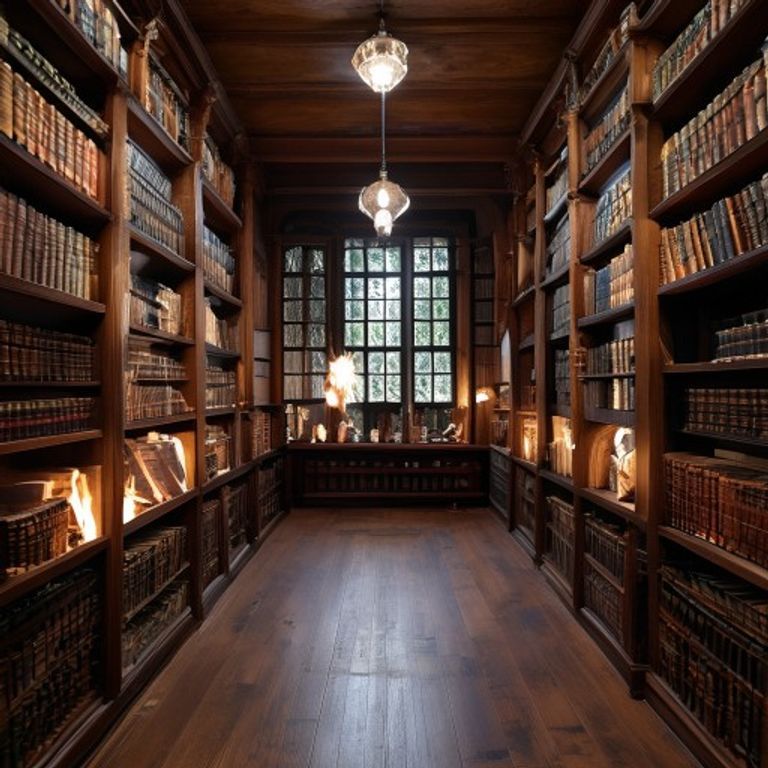
The tragic fire that struck the collection in Rio de Janeiro in 1954, resulting in the loss of irreplaceable historical documents, maps, and rare books.
⚠️ Research prepared with the aid of Deep Research is subject to referential ambiguity.
🖥️ Clean HTML code using a proprietary tool.
👥 Research by Guilherme Felipe, Curation by Sílvio Lôbo
The Fire That Devoured Knowledge: The Enigmatic Case of the National Library Fire
The air hung heavy with smoke and the acrid smell of tragedy. On a night that should have been marked by serenity and the vigilant guarding of knowledge accumulated over centuries, an incandescent scourge erupted in the bowels of one of the country's most important temples of knowledge: the National Library. What happened on that fateful dawn is a dark and, for many, unresolved chapter, seared into history. This documentary article delves into the ashes of this mystery, carefully separating proven facts from the speculations that persist, seeking to unveil the secrets guarded by the heat that consumed what should never have perished.
1. The Context and the Incident: Where, When, and How the Mystery Began
The fire at the National Library, located in the heart of the capital, broke out in the early hours of May 10, 1957. The date, which should have been a milestone in cultural preservation, became synonymous with destruction. Around 2:00 AM, alarms sounded, but the magnitude of the fire was already overwhelming. The flames, fueled by countless volumes of paper and wood, quickly spread through the various halls of the building, an architectural monument that housed an invaluable collection. What began as an alert turned into a herculean and desperate battle against an implacable enemy.
The incident began in one of the oldest sectors of the library, and the speed with which the fire spread raised questions about its origin from the very beginning. The loss was not just of buildings and furniture, but of millions of documents, rare books, historical manuscripts, and maps that represented the collective memory of generations.
2. Timeline of Events
Reconstructing the chronology is crucial for understanding how the mystery unfolded:
- May 10, 1957, around 2:00 AM: The first signs of fire are detected in one of the sectors of the National Library. Staff on duty and nearby residents report seeing smoke coming from the windows.
- Immediately after: Fire departments are called. The arrival of the first vehicles finds a scene of chaos, with flames already intense and difficult to control.
- Following hours: A titanic battle against the fire unfolds. Weather conditions and the internal structure of the library hinder efforts.
- At dawn: The fire is finally controlled, but the damage is devastating. A large part of the collection was consumed.
- Subsequent days and weeks: The start of investigations. Experts are called to determine the cause of the fire. Local and national press cover the event intensely, with speculations about sabotage and negligence.
- Following months and years: The publication of official reports, which present conclusions about the cause, but which for many do not fully close the matter.
3. Main Theories
The diversity of theories about the origin of the fire reflects the complexity of the case and the gap in information that has persisted over the decades. Each hypothesis attempts to explain the magnitude of the destruction and the impossibility of an isolated accident.
Official and Scientific Theories
- Short Circuit in Old Wiring: The hypothesis most widely disseminated by official reports points to an electrical failure in the library's old wiring. The structure, over a century old, had obsolete electrical systems that could have overheated and started the flames. Initial forensic examinations corroborated this possibility, but the lack of conclusive physical evidence of a specific ignition point has always raised questions.
- Spontaneous Combustion (Less Likely Theory): Although rare in controlled environments, in theory, the combination of combustible materials and specific temperature and humidity conditions could lead to spontaneous combustion. However, this theory finds little concrete evidence for the library's context and is frequently dismissed by serious investigations.
Alternative and Conspiracy Theories
- Arson / Sabotage: This is perhaps the most persistent theory, fueled by distrust regarding the official investigation. It is argued that the speed and intensity of the fire could indicate the deliberate action of individuals with hidden motives. Speculations range from radical groups that wanted to erase certain historical information to internal discontent or acts of revenge. The lack of an identified mastermind or perpetrator sustains the mystery.
- Concealment of Sensitive Documents: A branch of the sabotage theory suggests that the fire may have been orchestrated to destroy compromising documents that were kept in specific areas of the library. These documents could involve influential political figures of the time, state secrets, or information that would shake the social order. The supposed "speed" with which the official investigation concluded, for some, reinforces this idea of a cover-up.
- Malicious Accidents and Disposal of Hazardous Material: Some point to improper disposal of conservation materials or dangerous chemicals that could have reacted explosively, triggering the fire. This theory, although less widespread, attempts to find an unintentional explanation, but involving gross negligence or deliberate disposal action.
Paranormal Theories
- Unexplained Phenomenon: In some more esoteric accounts, the fire is seen as a supernatural event, a phenomenon inexplicable by scientific means. Arguments include the apparently "fast and voracious" nature of the flames, which would have acted with an intelligence of their own. However, these are theories devoid of any concrete evidence and belong to the realm of speculation and folklore.
4. Controversies and Blind Spots
The official investigation, despite its efforts, was marked by controversies and blind spots that fueled the mystery:
- Destroyed Physical Evidence: The very nature of the fire, which consumed much of the structure and the collection, made the collection of conclusive physical evidence extremely difficult, if not impossible. This left significant room for speculation.
- Contradictory or Incomplete Testimonies: Accounts from eyewitnesses and library staff, collected amidst chaos and panic, presented inconsistencies in some cases. The lack of a cohesive narrative about the initial moments of the fire contributed to the uncertainty.
- Supposed Speed of the Investigation: Critics of the official investigation point to the speed with which a conclusion (electrical failure) was reached, raising suspicion that the investigation may have been superficial or directed to cover up other causes. Declassified files on the case, when they exist, rarely bring new revelations that satisfy this distrust.
- Incalculable Lost Collection: The impossibility of measuring exactly what was lost and the historical value of that material makes the lack of clarity about the circumstances of the destruction even more painful.
5. Curiosities and Legacy
The National Library fire transcended the event itself, becoming a cultural landmark and a symbol of the fragility of knowledge in the face of destruction.
- Cultural Impact: The incident generated numerous literary works, newspaper articles, and public debates about the importance of preserving historical and cultural heritage. The loss of so many documents is frequently cited as a dark example of what can be quickly annihilated.
- Legacy and Archive: Despite the destruction, the National Library was rebuilt and its collection, in part, restored and expanded. However, the shadow of the 1957 fire hangs over its history.
- Current Status: The case is considered officially closed by the police, with the conclusion of electrical failure. However, informally, the mystery of the fire remains alive in the collective memory and among researchers who still seek, in obscure archives and forgotten accounts, to unravel the secrets that the flames took with them. There is no indication that the case has been officially reopened based on new concrete evidence.
The Fire That Devoured Knowledge remains, for the most part, an enigma. A tragedy that reminds us of the vital importance of protecting our legacy, but also of the persistence of mysteries that the ashes of time seem unable to completely erase. The search for answers, even if most of the clues have been reduced to dust, continues to be a call for those who refuse to accept the inexplicable.