


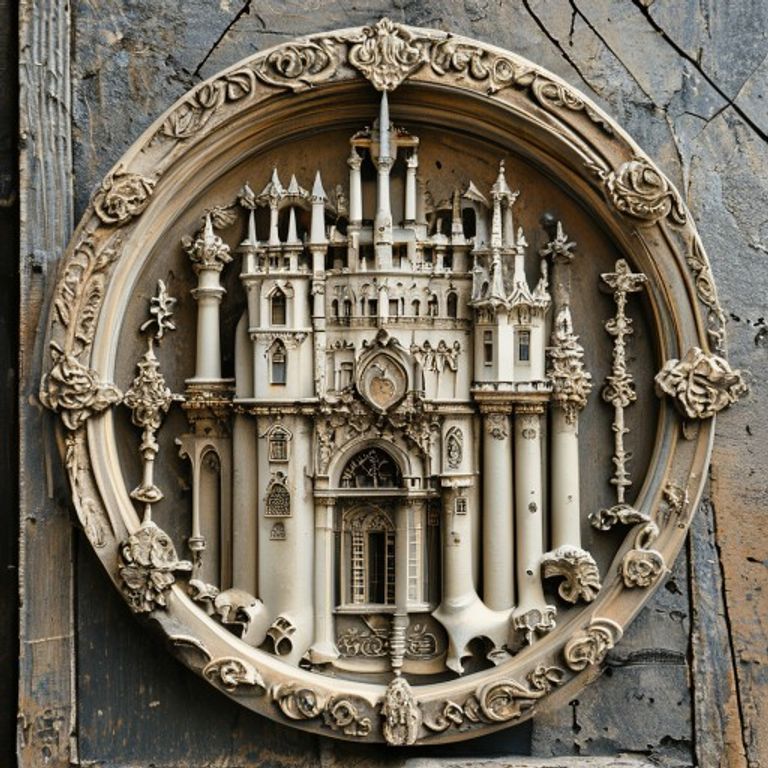
The mystery of Father Bérenger Saunière who, at the end of the 19th century, allegedly found secret documents in his church and suddenly began spending fortunes, sparking legends about the Templar treasure or secrets regarding the lineage of Christ.
⚠️ Research prepared with the aid of Deep Research is subject to referential ambiguity.
🖥️ Clean HTML code using a proprietary tool.
👥 Research by Guilherme Felipe, Curation by Sílvio Lôbo
The Enigma of the Rennes-le-Château Treasure: A Journey Through the Mysteries of Rural France
In the heart of the Aude region, in southern France, lies a small, quiet-looking village: Rennes-le-Château. However, beneath the veil of peasant serenity hides one of the most persistent and intriguing mysteries of modern history: the supposed treasure unearthed by its parish priest at the turn of the 20th century. This case, which blends history, archaeology, cryptography, and conspiracy, has fascinated generations of researchers, historians, and treasure hunters, challenging rational explanations and fueling wild speculations.
1. The Context and the Incident: Where, When, and How the Mystery Began
The mystery of Rennes-le-Château officially emerges in 1885, when Father Bérenger Saunière takes over the parish of Saint-Marie-Madeleine. The church, an ancient structure with traces of earlier activities, was in a precarious state and required extensive renovations. Saunière, a man of faith with a taste for luxury, began an ambitious project of restoration and beautification of the church, which spanned many years.
The turning point occurred, according to reports, between 1891 and 1892, when Saunière, during the restoration work on the high altar, allegedly discovered a secret compartment. Inside, they supposedly found a small wooden chest containing ancient parchments. The exact nature of these parchments and what they revealed became the core of the enigma. From that moment on, Saunière's life changed drastically. He began spending exorbitant amounts on his projects, now possessing an unusual lifestyle for a village priest, raising suspicions about the origin of his sudden wealth.
2. Timeline of Events: A Chronological Reconstruction
The exact chronology of events is one of the most controversial points of the case, with many reports based on later testimonies and interpretations of documents.
- 11th Century: Construction of the original Saint-Marie-Madeleine church over an older place of worship.
- 14th Century: Mentions of a church in Rennes-le-Château.
- 1885: Father Bérenger Saunière is appointed parish priest of Rennes-le-Château.
- 1891-1892: Alleged discovery of the parchments by Saunière during church renovations.
- 1897-1917: Period of intense renovations and construction by Saunière, including the Villa Bethania tower and the cemetery.
- 1917: Death of Bérenger Saunière.
- 1956: Publication of the book "Le Trésor de Rennes" by Gérard de Sède, which popularized the mystery.
- 1967: Publication of "The Holy Blood and the Holy Grail" by Michael Baigent, Richard Leigh, and Henry Lincoln, introducing the theory of the Jesus bloodline.
- Subsequent Decades: Countless investigations, books, documentaries, and expeditions focused on Rennes-le-Château.
3. The Main Theories: Possible Explanations
The lack of concrete evidence has opened a vast range of theories, spanning from mundane explanations to fantastic scenarios.
3.1. Scientific and Police Hypotheses (Most Likely)
- Embezzlement and Nepotism: The most prosaic explanation suggests that Saunière accumulated his fortune through the embezzlement of parish funds, illegal donations, and possibly through illicit activities. Official diocesan reports indicate that he charged excessive fees for masses and religious services, in addition to receiving substantial donations from wealthy parishioners, some of which could have been diverted. His niece, Marie Denarnaud, inherited the fortune and continued the luxurious lifestyle.
- Archaeological Exploration and Sale of Artifacts: Another hypothesis suggests that Saunière, in addition to restoring the church, may have discovered valuable archaeological artifacts that were sold discreetly on the black market to fund his works. The region has a rich past, with traces of Visigothic and Roman occupations.
- Discovery of Less Valuable Historical Documents: The parchments may have contained historical documents of local interest, perhaps related to the history of the region or important figures, but without the financial or secret value that the legend attributes to them. Saunière's wealth may have been built gradually based on his own ability to raise funds.
3.2. Alternative, Conspiracy, or Paranormal Theories
- The Knights Templar Treasure: One of the most popular theories links Rennes-le-Château to the Knights Templar. It is believed that the Templars, after their persecution and dissolution in 1312, hid their vast treasure (gold, sacred relics, spiritual secrets) in safe places, and Rennes-le-Château would be one of them. The parchments would be maps or keys to this treasure.
- The Holy Grail and the Jesus Bloodline: Popularized by "The Holy Blood and the Holy Grail", this theory posits that the parchments would reveal a monumental secret: the survival of Jesus Christ and the birth of his descendants with Mary Magdalene. Rennes-le-Château would be a crucial point in a network of secret societies (such as the Priory of Sion) that protected this lineage over the centuries. The treasures would be, in this context, not just gold, but also knowledge and sacred artifacts linked to this lineage.
- Cathar Secrets and Albigensian Treasures: The Rennes-le-Château region also has links to the Cathars, a Gnostic religious movement persecuted by the Catholic Church. Theories suggest that Saunière may have discovered a treasure hidden by the Cathars, containing their riches and/or heretical texts.
- Visigothic and Roman Treasures: Rennes-le-Château, formerly known as "Rhedae", was a Visigothic capital. The discovery of a Visigothic treasure of gold and jewelry, rather than a legendary treasure, is considered by some as a more plausible explanation for Saunière's fortune, although there is no concrete proof of such discoveries.
- Solomon's Treasure or the Ark of the Covenant: Some more exotic theories suggest that the parchments could reveal the location of biblical relics of immense value, such as the Ark of the Covenant or treasures associated with King Solomon.
4. Controversies and Blind Spots
The case is filled with inconsistencies and gaps that make resolution difficult:
- The Nature of the Parchments: The exact content of the parchments that Saunière allegedly found remains a mystery. Some claim they were biblical passages with annotations, others that they were historical or encrypted documents. Police reports from the time do not mention any bombshell discovery.
- Conflicting Testimonies: Witnesses who supposedly saw the parchments or spoke with Saunière about his discoveries presented varied and sometimes contradictory accounts over time.
- Official Investigations and Their Limits: Subsequent official investigations, especially those conducted by the diocese, focused mainly on Saunière's finances. Ecclesiastical authorities were more concerned with illicit enrichment than with hunting legendary treasures. Financial reports from the time are vague and do not fully explain the origin of the entire fortune.
- Lost or Destroyed Evidence: Many of the documents and possibly artifacts associated with Saunière were lost or destroyed over time, either through negligence or intentionally. Saunière's own house and some of his belongings were auctioned off after his death, dispersing any remaining clues.
- Document Manipulation: There are strong suspicions that some of the documents circulating today, such as the so-called "parchments" of Rennes-le-Château, may have been forged or manipulated to fuel the mystery and the most spectacular theories. Historian Pierre Jarnac, one of the first to investigate the case deeply, accused Gérard de Sède of manipulating evidence.
- Cryptography: The few fragments of text or codes that were supposedly found in Rennes-le-Château remain, for the most part, indecipherable or subject to multiple interpretations.
5. Curiosities and Legacy
The Rennes-le-Château case transcended the borders of France and became a global cultural phenomenon.
- Cultural Impact: It inspired countless books, documentaries, films (such as "The Da Vinci Code" series, which, although not directly mentioning it, echoes the type of mystery), video games, and even theme parks. The small village has become a tourist destination for enthusiasts of mysteries and history.
- Saunière's Legacy: Father Bérenger Saunière is today a mythical figure, portrayed sometimes as a man of extraordinary religious vision, other times as an adventurer and a con artist, depending on the researcher's interpretation.
- Current Status: The case is, for all practical purposes, "shelved" by official authorities. There is no ongoing police investigation, and academic institutions tend to treat the mystery with skepticism, preferring more rational explanations. However, popular fascination continues, with new books and theories emerging periodically. The true nature of the "treasure" of Rennes-le-Château, if it ever existed in its legendary form, remains one of the most persistent and seductive enigmas of our time, a perennial invitation to investigation and imagination.



