


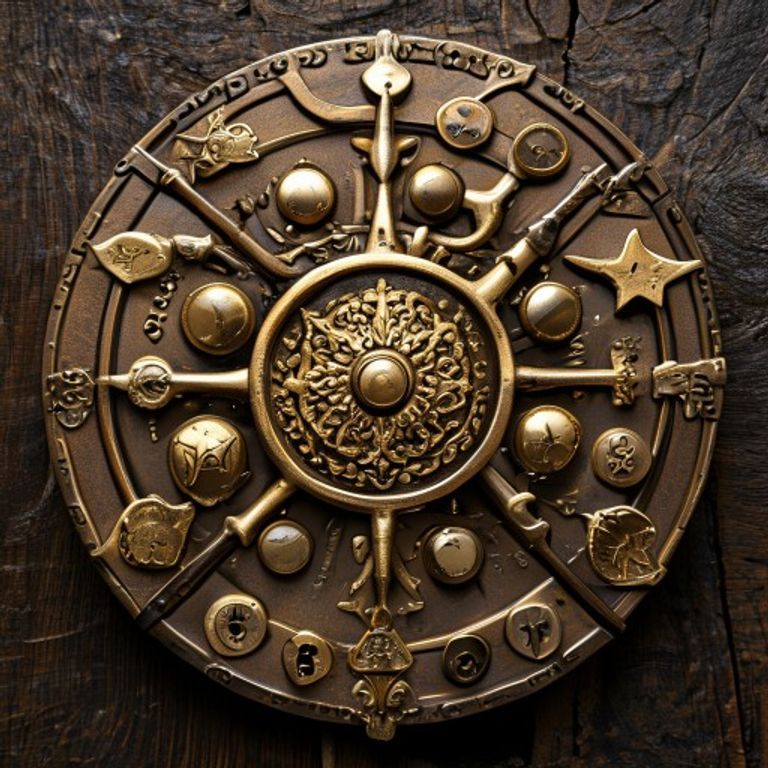
The legend that the Japanese army hid a fortune in gold, jewelry, and artifacts looted from across Southeast Asia in tunnels and caves in the Philippines during the final months of World War II.
⚠️ Research prepared with the aid of Deep Research is subject to referential ambiguity.
🖥️ Clean HTML code using a proprietary tool.
👥 Research by Guilherme Felipe, Curation by Sílvio Lôbo
The Hidden Glow: Unraveling the Enigmatic Yamashita Treasure
For decades, the bowels of the Philippines have whispered secrets of gold, jewelry, and priceless artifacts—a monumental treasure left behind by the brutality of World War II. At the center of this insatiable mystery lies the enigmatic figure of General Tomoyuki Yamashita, and the question that echoes through the corridors of history: Where is the Yamashita Treasure?
1. The Context and the Incident: A Legacy of War and Disappearance
The year is 1945. The Philippines, a stage for bloody battles between Allied forces and the Japanese Empire, was about to witness the end of a brutal occupation. General Tomoyuki Yamashita, commander of Japanese forces in the Philippines, tasked with defending the archipelago at any cost, allegedly ordered the concealment of a vast looted treasure. This loot, supposedly accumulated over years of conquests in Southeast Asia, included solid gold, diamonds, precious stones, historical artifacts, and priceless works of art. Legend has it that, under the imminent pressure of Allied defeat, hundreds of tunnels and hideouts were excavated across the archipelago to protect this fortune.
The "incident" itself is not a single event, but a complex tangle of narratives, confessions, and alleged discoveries that have unfolded over decades, fueling a persistent myth. The mystery began to take shape with the Japanese surrender and the subsequent Allied search for hidden assets and war crimes. The very existence and magnitude of the treasure, as well as its whereabouts, became the core of investigation and speculation.
2. Timeline of Events: A Trail of Clues and Frustrations
- Late 1940s: After the Japanese surrender in August 1945, General Yamashita was captured by the Americans and subsequently tried and executed for war crimes in 1946. During his captivity and trial, fragmented allegations and confessions emerged regarding the existence and concealment of a massive treasure.
- 1950s - 1960s: Reports from treasure hunters and individuals claiming to have knowledge of the hideouts began to circulate. Small amounts of gold and artifacts were allegedly recovered, further fueling hope and greed.
- 1970s: The case gained international notoriety when Ferdinand Marcos, then president of the Philippines, reportedly became obsessed with the search for the treasure. It is alleged that the Philippine government used state resources in the investigation, believing the treasure could solve the country's economic problems.
- 1988: Prosecutor Rogello J. Lim, in collaboration with the government, led an intensive investigation and claimed to have found evidence that part of the treasure was hidden in tunnels near Bongabon, Nueva Ecija.
- 1990s - Present: Various individuals, including treasure hunters, historians, and even sources linked to former Japanese military personnel, have continued to claim they have clues about the treasure's whereabouts. However, no massive and conclusive discovery has been publicly confirmed by reliable official sources.
3. Main Theories: From Tangible Gold to War Ghosts
The elusive nature of the Yamashita Treasure has given rise to a myriad of theories, ranging from the pragmatically possible to the extravagant and supernatural.
Scientific and Law Enforcement Theories (Most Likely)
- Large-Scale Concealment in Tunnels and Caves: The most widespread theory suggests that the treasure was hidden in complex underground tunnel systems, natural caves, and bunkers built by Japanese forces on various Philippine islands. The vast network of tunnels built during the war for military purposes would serve as the perfect hideout.
- Disappearance via Post-War Looting and Corruption: A plausible hypothesis is that the treasure, or a large part of it, was secretly looted by fleeing Japanese soldiers, local collaborators, or even the first Allied forces who found it. Post-war corruption and chaos would have facilitated the discreet disappearance of these assets.
- It Simply Does Not Exist on the Legendary Scale: Some skeptics argue that the magnitude of the treasure is exaggerated or purely mythical. The idea of a single colossal treasure, hidden by a single general, may be an oversimplification of scattered war loot that was later squandered or traded individually.
Alternative, Conspiracy, and Paranormal Theories
- The Treasure as a Tool for Political Manipulation: The conspiracy theory alleges that the Philippine government, especially under Marcos, used the search for the treasure for political purposes, justifying the diversion of funds and resources in the name of a national cause. The "treasure" itself could have been fabricated or exaggerated for this purpose.
- Influence of the Yakuza and Japanese Criminal Networks: One strand suggests that Japanese criminal organizations, such as the Yakuza, were involved in transporting and hiding the treasure, using their influence and network to hide the assets permanently.
- The Legend of the "White Horse" and Spiritual Protection: Some popular beliefs, especially among locals, speak of a "white horse" that guards the treasure or of spiritual protections that prevent it from being found. This is a manifestation of local folklore mixed with the material search.
- Extraterrestrial Intervention: In a more speculative extreme, some theorize that the treasure was taken by extraterrestrial forces, an idea that, while fanciful, is common in circles of unexplained mysteries.
4. Controversies and Blind Spots: Cracks in the Official Narrative
The search for the Yamashita Treasure is dotted with inconsistencies and gaps that fuel mystery and distrust.
- Ambiguous Confessions and Pressures: The confessions attributed to General Yamashita and his subordinates were often ambiguous, obtained under pressure in a turbulent post-war environment, which raises doubts about their accuracy and veracity.
- Missing and Destroyed Evidence: Reports that crucial documents, maps, and even key witnesses have disappeared or were intentionally destroyed are recurrent. This makes the factual reconstruction of events difficult.
- Alleged Unverified Discoveries: Numerous reports of partial discoveries of gold or artifacts have been made over the years. However, many of these "finds" were not properly documented, appraised, or confirmed by independent authorities, raising suspicions of fraud or exaggeration.
- The Controversial Role of Ferdinand Marcos: Marcos's deep connection to the treasure hunt raises ethical and practical questions. Critics point out that the government may have used the promise of the treasure as a smokescreen for embezzlement and to consolidate power.
- Silence of Official Sources: Despite the persistence of the legend, detailed and conclusive official reports on the location or non-existence of the treasure are scarce and, in many cases, contradictory. Declassified files, when they exist, often contain more questions than answers.
5. Curiosities and Legacy: The Gold that Haunts the Imagination
The Yamashita Treasure has transcended its historical context to become a cultural phenomenon, a symbol of greed, mystery, and the relentless search for fortune.
- Cultural Impact: The legend has inspired countless books, films, documentaries, and games, fueling the imagination of generations. The figure of the general and the hidden treasure have become part of Filipino and Japanese folklore.
- Treasure Hunters and Adventures: The case has attracted a legion of amateur and professional treasure hunters, many of whom dedicate their lives to the search, often in dangerous conditions and in remote areas of the Philippines.
- The Ongoing Search: Despite decades of failed investigations and expeditions, the hope that a part of the treasure might be found still persists. Sporadic small discoveries of gold and artifacts fuel this flame.
- Current Status: The case remains technically unsolved. There is no official "verdict" on the existence or location of the treasure. Although formal investigations may have been shelved, the legend lives on, driven by new alleged clues and the human fascination with the unexplored.
The Yamashita Treasure is more than a story of hidden gold; it is a mirror of the complexities of war, human nature, and the persistence of mysteries. The search continues, and perhaps, one day, the bowels of the Philippines will reveal their best-kept secrets. Until then, the hidden glow of the Yamashita treasure will continue to haunt the imagination and fuel the flame of investigation.



