


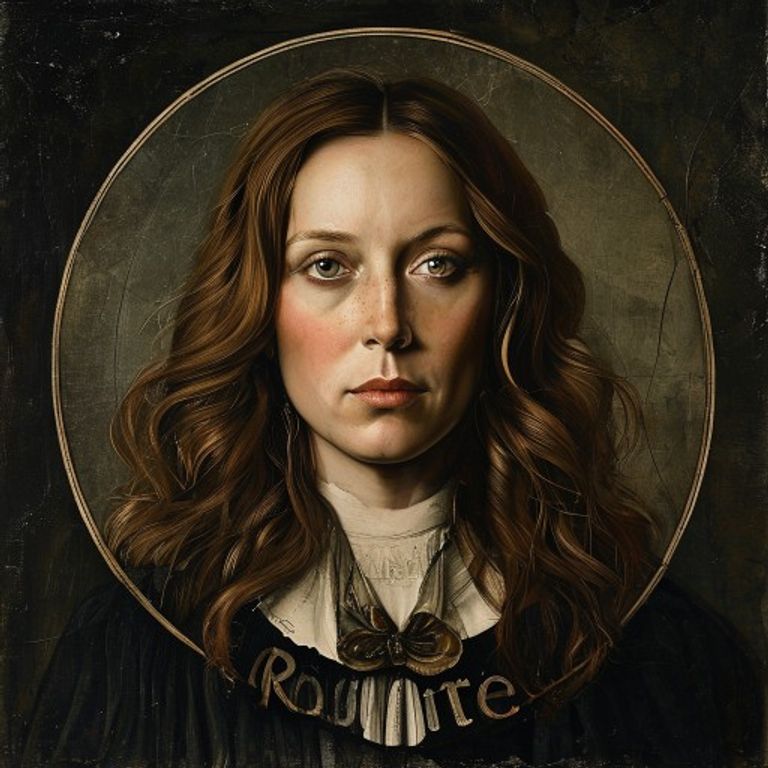
The inexplicable disappearance of an entire colony of English settlers in North America in the sixteenth century, leaving only the word 'Croatoan' behind.
⚠️ Research conducted with the aid of Deep Research is subject to referential ambiguity.
🖥️ Clean HTML code using a proprietary tool.
👥 Research by Guilherme Felipe, Curation by Sílvio Lôbo
The Roanoke Enigma: The Lost Colony That Haunts History
By [Your Name/Senior Investigative Journalist Pseudonym]
Date: [Current Date]
1. The Context and the Incident: Where, When, and How the Mystery Began
The story of the Roanoke Colony is one of the most persistent and intriguing enigmas in American history. Located on Roanoke Island, in the present-day state of North Carolina, this English colonization attempt, which predated the establishment of Jamestown by more than two decades, disappeared without a clear trace in 1590, leaving behind only the word "CROATOAN" carved into a post.
The first expedition to establish a colony at Roanoke was funded by Sir Walter Raleigh in 1585. Under the command of Ralph Lane, the group faced difficulties with supplies and conflicts with Native Americans. This first attempt was aborted, and the settlers returned to England in 1586.
The second and most famous expedition, led by John White, departed in 1587 with the mission of establishing a more permanent colony. On board were more than 100 settlers, including women and children, among them White's granddaughter, Virginia Dare, the first English child born in the Americas. White returned to England the same year to seek supplies, with the promise of returning soon. However, the imminent war against Spain (the Spanish Armada) prevented his return for three long years.
When White finally managed to return to Roanoke in 1590, he found the colony completely deserted. The houses had been dismantled, and there were no signs of a struggle or a forced settlement. The only trace left behind was the word "CROATOAN" carved into a post and "CRO" on a tree.
2. Timeline of Events
- 1585: Raleigh's first expedition to Roanoke; establishment of the first colony.
- 1586: Settlers from the first expedition return to England.
- 1587: Second expedition led by John White departs for Roanoke with over 100 settlers.
- August 1587: Birth of Virginia Dare, the first English child born in the Americas.
- August 1587: John White returns to England in search of supplies.
- 1588: The Anglo-Spanish War (Spanish Armada) delays White's return.
- 1590: John White returns to Roanoke and finds the colony deserted.
3. The Main Theories
Over the centuries, countless theories have attempted to explain the disappearance of the Roanoke settlers. They range from the most plausible, based on archaeological and historical evidence, to the most speculative and paranormal.
3.1. Assimilation with Native Tribes
This is perhaps the theory most widely accepted by the academic and archaeological community. The presence of the carved word "CROATOAN" suggests that the settlers moved to the island of Croatoan (present-day Hatteras), inhabited by the Croatan Native American tribe. Reports from other tribes indicated the existence of light-skinned individuals with European customs living among the Croatan. The logic behind this theory is the need for survival in a hostile environment, where collaboration with native populations would be the most viable option. Archaeological evidence, such as the discovery of European artifacts at sites associated with the Croatan, reinforces this hypothesis.
3.2. Attack and Massacre by Hostile Native Tribes
Another hypothesis considers a violent attack by native tribes other than the Croatan, perhaps the Powhatan, who were known for their hostility toward English settlers. The absence of signs of a struggle in the main colony could be explained by a quick and decisive attack, or by the dispersal of the settlers before the confrontation. However, the absence of mass remains weakens this theory, unless the bodies were removed or hidden.
3.3. Disease and Famine
Living conditions in Roanoke were precarious. The lack of adequate supplies, the difficulty in cultivating the land, and exposure to new diseases could have led to a gradual decline in the population. In extreme scenarios, a combination of famine and epidemics could have decimated the settlers, with the few survivors dispersing or succumbing in other locations. However, the dismantling of the houses and the absence of any evidence of mass burials make this theory less likely as a sole explanation.
3.4. Attempt to Return to England or Another Settlement
The settlers could have attempted to sail back to England or to other English settlements, such as the newly established Jamestown. The lack of adequate vessels or adverse weather conditions could have led to shipwreck or disappearance at sea. However, the absence of wreckage or reports from survivors makes this hypothesis difficult to prove.
3.5. Theory of Dissolution by the Spanish Armada
A less common but intriguing theory suggests that the settlers could have been discovered and eliminated by a Spanish expedition. Spain viewed English colonies as a threat and had an interest in eradicating them. The absence of signs of a struggle in the main colony could be explained by a silent capture or a quick and efficient massacre. However, there are no historical records that corroborate a Spanish expedition with such an objective in that area at that time.
3.6. Alternative and Paranormal Theories
Over time, the Roanoke mystery has inspired more fantastic theories, including the possibility of disappearance into another dimension, alien abduction, or even the influence of supernatural forces. These hypotheses, while fascinating, lack any scientific basis or empirical evidence, belonging more to the realm of fiction and speculation.
4. Controversies and Blind Spots
The investigation into the disappearance of Roanoke has been marked by difficulties and inconsistencies from the beginning.
- The Delay of John White's Return: White's decision to return to England for supplies, while necessary, was fatal for the colony. The war with Spain created an insurmountable obstacle that lasted three years, a crucial period for the settlers' survival.
- The Absence of Signs of Struggle: The discovery of houses that were dismantled, not destroyed, is a point of perplexity. It suggests planning, an organized departure, or assimilation, rather than a violent and indiscriminate attack.
- The Word "CROATOAN": The inscription is one of the few concrete traces, but its interpretation is open. It could indicate a destination, a warning, or a tribal name to be sought. The absence of an "X" (generally used to indicate danger or forced departure) next to the word is significant to some researchers.
- Lost or Ignored Evidence: The lack of a detailed record of White's explorations upon returning in 1590, along with the scarcity of European artifacts unequivocally linked to the Roanoke settlers, creates significant gaps. Reports from other English settlers in later periods mention encounters with natives of European appearance, but the connection to Roanoke has never been definitively established.
- Disappearance of Artifacts: The very nature of Raleigh's expedition and the conditions of the time mean that many crucial artifacts and documents may have been lost over time, making the investigation a constant detective game with missing pieces.
5. Curiosities and Legacy
The Roanoke Mystery Case has transcended the field of history to become an icon of popular culture, fueling the imagination of writers, filmmakers, and historians for centuries.
- The First English Child: The birth of Virginia Dare adds a human and tragic element to the story, turning her into a symbol of the fragility of life on the new frontiers.
- Cultural Inspiration: The Roanoke mystery has inspired countless books, novels, TV series (notably the series "American Horror Story: Roanoke"), and films, exploring the various theories and adding layers of fiction to the enigma.
- Ongoing Research: Despite centuries of speculation, the search for answers continues. Archaeologists and historians still conduct excavations and research in Roanoke and the surrounding islands in search of new clues. Projects like the First Colony Foundation are dedicated to uncovering what happened.
- Current Status: The case remains unsolved. There is no official statement that concludes the mystery. Investigations continue to be a work in progress, with the hypothesis of assimilation with native tribes being the most robust and supported by evidence, but the veil of uncertainty over the exact fate of the Roanoke settlers has never been completely lifted.
The Roanoke enigma is a somber reminder that, even in an era of scientific advances and investigative technologies, certain historical mysteries can resist the passage of time, remaining an invitation to reflection and the tireless search for the truth.



