


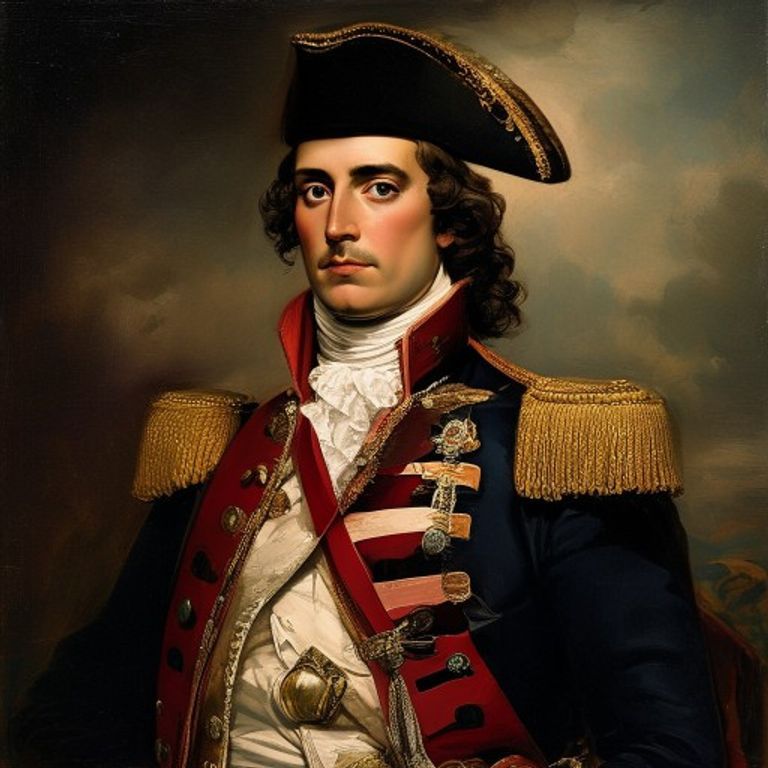
The final years of the exiled French emperor on an isolated island in the South Atlantic, where he passed away in 1821 under the constant surveillance of British troops.
⚠️ Research conducted with the aid of Deep Research is subject to referential ambiguity.
🖥️ Clean HTML code using a proprietary tool.
👥 Research by Guilherme Felipe, Curation by Sílvio Lôbo
The Longwood Enigma: Unraveling the Case of Napoleon on Saint Helena
Exile, for many, is synonymous with the end. For Napoleon Bonaparte, it was a somber twilight on a remote island, where his fate became intertwined with one of the most persistent historical mysteries: his death. On Saint Helena, an isolated volcanic rock in the South Atlantic, the dethroned emperor spent his final years, and the exact manner of his passing continues to fuel debates and speculation, even after two centuries.
1. The Context and the Incident: Where, When, and How the Mystery Began
Defeated at the Battle of Waterloo in June 1815, Napoleon surrendered to the British, who exiled him to Saint Helena, a strategic yet inhospitable British colony. He arrived on the island in October 1815 and was confined to the residence of Longwood House, an austere structure, often cold and damp, unsuitable for his fragile health. It was there that, on May 5, 1821, at the age of 51, Napoleon Bonaparte passed away. The official cause, declared by the autopsy performed by the British physician Sir Hudson Lowe, was stomach cancer, a disease that also claimed his father. However, the circumstances of his death and the subsequent analysis of his body raised questions that have never been fully answered, sowing the ground for conspiracy theories and parallel investigations.
2. Timeline of Key Events
- October 1815: Napoleon Bonaparte lands on Saint Helena.
- 1815-1821: Period of exile at Longwood House, marked by disagreements with British guards and the emperor's declining health.
- May 5, 1821: Death of Napoleon Bonaparte at Longwood House.
- May 6, 1821: Autopsy performed by a board of British physicians.
- 1840: The remains of Napoleon are exhumed and repatriated to France, being interred at Les Invalides in Paris. During this exhumation, hair and tissue samples were collected.
- 19th and 20th Centuries: Various toxicological studies on samples of Napoleon's body and hair point to the elevated presence of arsenic.
- 21st Century: New analyses and debates continue to emerge, exploring different hypotheses.
3. The Main Theories
The mystery surrounding Napoleon's death has given rise to a myriad of theories, ranging from the most plausible to the most fantastic.
Natural Cause Theory (Stomach Cancer)
Logic: This is the official cause, supported by the initial autopsy. Napoleon's family history, with his father also being a victim of stomach cancer, lends credibility to this hypothesis. The stressful lifestyle and poor diet during his exile could have contributed to the worsening of a genetic predisposition.
Evidence: Initial autopsy report, family medical history.
Arsenic Poisoning Theory
Logic: The discovery of high levels of arsenic in samples of Napoleon's hair and tissues led to speculation of deliberate poisoning. Arsenic was a slow-acting poison that was difficult to detect at the time, and could be administered covertly in food or drink. The motivation would have been to prevent any potential return of Napoleon to power.
Evidence: Toxicological analyses of hair and tissue samples (conducted at different times and with varying results, which generates controversy). Chronic exposure to arsenic, which could have been present in wallpaper or food preservatives, is also considered.
British Conspiracy Theory
Logic: This theory suggests that the British, fearful of an escape or a new Napoleonic uprising, orchestrated Napoleon's poisoning. The lack of unrestricted access to Napoleon by his trusted physicians and the strict control exercised by Sir Hudson Lowe fuel this suspicion.
Evidence: Difficulties imposed on Napoleon's communication and treatment, reports of mistreatment and negligence by guards, and the very isolated and controlled nature of the exile.
French Poisoning Theory (or by Napoleonic partisans)
Logic: Less popular, but existing, is the hypothesis that French individuals or sympathizers of Napoleon might have poisoned the emperor to prevent him from becoming a political burden or to silence him permanently.
Evidence: Lack of concrete evidence, based more on speculation about internal political motivations in post-Napoleonic France.
Alternative/Paranormal Theories
Logic: In a broader spectrum, theories arise regarding divine intervention, rare tropical diseases, or even the replacement of Napoleon with a body double. These hypotheses lack any concrete scientific or historical basis.
Evidence: No credible evidence.
4. Controversies and Blind Spots
The official investigation into Napoleon's death was marked by inconsistencies and blind spots that continue to fuel the debate:
- Quality of the Autopsy: The autopsy was performed under precarious conditions and by physicians with clear political interests. The lack of detailed records and the possible haste to finalize the process raise doubts about its accuracy.
- Missing or Destroyed Evidence: The fate of all of Napoleon's organs after the autopsy is not entirely clear. The alleged destruction or disappearance of some tissues may have prevented more conclusive subsequent analyses.
- Arsenic Level: Although some hair analyses show elevated levels of arsenic, other tests, especially on more recent samples, did not corroborate this finding. This suggests the possibility of post-mortem contamination or different periods of exposure.
- Conflicting Testimonies: Accounts from people close to Napoleon about his final days are sometimes contradictory, adding layers of complexity to the reconstruction of events.
- Restricted Access: Sir Hudson Lowe exercised iron-fisted control over access to Napoleon, which hindered independent observation of his health and treatment by his followers.
5. Curiosities and Legacy
The case of Napoleon on Saint Helena transcended the boundaries of history and became a cultural icon:
- Hair as Evidence: Napoleon's hair samples, kept for generations, have become objects of fascination and study, being sold at auctions and analyzed by scientists around the world.
- Longwood House: Napoleon's residence on Saint Helena is now a museum, attracting tourists and researchers interested in unraveling the emperor's final days.
- Ongoing Debate: Despite having been officially closed a long time ago, the "Napoleon case" has never been truly resolved. New research and forensic analysis technologies continue to reopen the discussion, keeping the mystery alive.
- Symbol of Impotence: The exile on Saint Helena and the death under mysterious circumstances consolidated the image of Napoleon as a tragic hero, whose greatness was crushed by fate and political intrigue.
The enigma of Longwood House, therefore, remains a somber and fascinating chapter in history, where the line between fact, speculation, and legend becomes increasingly blurred. The truth about the final days of Napoleon Bonaparte may have been lost in the mists of Saint Helena, but the search for answers continues, fueling the imagination and demonstrating the enduring power of historical mysteries.



